When you notice your pet settling into a seated position before the word even leaves your mouth, it is often a sign of high intelligence and a strong bond. You might be wondering, "why does my dog sit before I finish the command?" in the middle of a training session. Usually, this happens because dogs are masters of reading human body language and environmental patterns.
They aren't necessarily being impatient; rather, they are trying to be proactive. By predicting what you want, they hope to get to the reward faster. This behavior is quite common during dog training fundamentals, where repetition creates predictable outcomes for your canine companion.
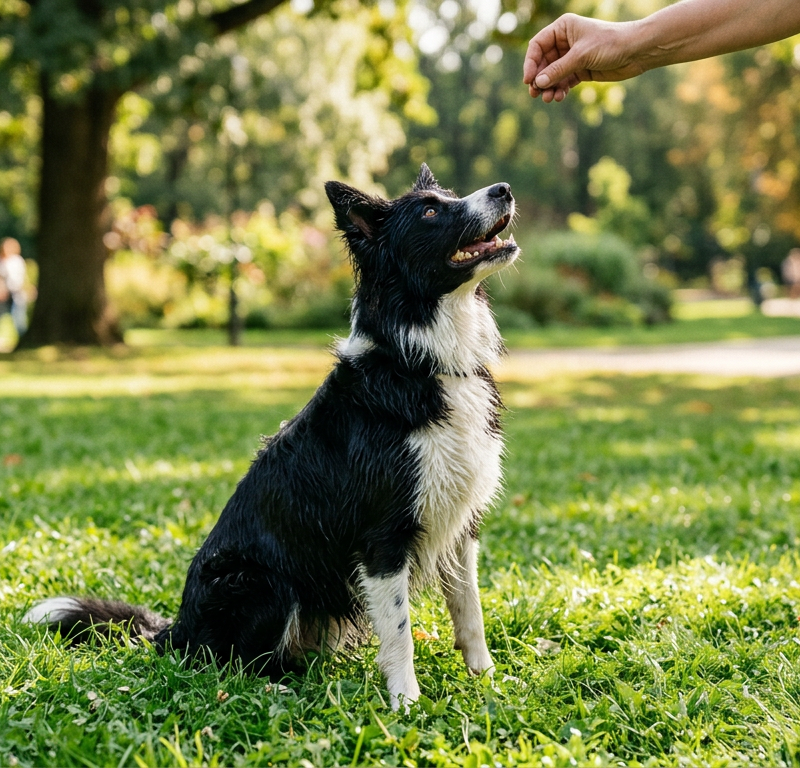
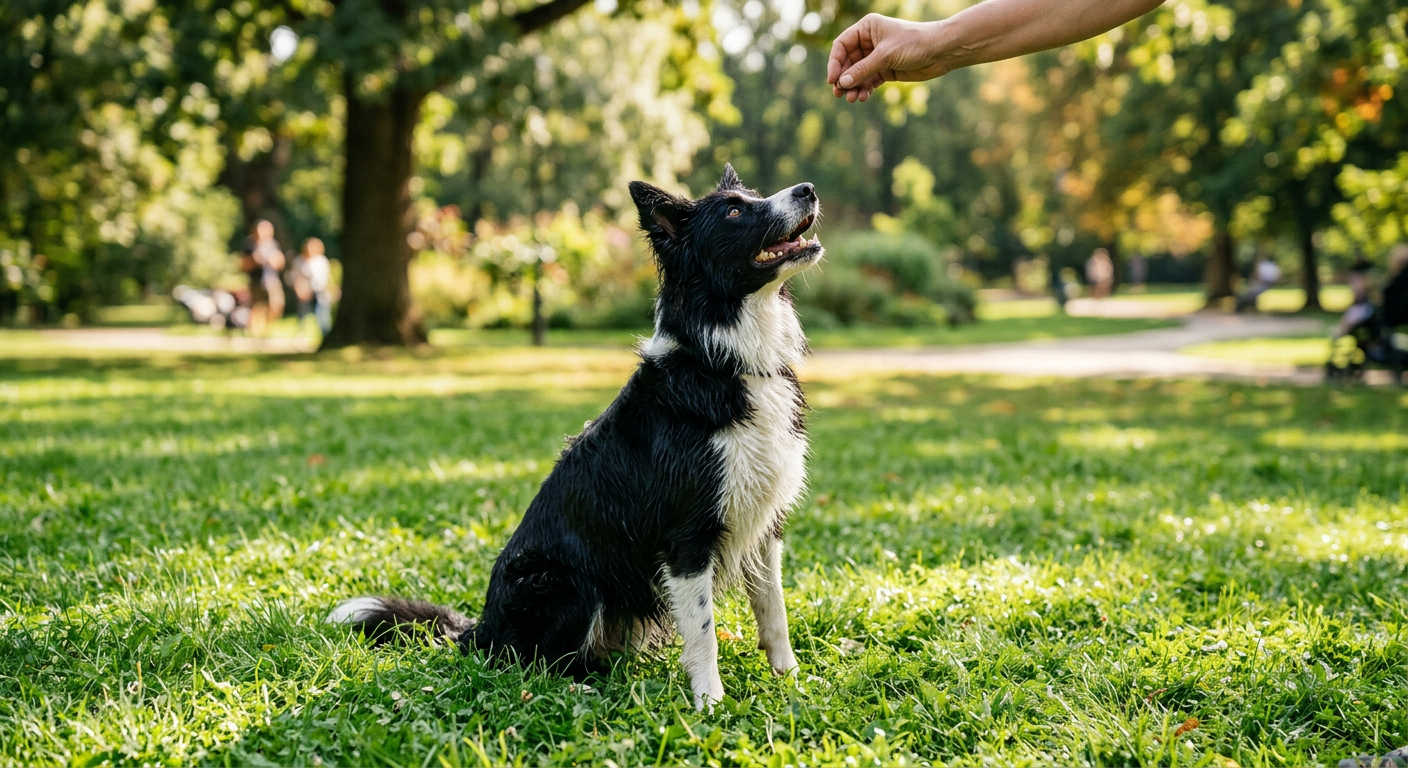
A smart Border Collie sitting and looking up at its owner with intense focus during an outdoor training session.
Understanding Canine Pattern Recognition
Dogs don't just listen to our voices; they observe our every move. If you always reach for your treat pouch before saying "sit," your dog has learned that the hand movement is the real cue. They are simply responding to the earliest signal they perceive in the sequence of events.
This is especially common in breeds known for their focus and work ethic. For instance, if you look at the Border Collie, you will see a dog that is constantly scanning for the next task. They often "short-circuit" the command process because they are eager to please and move on to the next activity.
The Role of Body Language
Your posture, the way you shift your weight, or even a slight nod of your head can act as a silent command. If you find your dog sitting early, try recording a video of yourself. You might notice that you lean forward or reach into your pocket seconds before you actually speak.
Environmental Cues
Sometimes the environment tells the dog what to do. If you always ask for a sit at the front door before a walk, the door itself becomes the command. Your dog sits because they know the "Front Door Protocol," effectively bypassing your verbal instruction entirely.
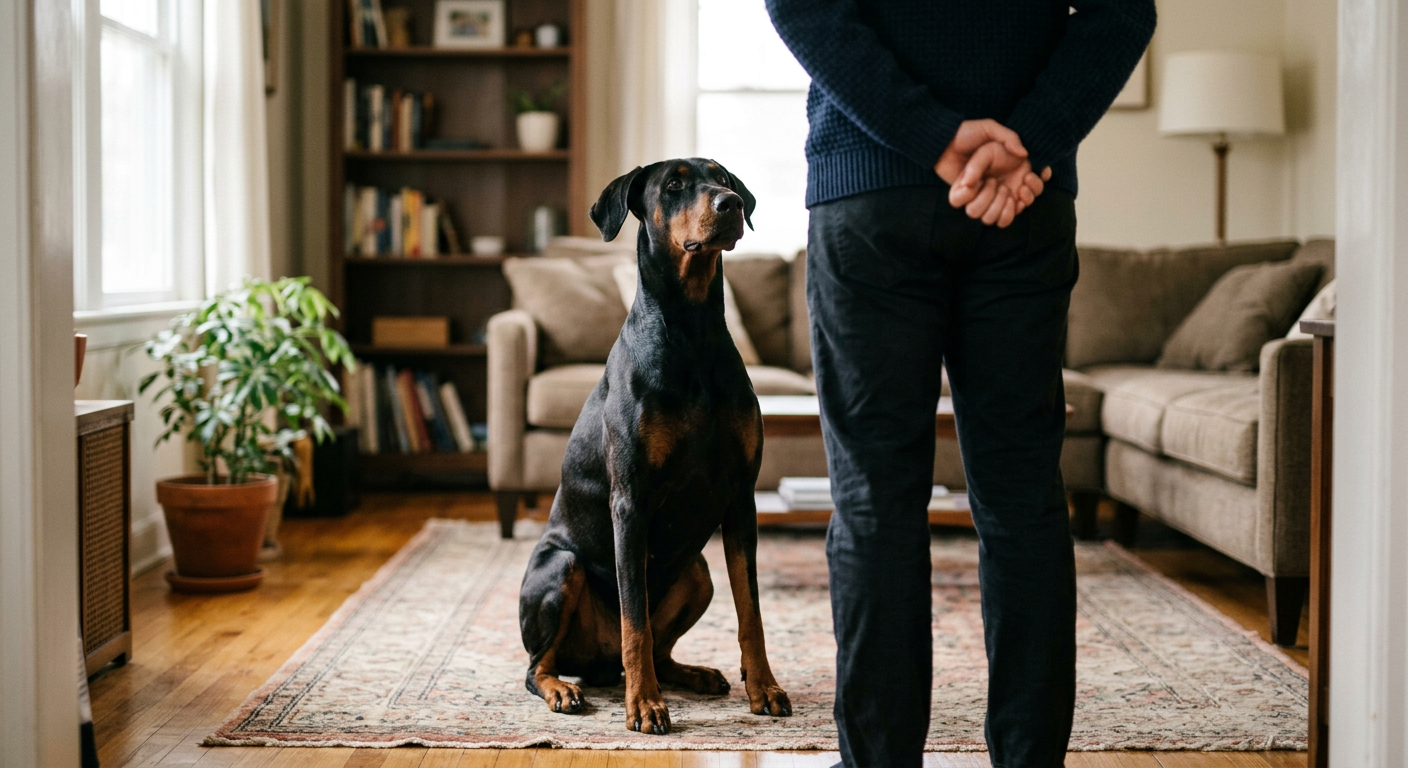
A person training a Doberman Pinscher by standing still to ensure the dog listens to verbal cues.
Is Early Sitting a Problem?
In most casual settings, a dog offering a sit is actually a wonderful thing. It shows they are attentive and looking to you for direction. However, in formal obedience or advanced essential commands, precision is usually the goal.
If your dog is sitting before you finish speaking, they might start to ignore the actual verbal cue entirely. Over time, this can lead to confusion if you ever want them to do something else in that same context. For example, if you wanted them to "stay" or "down" but they already sat, you have to undo their choice to get the desired behavior.
How to Refine Your Communication
If you want to ensure your dog waits for the full verbal command, you can use several proactive care techniques to sharpen their listening skills. The goal is to make the verbal word the only reliable predictor of the reward.
Vary Your Routine: Don't always follow the same sequence. Ask for a "down" or a "touch" instead of a sit to keep them guessing.
The "Statue" Test: Stand perfectly still with your hands behind your back. Give the command without moving any other part of your body.
Delay the Reward: If they sit early, wait a few seconds before giving the treat. This teaches them that the sit itself isn't the only requirement; the timing matters too.
Introduce a Release Word: Make sure they know that the behavior ends only when you say so, which helps build overall patience.
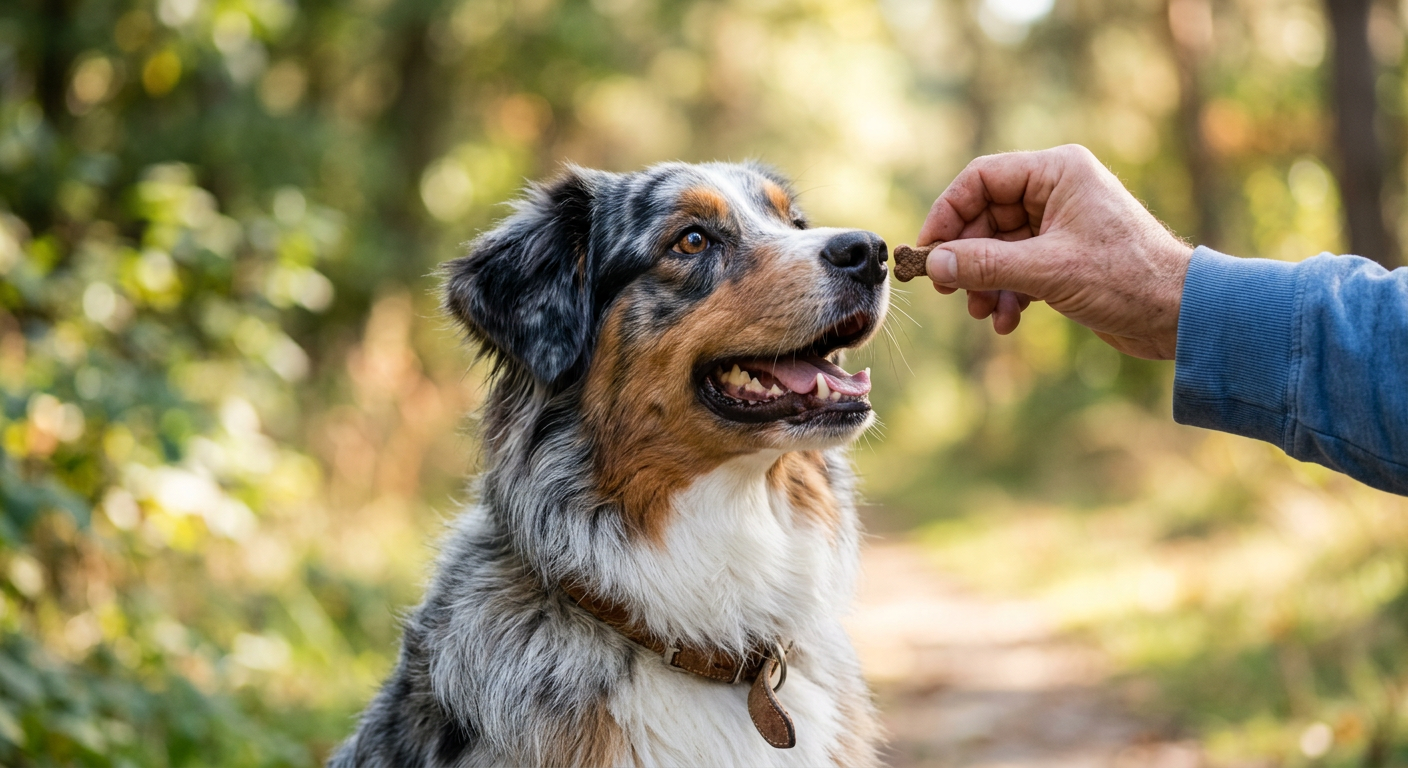
A trainer giving a treat to a happy Australian Shepherd after a successful patient stay.
Training for Better Impulse Control
Developing patience is a core part of leash training made easy and general manners. When a dog sits prematurely, they are displaying a slight lack of impulse control. They are so excited for the treat that they can't wait for the formal "go" signal.
Working on "stay" and "wait" commands can help balance this out. By rewarding the act of waiting, you teach your dog that stillness is just as valuable as movement. This is a great way to address common behavioral challenges related to over-excitement or hyper-focus during training sessions.
Using Intermittent Reinforcement
Once your dog knows a command well, you don't have to reward them every single time. By switching to a random reward schedule, your dog will pay closer attention to your specific words to ensure they are doing exactly what is asked to earn that occasional high-value treat.
Considering Breed Differences
Different breeds have different levels of "eagerness." A German Shepherd vs Labrador Retriever comparison often shows that while both are highly trainable, the Shepherd might be more prone to anticipating movements due to their guarding and herding instincts.
Smaller breeds, like a French Bulldog, might sit early simply because they are closer to the ground and it's a comfortable default position for them. Knowing your dog's breed traits can help you understand if they are being proactive or just doing what comes naturally to their body type.
The Importance of Professional Guidance
While an early sit is usually just a sign of a "smart cookie," if your dog seems anxious or frantic to please, it may be worth consulting a professional trainer or your veterinarian. Sometimes, what looks like anticipation can be a sign of underlying stress or a desire to avoid a certain posture that causes discomfort.
A vet can ensure that your dog's joints are healthy, especially in larger breeds. For example, check the Great Dane age chart to monitor growth milestones, as joint wellness is a major factor in how comfortably a dog can transition into a sit.
Summary of Proactive Steps
To help your dog wait for the full command, remember to stay consistent and calm. Use clear, distinct words and try to minimize extra "noise" from your body language. By being a clear communicator, you make it easier for your dog to succeed.
Why does my dog sit before I finish the command? Most likely, it’s because they love you, they love treats, and they are trying their absolute best to be the "goodest" dog in the room. Celebrate their enthusiasm while gently guiding them toward better listening skills. Training is a lifelong journey of wellness and connection for both you and your pet.
Frequently Asked Questions
Dogs are excellent at reading body language. They often see you reaching for a treat or shifting your weight and react to those physical cues before you even speak.
Try the 'statue' method: stand still with your hands behind your back and give the command. If they wait for the word, reward them immediately. Variation in your routine also helps.
Yes! Highly intelligent breeds like Border Collies and German Shepherds are notorious for anticipating commands because they are eager to work and get to the next task.
Sometimes dogs sit as a default 'please' behavior. If they are unsure of what you want, they might offer a sit because it has been rewarded most frequently in the past.
We're passionate pet lovers and AI enthusiasts dedicated to helping you understand your furry friends better through the power of artificial intelligence.
AI Analysis
Free!
AI-Powered Pet Analysis
Understand Your Pet's Emotions
Our AI analyzes photos and videos to reveal what your pet is really feeling.