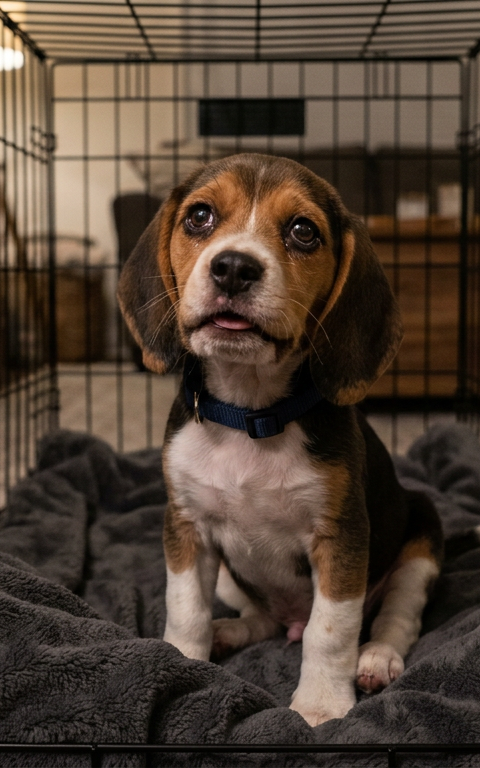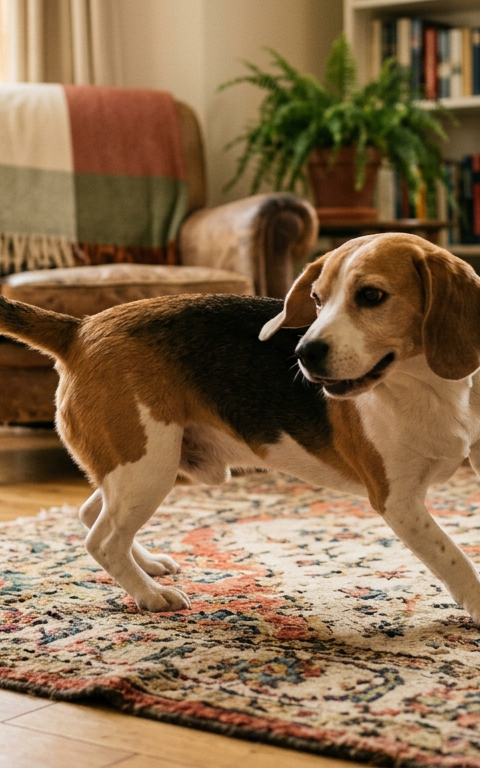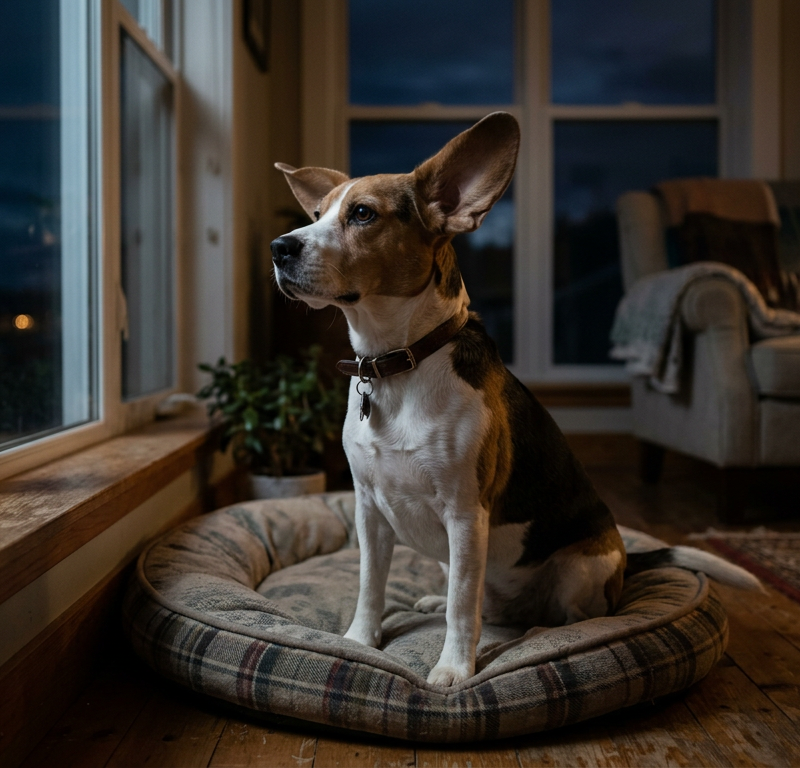
It is the middle of the night, and the house is perfectly still. Suddenly, you are startled awake by your canine companion sounding the alarm. If you find your dog barking at nothing at 3am, you are certainly not alone. While it can be frustrating to have your sleep interrupted, this behavior is usually a dog’s way of communicating a specific need or reaction to a stimulus we simply cannot perceive.
Understanding why our dogs choose the early hours of the morning to become vocal is the first step toward a peaceful night's rest. Dogs have sensory capabilities that far exceed our own, meaning that "nothing" to a human might be a very significant "something" to a dog. By looking at their environment, health, and age, we can decode these midnight messages and help them settle back down.
Common Reasons for Nighttime Vocalization
The most frequent cause for a dog barking at nothing at 3am is sensory input. Dogs can hear frequencies twice as high as humans and can detect sounds four times farther away. A neighbor starting a car three houses down or a small animal scurrying across the roof can trigger an instinctive guarding response.
Beyond external sounds, internal needs often play a role. If your dog hasn't had an adequate bathroom break before bed, they may use barking as a way to signal discomfort. Understanding your pet's life stage can provide context for these needs; for instance, you might check a Golden Retriever age calculator to see if your dog is entering senior years where bladder control naturally decreases.
Anxiety and boredom are also powerful motivators. If a dog hasn't received enough mental or physical stimulation during the daylight hours, they may wake up with pent-up energy. This "midnight zoomie" energy sometimes manifests as vocalizing at shadows or slight movements in the room.
The Role of Keen Senses
Dogs possess an extraordinary sense of smell and hearing. At 3am, when the rest of the world is quiet, these senses become even more acute. They might be reacting to a fox in the yard or even the sound of water moving through the pipes in your walls.
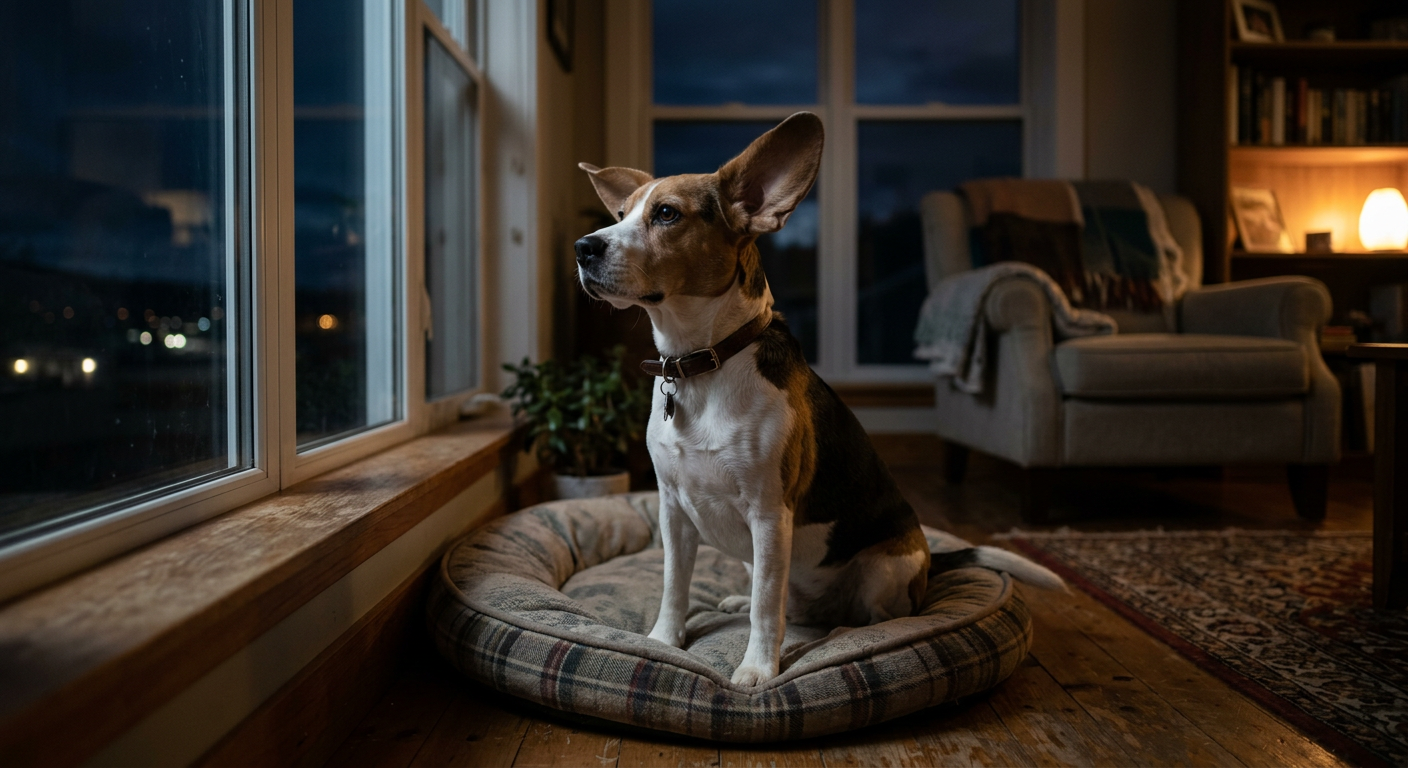
It is helpful to observe the direction of your dog's gaze. If they are focused on a window or a specific door, they are likely tracking a scent or sound you can't detect. This is different from a dog staring at the wall at night, which can sometimes indicate cognitive changes or subtle pests behind the drywall.
Impact of Age and Cognitive Health
As dogs transition into their senior years, their sleep patterns often shift. Canine Cognitive Dysfunction (CCD) is a condition similar to dementia in humans that can disrupt a dog's internal clock. This often leads to an old dog waking up confused at night and barking to seek reassurance from their owners.
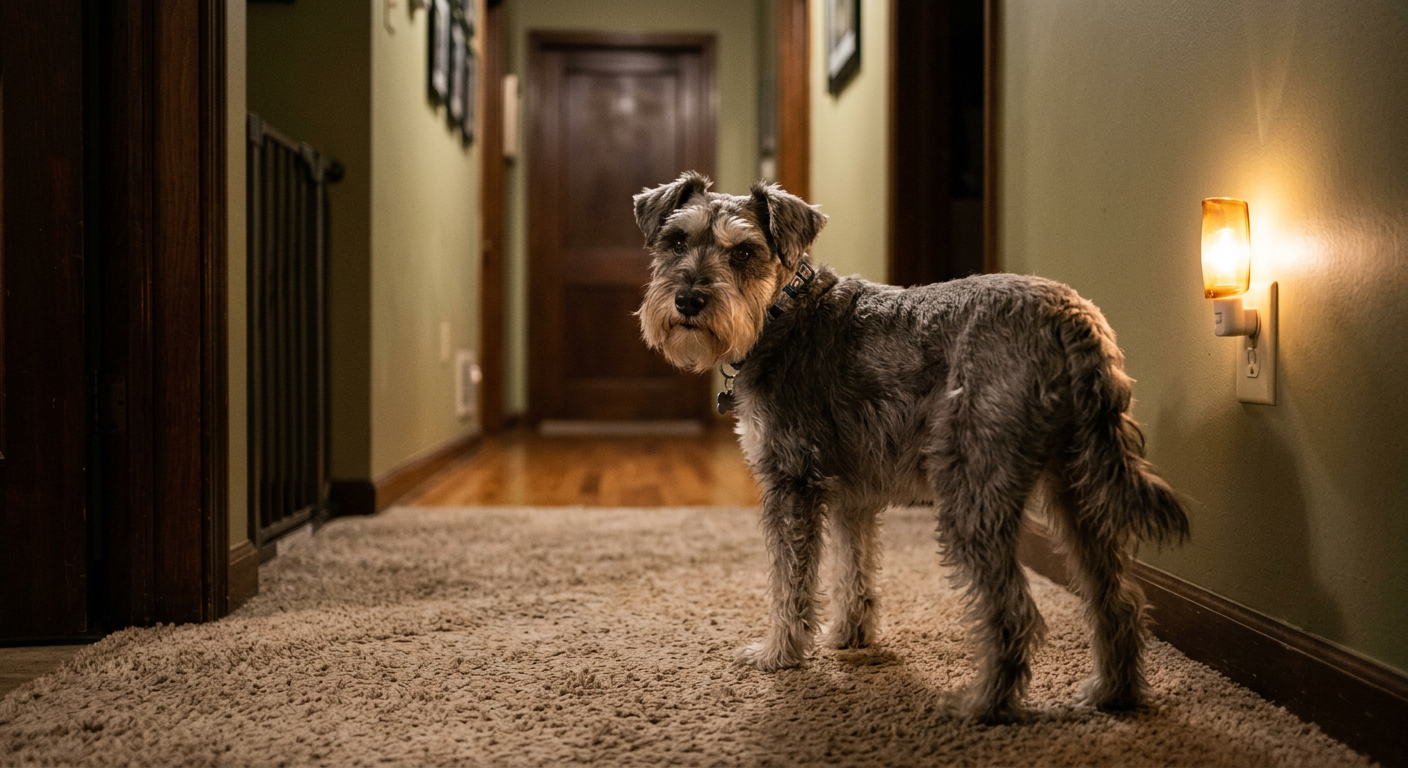
Senior dogs may also experience a decline in their sight and hearing. When a dog can't see clearly in the dark, shadows become more intimidating, leading to "alarm barking" at things that wouldn't bother them during the day. Keeping a hallway light on or providing a nightlight near their bed can offer significant comfort.
- Disorientation: Seniors may forget where they are upon waking.
- Sensory Loss: Reduced vision creates "ghost" shapes in the dark.
- Joint Discomfort: Shifting positions to get comfortable can cause a dog to wake up and bark.
- Sleep-Wake Cycles: Older dogs often sleep more during the day and less at night.
If you have an older pet, you might notice other behaviors accompanying the vocalization. You can read more about an old dog waking up confused at night to see if your pet’s behavior matches typical senior patterns. Consult your veterinarian if you suspect cognitive changes are affecting your dog's quality of life.
Environmental Triggers in the Early Hours
Sometimes the trigger is purely environmental. Is there a heater that kicks on at 3am? Does a delivery truck pass by nearby? Even a change in temperature can cause a dog to wake up and feel unsettled. Dogs are creatures of habit, and any break in the "silence" of the night can feel like an intrusion to them.
Addressing Anxiety and Seeking Attention
Separation anxiety doesn't just happen when you leave the house; it can also occur when you are asleep in another room. If your dog barks and stops the moment you speak to them or enter the room, they may be seeking "demand barking" for attention. They have learned that a loud noise brings their favorite human to their side.
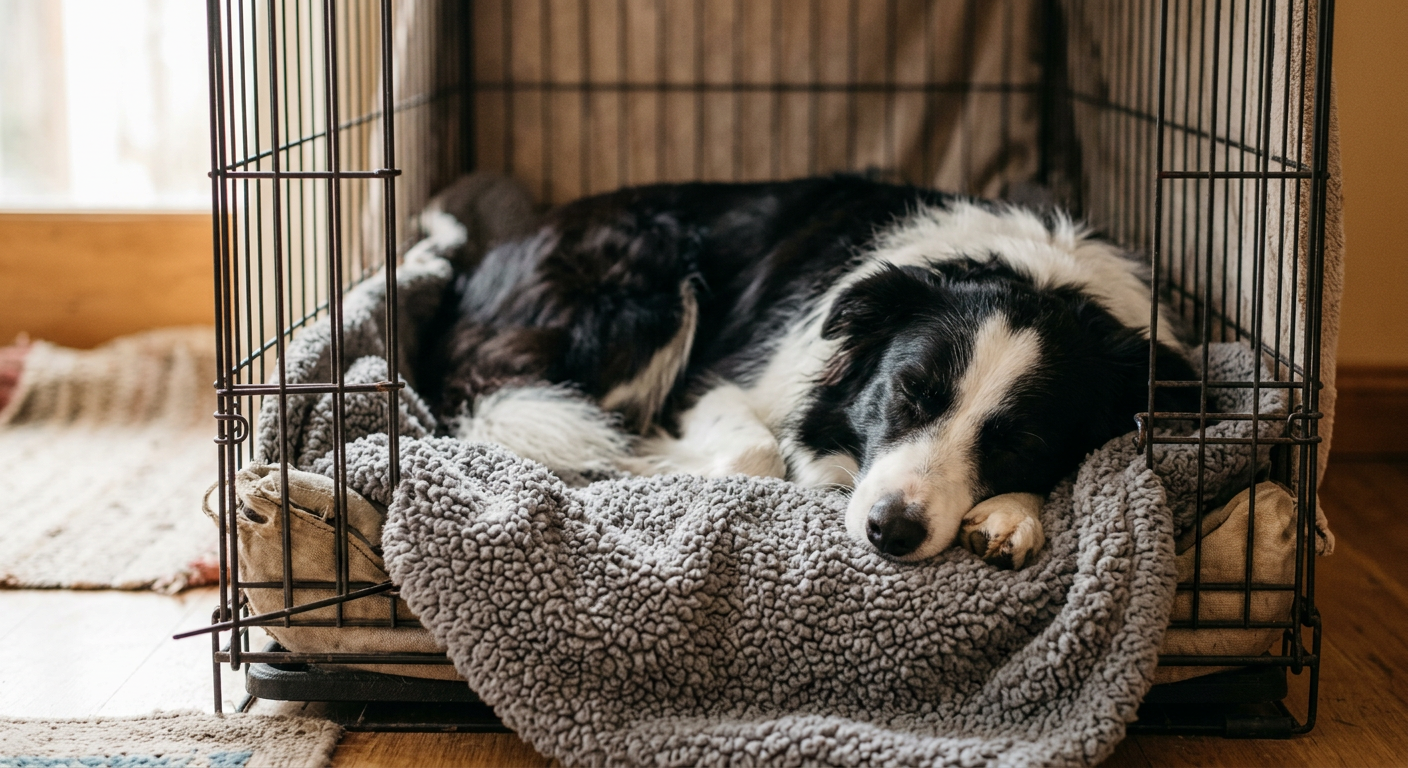
To curb this, it is essential to ensure your dog feels secure in their sleeping area. Providing a high-quality bed and perhaps an item of your clothing with your scent can help soothe an anxious dog. If you are choosing between breeds known for loyalty, such as in a German Shepherd vs Rottweiler comparison, keep in mind that protective breeds may be more prone to nighttime "guarding" barks.
Mental Stimulation and Exercise
A tired dog is a quiet dog. Increasing physical exercise in the evening can help ensure your dog stays in a deep sleep throughout the night. However, mental stimulation is just as important. Foraging mats, puzzle toys, or a short training session before bed can tire out a dog's brain, making them less likely to react to minor noises at 3am.
If your dog is active at night, it might be part of a larger trend. You may find helpful insights in our guide on why dogs act strange at night to help differentiate between normal behavior and something that requires a schedule adjustment.
Proactive Steps for a Quieter Night
Changing a dog's nighttime habits takes patience and consistency. Start by ruling out medical issues with your veterinarian, especially if the barking is a new development. Once health concerns are addressed, you can focus on environmental and behavioral modifications.
- White Noise: Use a fan or a white noise machine to drown out external sounds like distant traffic or wildlife.
- Consistent Routine: Feed and walk your dog at the same time every evening to regulate their internal clock.
- Limit Visibility: Close curtains or use blackout shades to prevent your dog from seeing movement outside.
- Comfortable Environment: Ensure the sleeping area is the right temperature and free from drafts.
In cases where a dog appears restless or is pacing the house at 2am suddenly, they may be experiencing physical discomfort or a need to go outside. Monitoring these patterns over a few nights can help you identify if there is a specific trigger you can remove. Check out our article on a dog pacing the house at 2am suddenly for more specific advice on restless nocturnal behavior.
When to Consult Your Veterinarian
While most cases of a dog vocalizing late at night are due to environmental triggers or minor anxiety, sudden changes in behavior should always be discussed with a professional. If your dog seems distressed, unable to settle, or exhibits signs of pain, a vet visit is the best course of action. They can rule out underlying issues such as urinary tract infections, joint pain, or early-stage cognitive dysfunction.
By approaching the situation with curiosity rather than frustration, you can help your dog feel safe and secure. Remember that your dog isn't trying to be difficult; they are simply reacting to their world. With the right adjustments, both you and your furry friend can return to a full night of uninterrupted sleep.