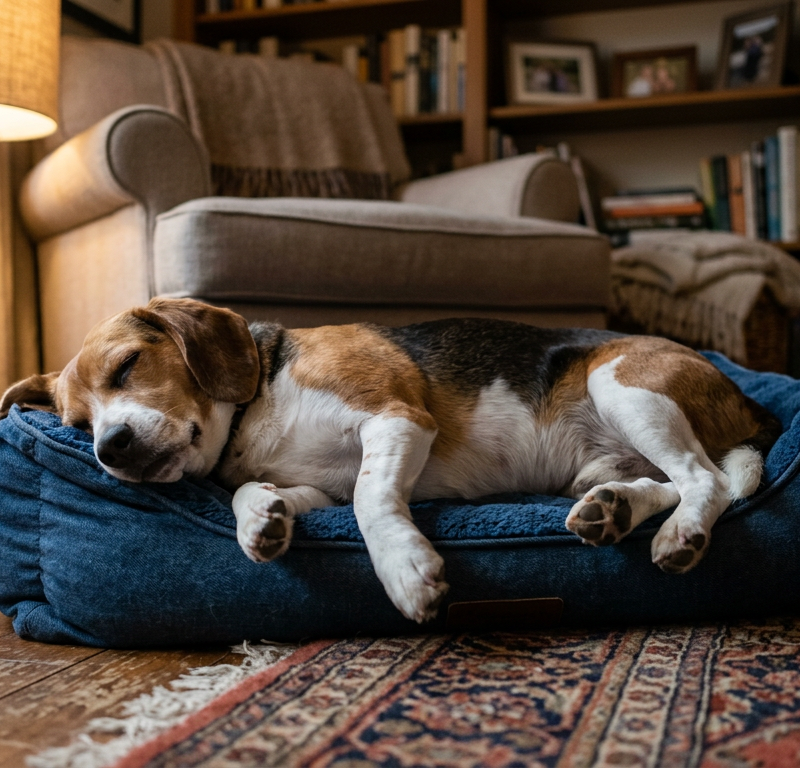
If you have ever been woken up by the sound of your dog whimpering in sleep every night, you know how concerning it can feel. You might wonder if your furry friend is having a bad dream or if they are experiencing some form of physical discomfort. Most of the time, these nocturnal vocalizations are a perfectly natural part of the canine sleep cycle.
Watching your dog twitch their paws or let out soft cries can be fascinating, yet it often leaves pet owners searching for answers. Understanding why these sounds occur helps you ensure your dog is resting comfortably. While occasional noises are normal, persistent whimpering can sometimes signal underlying wellness considerations that merit a closer look at their daily routine.
In this guide, we will explore the science of puppy and adult dog sleep, common reasons for nighttime vocalizations, and when it might be time to chat with your veterinarian. By the end, you will have a better grasp of your pet's midnight "shout-outs" and how to support their rest.
The Science of Canine Sleep Cycles
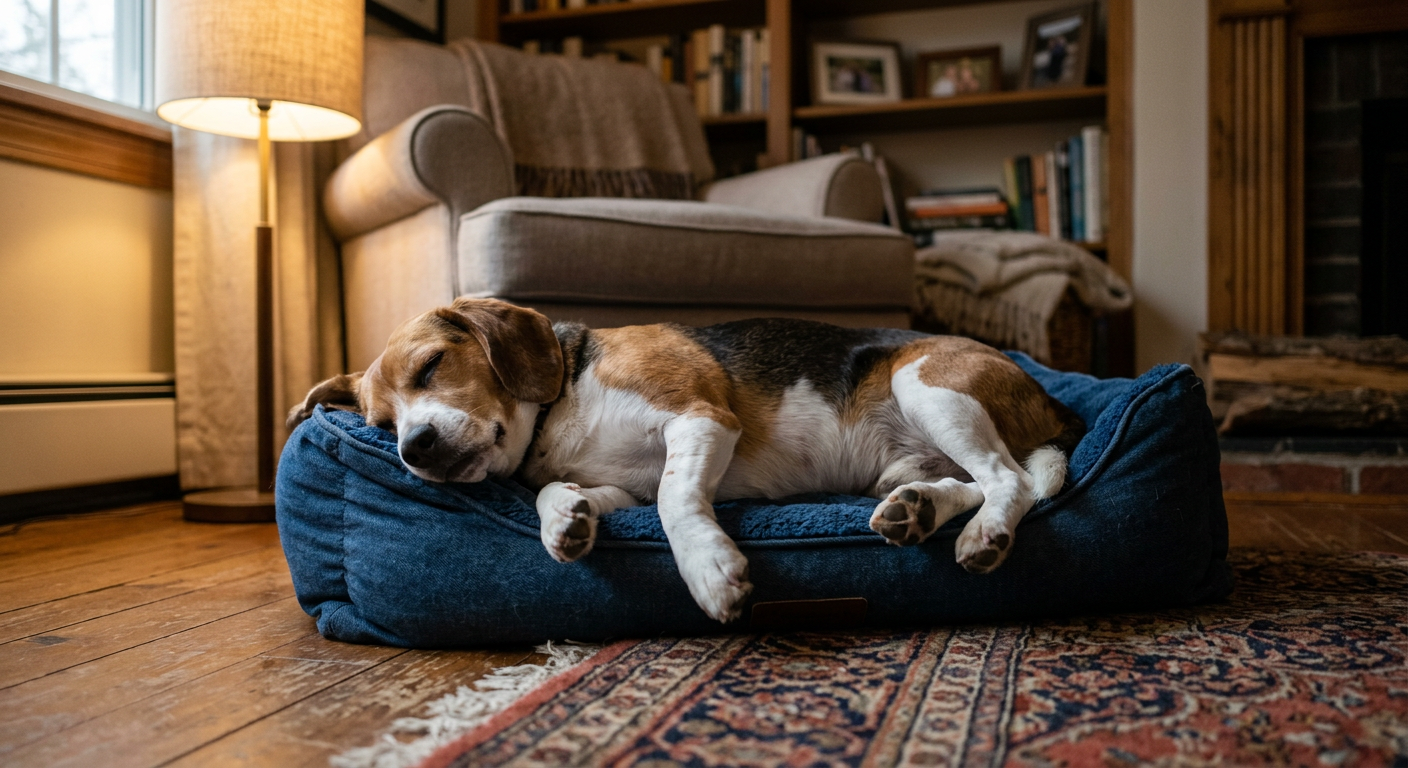
Just like humans, dogs go through different stages of sleep. The most active stage is known as REM (Rapid Eye Movement) sleep. This is the period when the brain is most active, and most dreaming occurs. For many dogs, this is exactly when the soft crying or muffled barking begins.
During REM sleep, a dog's muscles are typically relaxed to prevent them from acting out their dreams. However, this relaxation isn't always complete. Small muscle twitches, rapid eye movements under the lids, and vocalizations like whimpering are signs that your dog’s brain is busy processing the day’s events.
The Role of Dreaming in Dogs
Research suggests that dogs dream about common activities, such as chasing a squirrel at the park or playing with their favorite ball. If your dog is whimpering in sleep every night, they might simply be a very "vocal" dreamer. Smaller breeds, such as a Yorkshire Terrier, tend to have more frequent, shorter dreams compared to larger breeds.
It is important to remember that dreaming is a healthy cognitive process. It helps dogs consolidate memories and learn new skills. Even if the sound seems slightly distressed, it is usually just an involuntary reaction to a vivid mental image of a game of fetch or a walk in the woods.
Common Reasons Dogs Cry While Sleeping
While dreaming is the most frequent cause, other factors can lead to a dog making noise during the night. Environmental factors, age-related changes, and even daily stress levels can influence how quietly a dog sleeps. Identifying these factors can help you create a more peaceful environment for your pet.
Some common triggers for nighttime whimpering include:
- Processing high-energy interactions from earlier in the day.
- Environmental noises like wind, distant sirens, or household electronics.
- Temperature fluctuations in the sleeping area.
- Physical growth or minor muscle soreness from exercise.
Heightened Emotions and Daily Stimulation
A dog that had a very exciting day at the dog park or met several new people might be more prone to active dreaming. The brain continues to "work" through these high-arousal events long after the lights go out. If you notice your dog is more vocal after a busy day, it is likely just their way of decompressing.
Conversely, if your dog is experiencing a change in routine, they might show signs of minor stress. This doesn't necessarily mean they are unhappy; it just means their brain is adapting. You can read more about how dogs process their environment in our article on why dogs act strange at night.
When Whimpering Signals Physical Discomfort
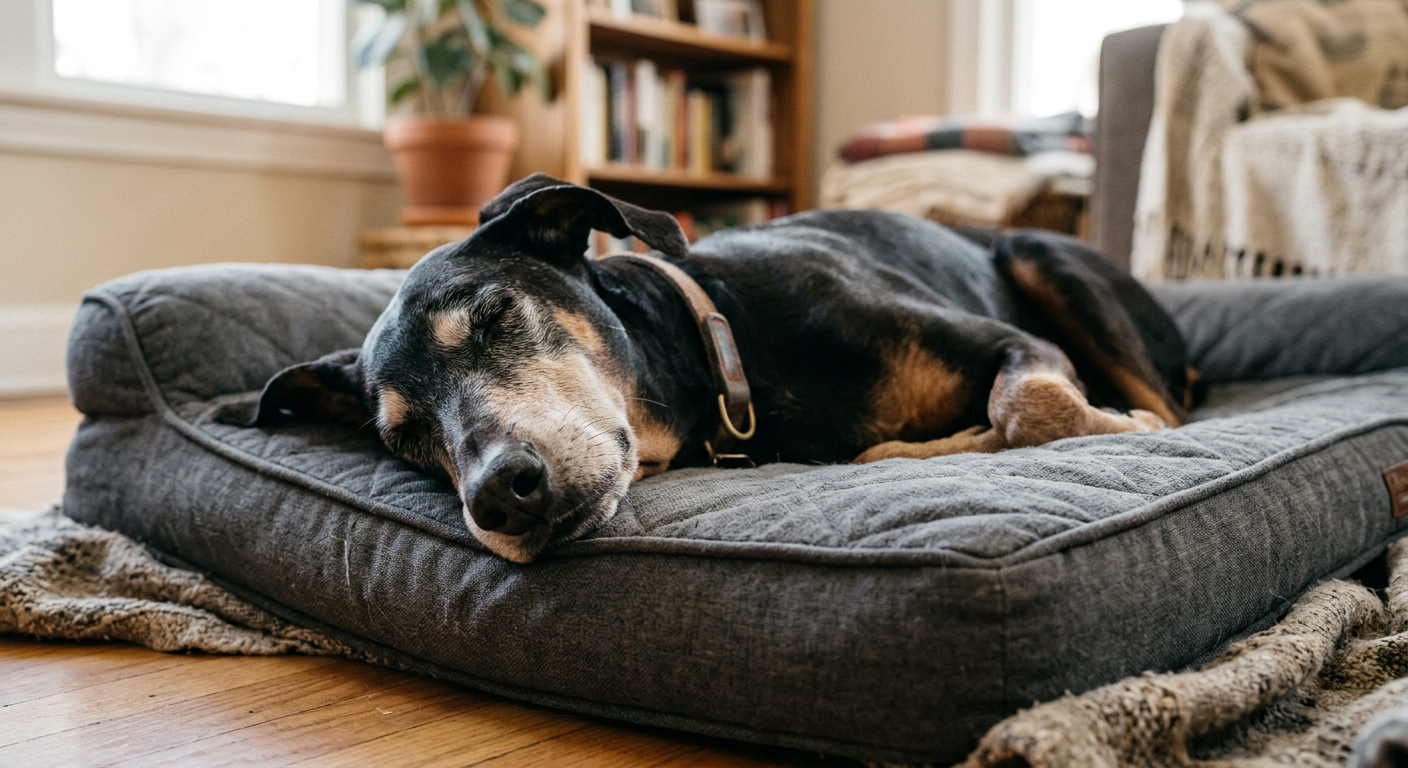
While the majority of sleep vocalizations are harmless, persistent sounds can sometimes indicate that a dog is not physically comfortable. This is especially true for senior dogs who may be dealing with stiff joints or age-related wellness considerations. If the whimpering is accompanied by a struggle to find a comfortable position, it may be more than just a dream.
For larger breeds, such as a Great Dane, joint support is a crucial part of proactive care. An orthopedic bed can make a world of difference in reducing the physical restlessness that leads to nighttime whining. Providing a supportive surface helps keep the body aligned and minimizes the aches that might wake a dog up or cause them to whimper in their sleep.
Age-Related Nighttime Behavior
Senior dogs often undergo changes in their sleep-wake cycles. If you have an older pet, you might notice they are more active or vocal during the night than they used to be. This can sometimes be linked to cognitive changes where the dog feels a bit disoriented when they drift between sleep stages.
If your older companion seems confused upon waking, it may be helpful to check out our resources on an old dog waking up confused at night. Proper lighting and a consistent routine can help these senior pets feel more secure as they navigate their golden years.
Environmental Factors and Anxiety
Sometimes, a dog whimpering in sleep every night is responding to something in their immediate environment. Dogs have much more sensitive hearing than humans. A sound that you don't even notice, like the hum of a refrigerator or a neighbor's car door, can enter a dog's dream state and trigger a vocal response.
Separation anxiety or general sensitivity to being alone can also play a role. If a dog feels insecure about their sleeping location, they may not enter deep sleep effectively. This "light" sleep can be characterized by more frequent whining as the dog remains on alert even while dozing.
Creating a Restful Sleep Sanctuary
To help reduce vocalizations caused by external triggers, consider the following environmental adjustments:
- Use a white noise machine to drown out sudden outdoor sounds.
- Ensure the room temperature is consistent and comfortable for the specific breed.
- Limit water intake right before bed to prevent a full bladder from causing restlessness.
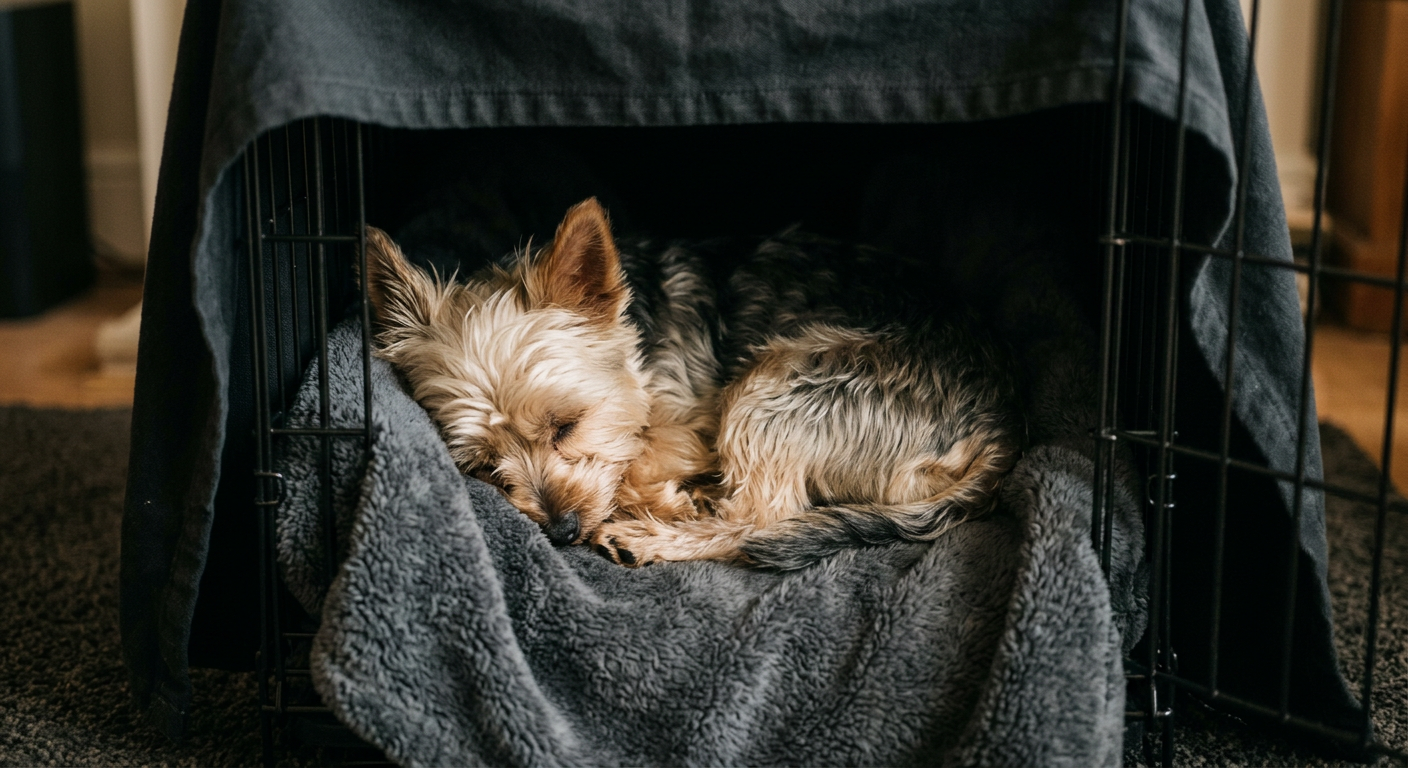
- Provide a "den-like" space, such as a crate with a cover or a cozy corner.
Should You Wake a Whimpering Dog?
It can be very tempting to reach out and wake your dog when they sound like they are crying. However, the old adage "let sleeping dogs lie" is actually very good advice. Waking a dog suddenly from REM sleep can be startling and may lead to a reflexive snap or a period of intense disorientation.
If you feel you must wake them, do so gently. Call their name softly from a distance rather than touching them. This allows them to transition out of the dream state naturally. Most of the time, the whimpering will stop on its own within a minute or two as the dog moves into a different sleep phase.
When to Consult Your Veterinarian
Monitoring your pet's behavior is a key part of responsible ownership. While whimpering during dreams is standard, you should consult a professional if you notice the following:
If the whimpering is new and paired with limping during the day, or if the dog seems unable to settle down at all, a physical exam is a proactive step. Veterinarians can rule out issues like urinary tract discomfort or joint pain that might be exacerbated at night. Mentioning these nighttime patterns during your regular check-up is always a great idea for maintaining long-term wellness.
Supporting Your Dog's Nighttime Wellness
Providing a consistent evening routine can significantly improve the quality of your dog's rest. Much like humans benefit from a "wind-down" period, dogs thrive when they know exactly what to expect before bed. This reduces overall anxiety and can lead to quieter, deeper sleep.
A gentle walk or a calm training session about an hour before bed can help burn off residual mental energy. This prevents the "pacing" behavior often seen in restless dogs. For more on that specific behavior, read about a dog pacing the house at 2am suddenly. Following this with a small, healthy snack and a bathroom break ensures their physical needs are met before they settle in.
Ultimately, a dog whimpering in sleep every night is often just a sign of a healthy, active imagination. By paying attention to their environment and providing a supportive place to rest, you can ensure that those little midnight cries are nothing more than the sounds of a dog living their best life—even in their dreams.