Have you ever looked at your feline friend and wondered what is going on in that mysterious mind? While cats are often described as stoic or unpredictable, they are actually communicating with us constantly using their bodies. Understanding cat tail positions and their meanings is one of the most effective ways to build a deeper bond with your pet and respond to their needs with empathy.
A cat's tail is an extension of their spine and a primary tool for balance, but it also acts as an emotional barometer. By paying attention to the height, movement, and shape of the tail, you can tell if your cat is feeling playful, relaxed, or perhaps a little overstimulated. This non-verbal language is a core part of decoding your cat's behavior in everyday situations.
The Vertical Tail: The Sign of a Happy Cat
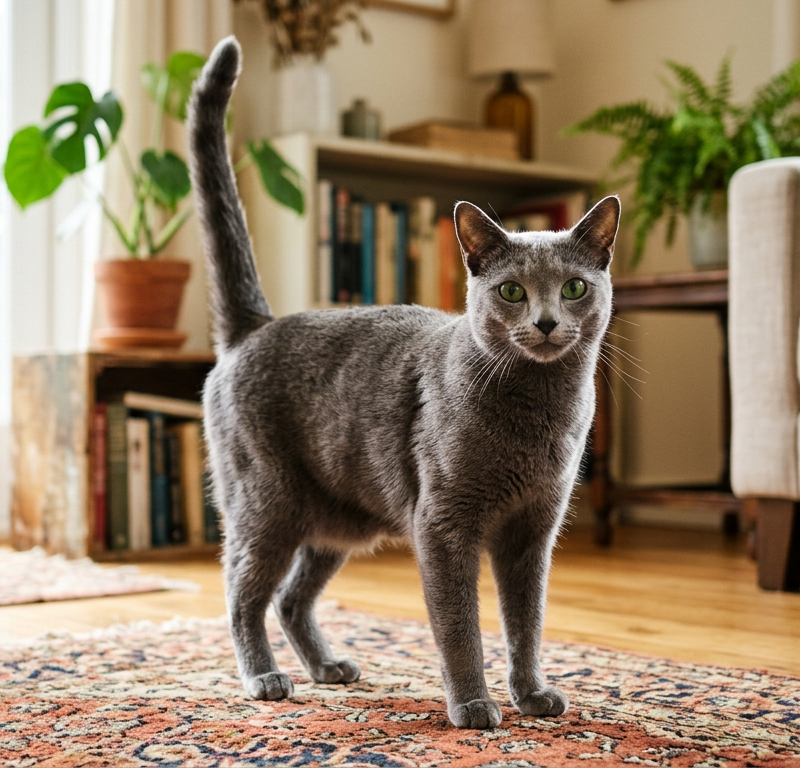
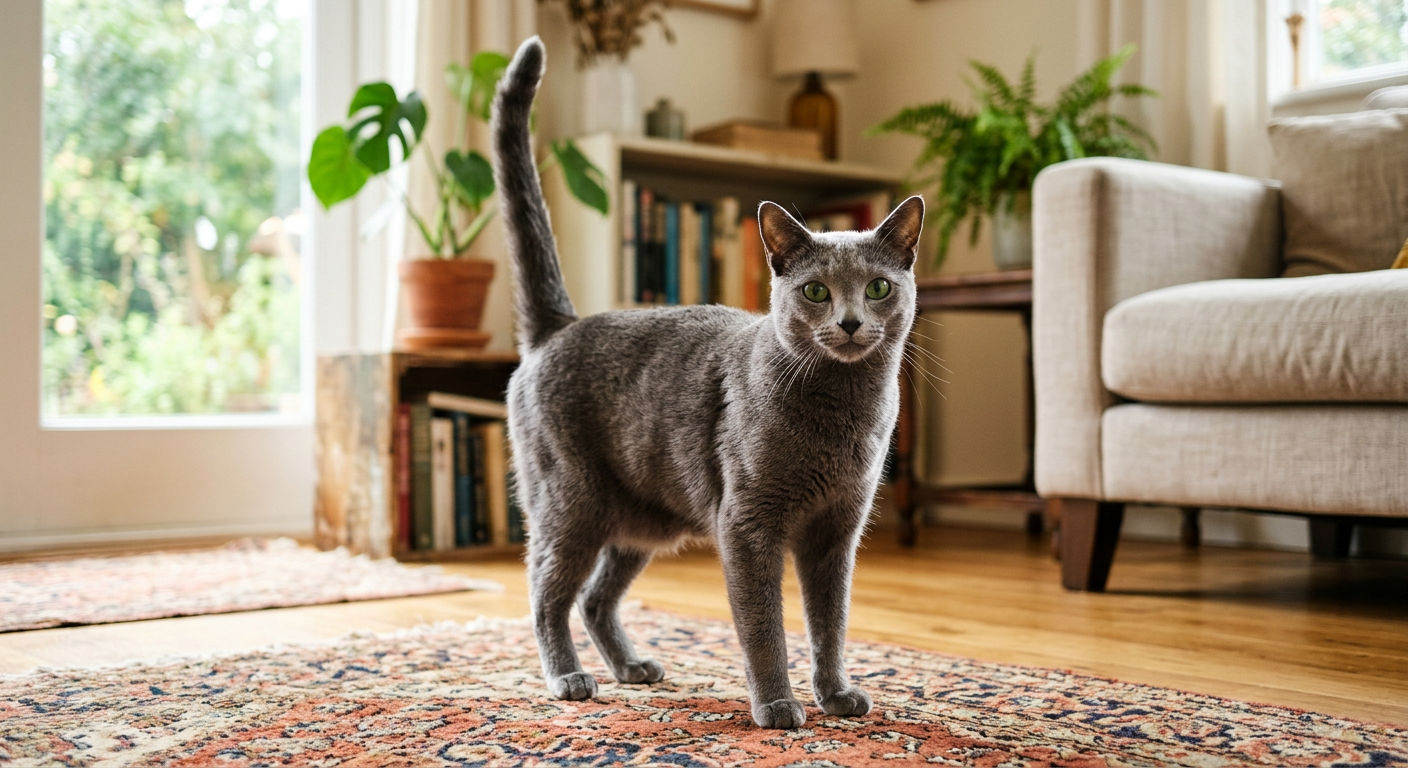
When you see a tail held high in the air, you are looking at a confident and content animal. A vertical tail is generally a friendly greeting, similar to a human waving hello. If the tip of that high tail has a tiny little twitch or a "crook" at the end, it often means your cat is particularly excited to see you.
This upright position is frequently seen during meal times or when you first return home from work. It shows that the cat feels secure in its environment and is open to interaction. This is the perfect time for some gentle chin scratches or a quick play session with a favorite toy.
The Question Mark or Hooked Tail
Sometimes a vertical tail curves at the top, resembling a question mark. This is one of the most positive signals a cat can give. It suggests a playful mood and an invitation for social interaction. When your cat approaches you with this "hook," they are essentially asking if you want to hang out or play.
In many multi-cat households, you will see cats approach each other with hooked tails to signal peaceful intentions. It is a sign of a well-socialized pet who is comfortable sharing their space. You can learn more about how different feline personalities interact by looking at understanding cat meowing patterns alongside these body signals.
Understanding Cat Tail Positions and Their Meanings During Stress
Not every tail movement is a sign of joy. Just as humans might cross their arms when uncomfortable, cats use their tails to signal when they need space. Recognizing these signs early can help you avoid accidental scratches and keep your home a peaceful environment for everyone.
A tail held low, tucked between the legs, or hidden beneath the body usually indicates fear or submission. This position makes the cat appear smaller and less threatening to potential "adversaries." If you notice this, it is best to give your cat some quiet time and investigate what might be making them feel insecure.
The Puffed Up or Bristled Tail
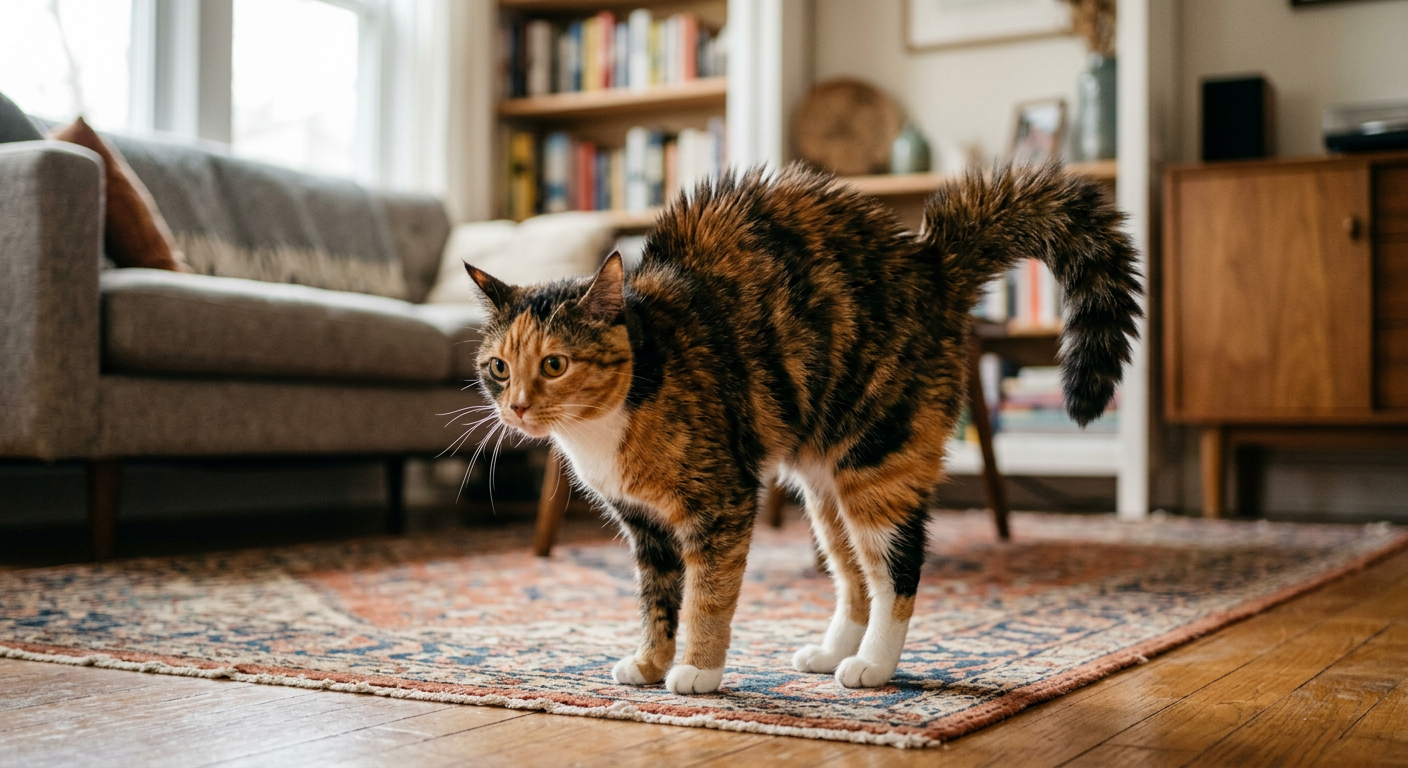
We have all seen the "Halloween cat" look where the fur on the tail stands straight up, making it look twice its normal size. This is known as piloerection. It is a defensive mechanism meant to make the cat look larger and more intimidating to a perceived threat.
While it might look funny to us, a puffed tail means your cat is genuinely startled or feeling defensive. In these moments, it is important not to rush toward them. Allow them to calm down on their own terms. If this behavior happens frequently, you might want to look into why they feel so reactive in their current environment.
The Whipping or Thumping Tail
If you see a tail moving rapidly back and forth or thumping against the floor, take note. This is very different from the happy "wag" of a dog. In the feline world, a whipping tail is a sign of agitation, annoyance, or intense focus. It serves as a clear warning that the cat is reaching their limit for stimulation.
You might see this during a long petting session. Your cat might love the attention at first, but then their tail starts to twitch or thump. This is their way of saying, "That's enough for now, thank you." If you ignore this signal, the cat may eventually nip or walk away abruptly. Observing these subtle shifts is as important as the meaning behind slow blinks when building trust.
The Nuances of Tail Movement
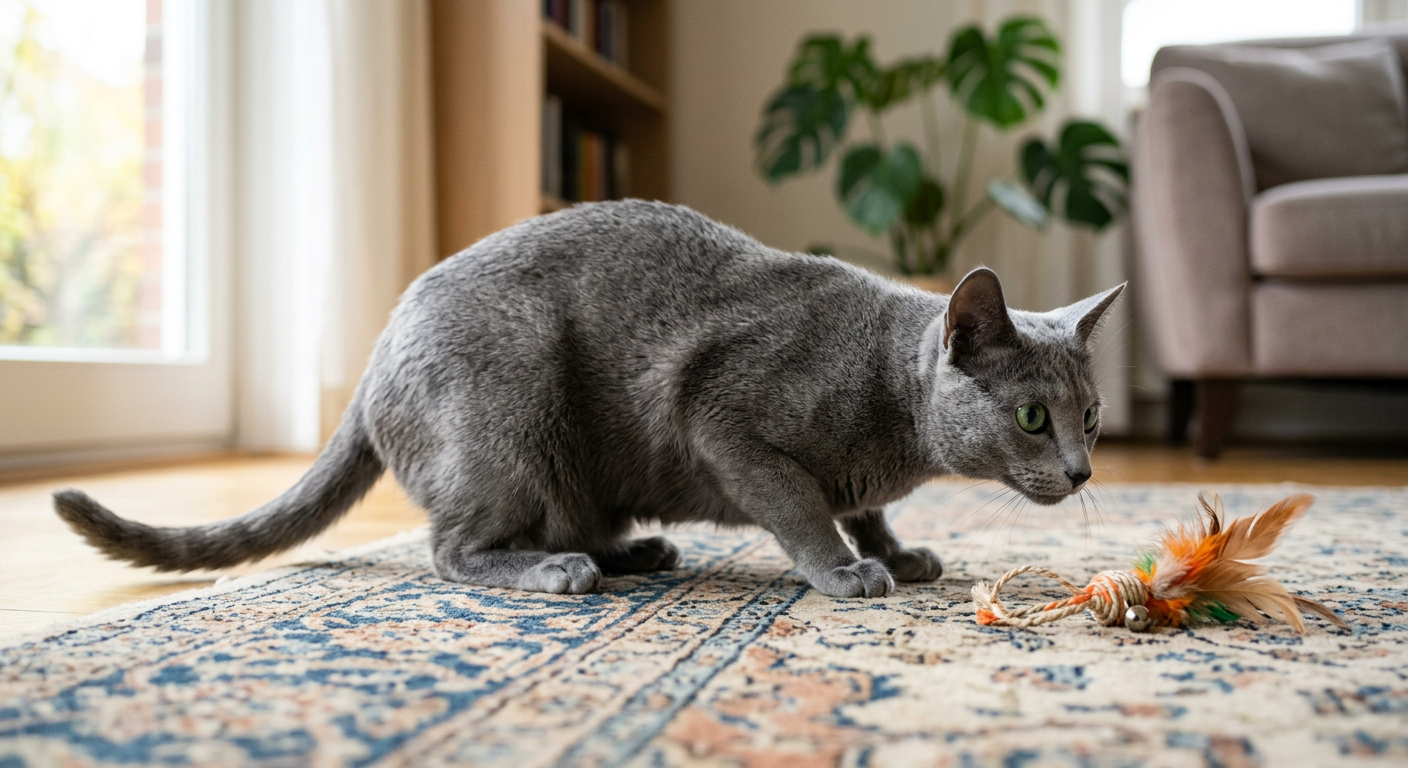
Movement is just as telling as position. A slow, rhythmic sway from side to side often occurs when a cat is focused on something, like a bird outside the window or a feather toy. This "predatory sway" shows that the cat is in a state of high concentration and is preparing to pounce.
On the other hand, a slight twitch at the very end of a relaxed tail simply means your cat is alert. They might be napping, but that twitching tip tells you they are still monitoring the sounds in the room. It’s a sign of a cat that is resting but remains engaged with their surroundings.
- High Tail: Confidence, happiness, and friendliness.
- Curved Hook: Playfulness and curiosity.
- Tucked Tail: Fear, anxiety, or submission.
- Horizontal/Neutral: Relaxed but observant.
- Whipping Tail: Irritation or overstimulation.
Tail Wrapping Behavior
Have you ever had a cat walk past your legs and wrap their tail around your ankle? Or perhaps you've seen two bonded cats intertwine their tails while walking together. This is a profound sign of affection and social bonding. It is the feline version of a hug or holding hands.
When a cat wraps their tail around you, they are marking you with their scent and reinforcing your "family" bond. It is a gesture of profound trust. Some breeds are more known for these social displays than others. Owners of a Maine Coon or a British Shorthair might notice these gentle social physicalities frequently.
When Tail Language Indicates a Wellness Consideration
While most tail movements are emotional, sometimes physical changes in how a cat carries their tail can be a wellness consideration. If your cat suddenly stops lifting their tail or if it seems to hang limp, it could indicate an injury or discomfort in the lower back or base of the tail.
A "twitchy skin" response accompanied by frantic tail swishing can sometimes be related to feline hyperesthesia syndrome. If you notice any sudden, drastic changes in your cat's tail carriage or if they seem painful when the area is touched, it is always best to consult with your veterinarian for proactive care. They can help rule out any underlying physical issues.
Observing the Whole Body
To truly understand your cat, always look at the tail in context with the rest of the body. A wagging tail paired with flattened ears and dilated pupils means something very different than a wagging tail paired with a "chirp" and a relaxed posture. Learning to read these clusters of signals is the key to pet parenting mastery.
Cats are masters of subtle communication. By spending just a few minutes a day watching how they use their tails during different activities, you'll start to see a whole new side of your pet's personality. Whether they are telling you they're ready for dinner or need a little quiet time, their tail is the storyteller of their soul.
Closing Thoughts on Feline Communication
Understanding cat tail positions and their meanings is a journey of observation and love. Our cats may not speak our language, but they never stop communicating with us. By learning these signals, you create a safer, happier home where your cat feels truly heard and understood.
Remember that every cat is an individual. While these guidelines apply to most felines, your specific pet might have their own unique "accents" or quirks. Keep observing, stay curious, and enjoy the wonderful, wordless conversation you share with your feline companion.