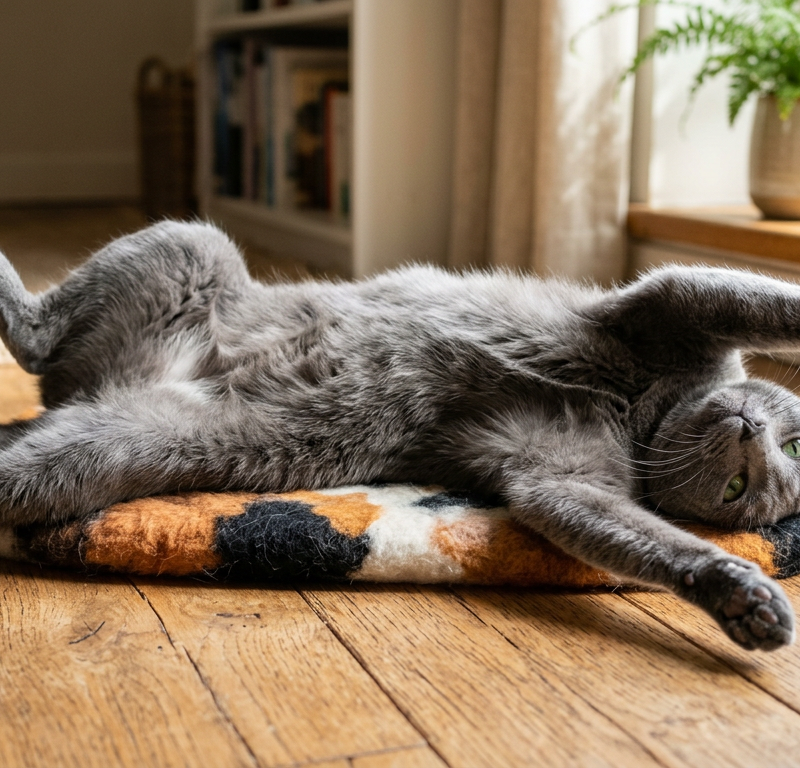
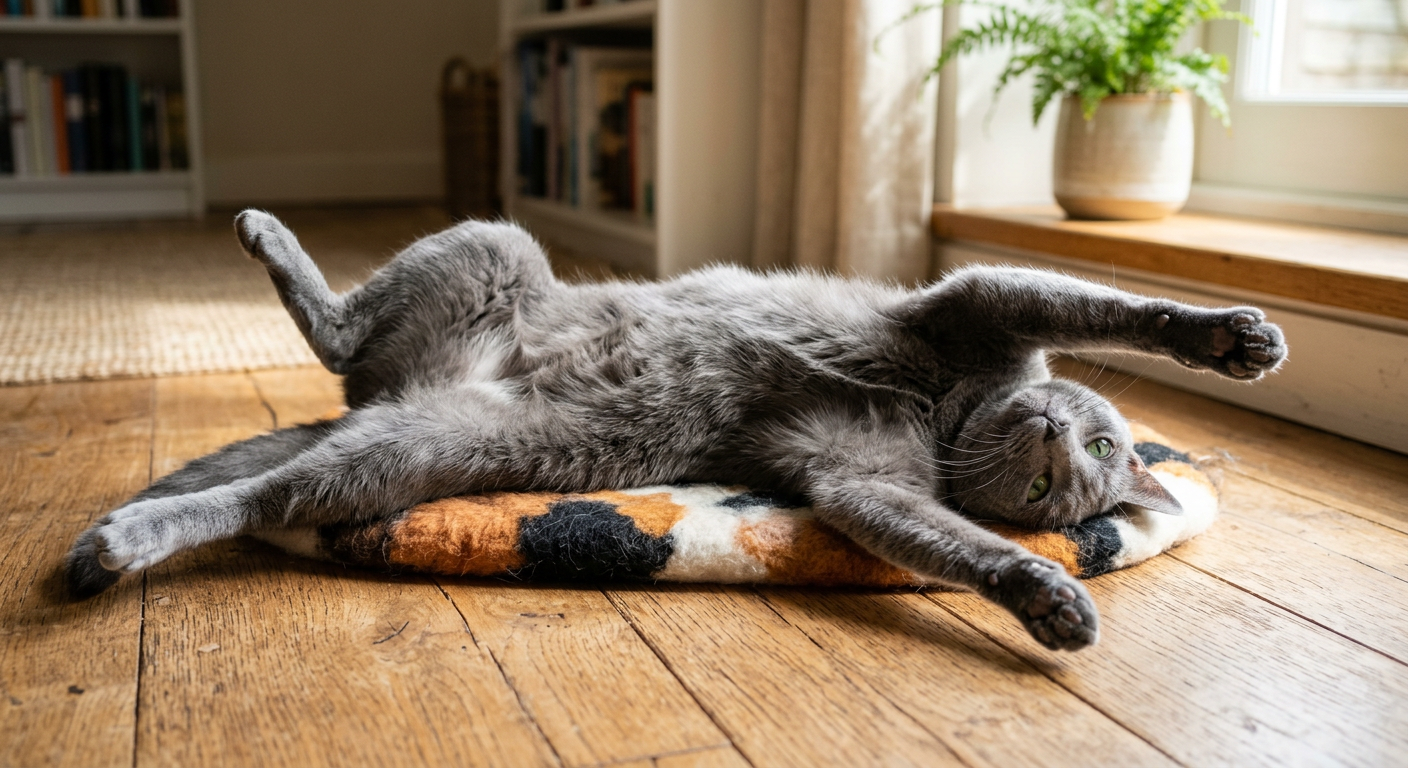
It is one of the most endearing scenes a pet parent can experience: your feline companion rolls onto their back, exposing a soft, fluffy underside. Naturally, you reach down to offer a gentle pat, only to have your hand immediately seized by four sets of claws and a pair of playful teeth. If you have ever wondered, "why does my cat show its belly then grab my hand," you are certainly not alone in this confusing encounter.
This sequence of events often feels like a "trap," but in the world of feline communication, it is a complex interaction involving trust, instinct, and play. Understanding these mixed signals can help you build a stronger bond with your cat and avoid those unexpected scratches during cuddle time.
The Belly as a Sign of Ultimate Trust
When a cat exposes their stomach, they are showing you their most vulnerable area. In the wild, the abdomen houses all the vital organs, and a cat would never expose this area to a predator or someone they didn't trust. By rolling over, your cat is communicating that they feel safe and secure in your presence.
However, it is important to distinguish between a "trust display" and an "invitation to touch." For many cats, showing the belly is a greeting rather than a request for a belly rub. Unlike dogs, who often roll over specifically for scratches, cats use this posture as a way to say, "I feel relaxed around you."
The Defensive Posture Myth
In some contexts, a cat on its back is actually preparing for a defensive maneuver. By being on their back, they have all four paws—and their sharp claws—available to defend themselves if needed. While this usually isn't the case in a cozy living room, it explains why the physical reaction to being touched there is so fast and instinctive.
Why Your Hand Becomes a Target
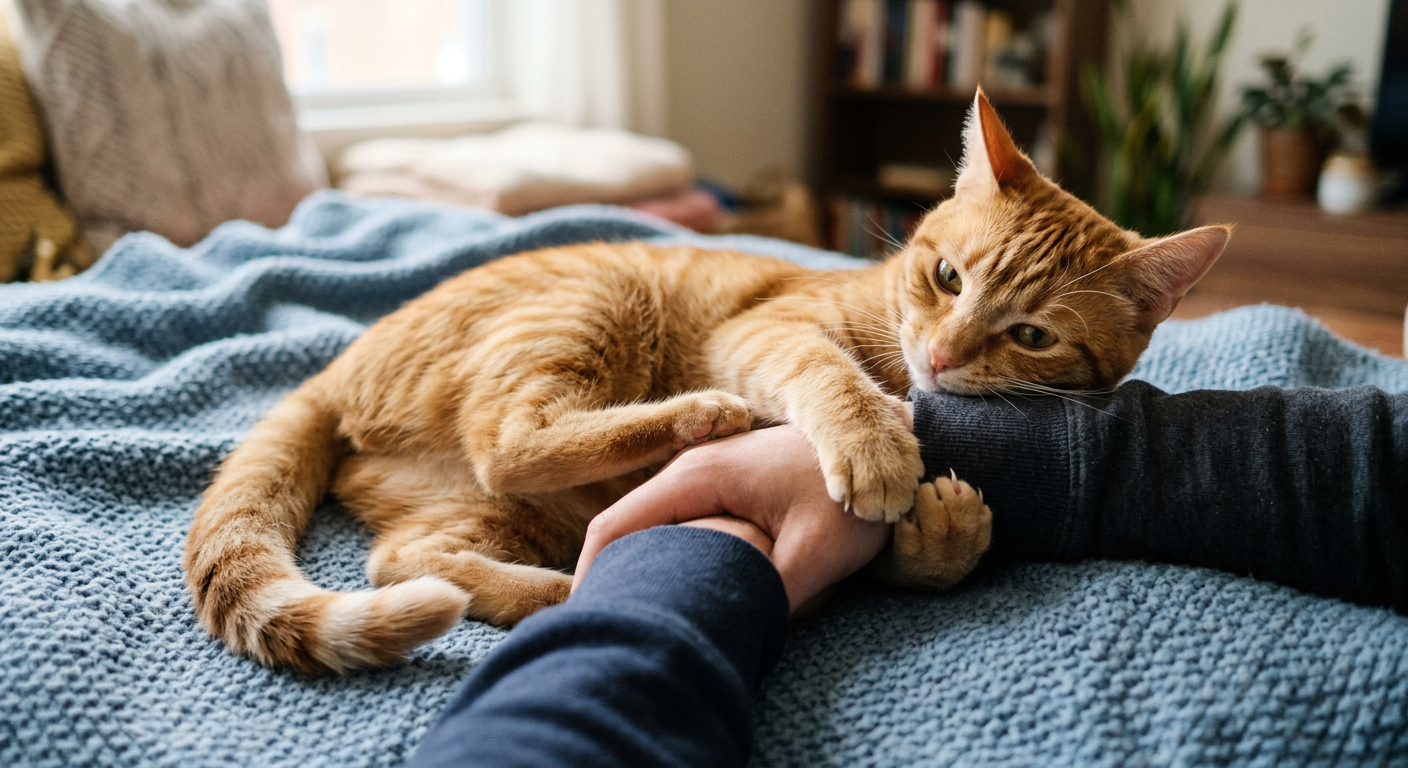
The moment you reach out and your cat grabs your hand, a few different things could be happening. Most commonly, the physical sensation of being touched on the stomach triggers a reflexive predatory response. Even the most pampered house cat retains the instincts of a hunter, and a hand moving toward their midsection can look a lot like prey or a playmate.
This behavior, often called "play aggression" or "bunny kicking," is how kittens learn to hunt and defend themselves. When your cat wraps their paws around your wrist, they are engaging in a natural motor pattern that involves capturing and "disabling" a target. It is rarely meant to cause harm, but their skin-to-claw contact can certainly be uncomfortable for us.
Overstimulation and Sensitivity
Cats have highly sensitive hair follicles on their undersides. While a few pets might feel good, the sensation can quickly become overwhelming or even painful for them. This is known as overstimulation. When the threshold is reached, the cat grabs your hand as a way to say, "That’s enough for now."
You can learn more about these subtle shifts in mood by reading about decoding your cat's behavior to spot the warning signs before the grab happens. Look for flickering tails or ears that start to rotate sideways.
The Difference Between Play and Aggression
It can be difficult to tell if your cat is genuinely annoyed or just having fun. In most cases where a cat shows their belly then grabs your hand, the intention is playful. If their ears are forward, their movements are somewhat loose, and they aren't hissing, they likely view your hand as a wrestling partner.
On the other hand, if the grab is accompanied by growling, flattened ears, or intense biting, the cat may be feeling fearful or defensive. Proactive care involves recognizing these boundaries. If your cat seems genuinely stressed, it is best to consult a veterinarian to rule out any underlying sensitivity or pain in the abdominal area.
- Observe the tail: A slow wag usually means relaxation, while a sharp twitch signals rising tension.
- Watch the pupils: Dilated pupils during a belly rub often indicate the cat is entering "hunt mode."
- Listen for vocalizations: Silence or soft chirps are good; low growls are a sign to stop immediately.
How to Respond to the Belly Trap
If your cat has already grabbed your hand, the best thing to do is stay still. Pulling away quickly mimics the movement of fleeing prey, which will only cause the cat to tighten their grip and kick harder. Instead, relax your hand and wait for them to let go, then calmly redirect their attention to a toy.
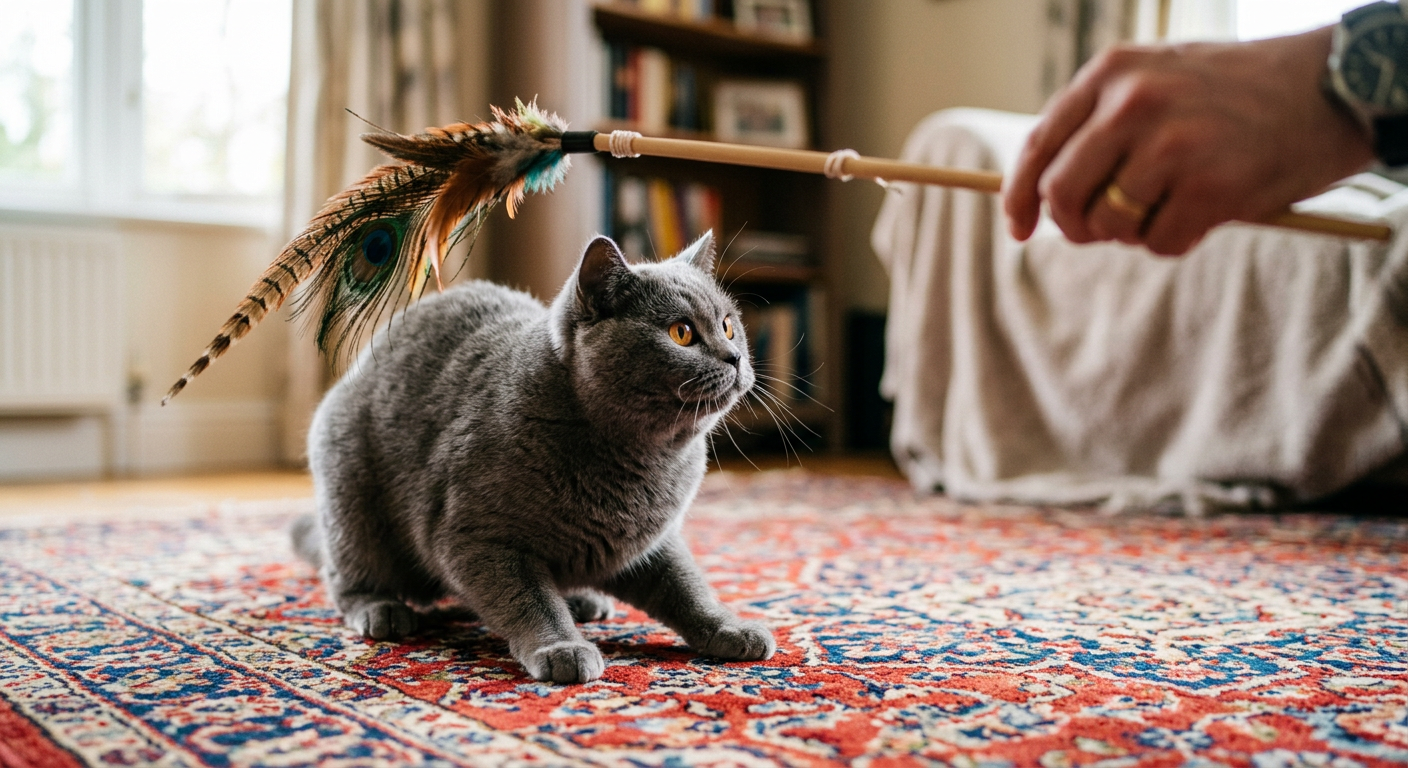
To prevent this from happening, try redirection before you reach for the belly. Use a wand toy or a "kicker" toy that they can safely grab and bunny-kick to their heart's content. This allows them to express their natural hunting instincts without using your skin as a scratching post.
For those interested in how cats communicate in other ways, understanding the meaning behind slow blinks can help you offer a non-physical way to show affection that doesn't result in a hand-grab.
Bonding Without the Scratches
Understanding "why does my cat show its belly then grab my hand" helps shift the perspective from a "mean" cat to a "misunderstood" one. You can still enjoy these moments by focusing your affection on areas cats generally prefer, such as the chin, cheeks, and behind the ears. When they show you their belly, acknowledge the compliment with a soft word or a slow blink rather than a reach.
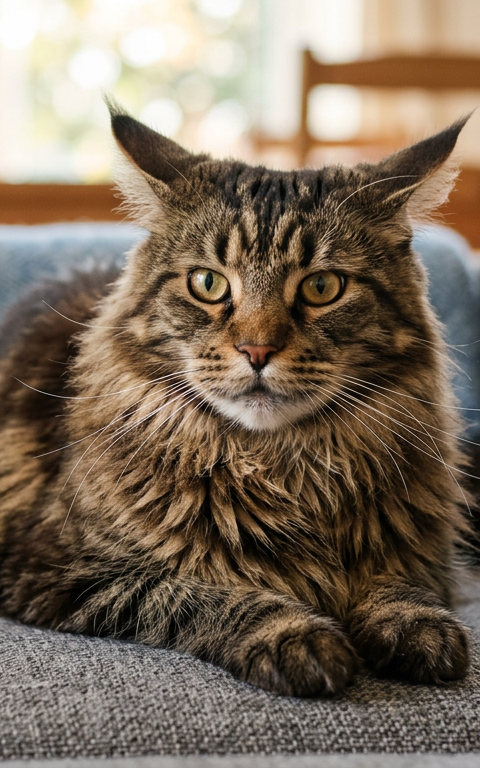
Every cat has a unique personality. While a Maine Coon might be more laid back, a smaller, high-energy breed might be more prone to these sudden bursts of play. Respecting their personal space and physical boundaries is the best way to ensure your relationship remains filled with trust and joy.
Summary of Feline Belly Logic
In summary, the belly roll is a beautiful sign of comfort and trust. When your cat grabs your hand, they aren't trying to be difficult; they are simply reacting to high-intensity stimulation or expressing a natural play drive. By learning to read their body language and responding with patience, you can navigate these interactions safely.
If you find that your cat's behavior changes suddenly or they become uncharacteristically aggressive when touched, a wellness visit with your veterinarian is always a wise step to ensure they are feeling their best. Understanding your cat's unique language is a lifelong journey that makes the bond between human and feline truly special.