Creating a beautiful indoor garden often brings a sense of peace to a home, but for feline owners, it requires a careful eye. Understanding cat-safe plants and home hazards is the first step in ensuring your living environment remains both stylish and secure for your curious companions. Cats are natural explorers who often use their mouths to investigate new textures, making plant choice a vital part of proactive pet parenting.
While many common houseplants are harmless, others can cause mild to severe digestive upset or systemic wellness concerns. By choosing the right greenery, you can satisfy your cat's jungle instincts without compromising their health. This guide will help you navigate the world of pet-friendly flora and identify common household items that might require a bit of extra caution.
Common Cat-Safe Plants for Your Home
The good news for plant lovers is that many of the trendiest indoor species are perfectly safe for cats. You don't have to choose between a verdant home and a happy pet. Selecting non-toxic varieties allows your cat to sniff and brush against foliage safely.
Spider Plants and Ferns
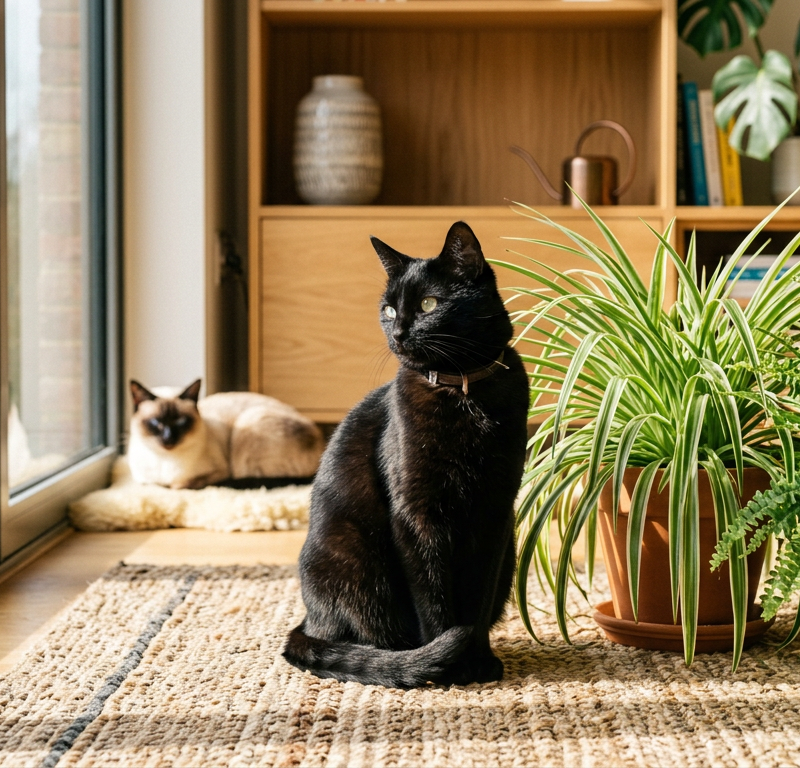
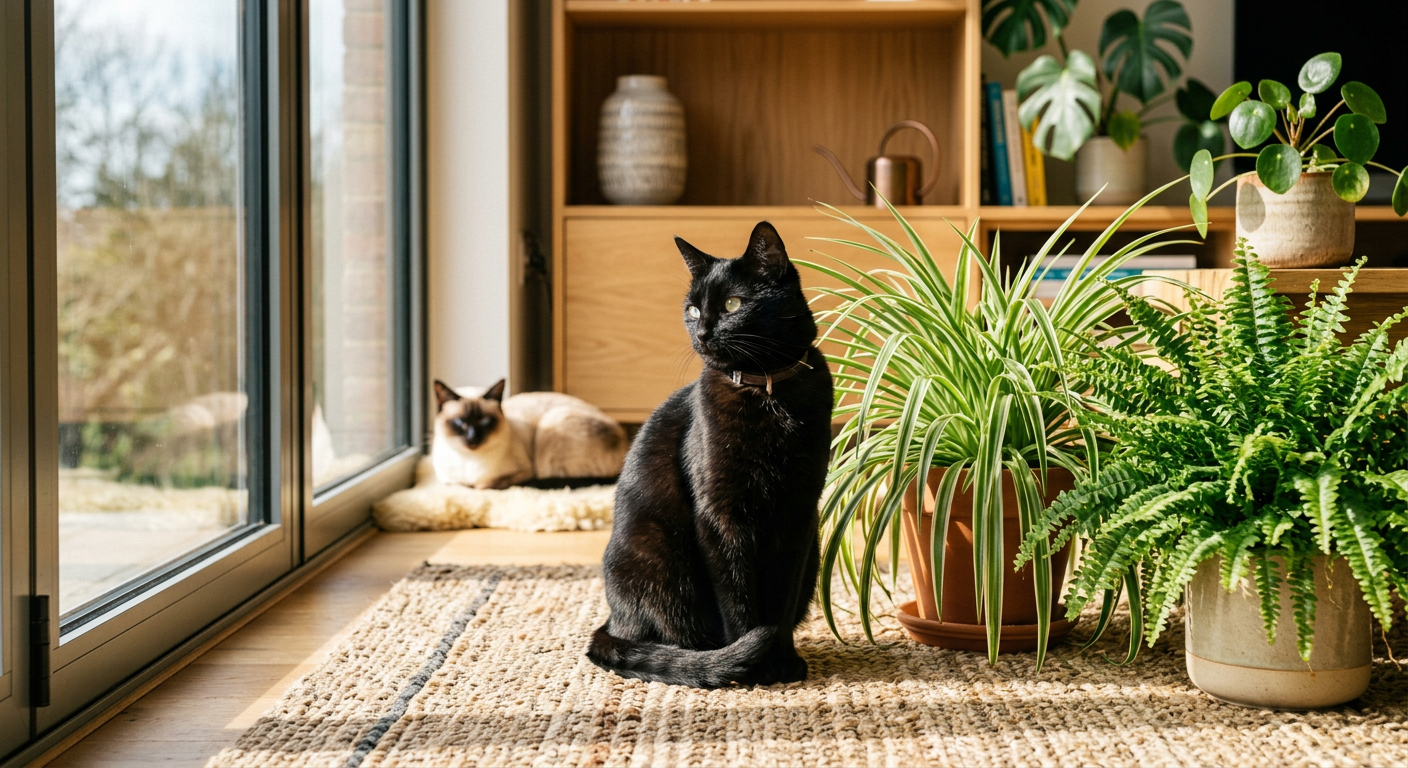
The Spider Plant (Chlorophytum comosum) is a classic favorite because it is incredibly hardy and safe for felines. Interestingly, some cats find the dangling plantlets irresistible to swat at, almost like a natural toy. If you notice your cat nibbling the leaves, don't worry—it is non-toxic, though it may have a mild hallucinogenic effect for some cats, similar to catnip.
True ferns, such as the Boston Fern or Kimberly Queen Fern, are also excellent pet-friendly choices. Be careful not to confuse these with "Asparagus Ferns," which are not actually true ferns and can be irritating to pets. Check out our cat care essentials guide for more tips on setting up a pet-friendly environment.
Safe Succulents and Palms
If you prefer the look of desert plants, Echeveria and Haworthia are safe succulent options. These add wonderful texture to a bookshelf or windowsill without posing a risk. Avoid Kalanchoe or Aloe Vera, as these can cause stomach upset if ingested by your feline friend.
For those looking to add height, the Parlor Palm or Areca Palm are fantastic cat-safe alternatives to more dangerous options like the Sago Palm. These palms provide a lush, tropical feel while keeping your home's air clean and your cat's tummy settled.
Identifying Common Potentially Harmful Household Plants
Being aware of which plants to avoid is just as important as knowing which ones to buy. Some of the most beautiful flowers are unfortunately the most problematic for cats. Recognizing these "red flag" plants can help you make safer choices at the nursery or florist.
- Lilies: True lilies (like Easter and Stargazer lilies) are extremely high-risk for cats. Even a small amount of pollen can be a significant wellness consideration.
- Sago Palms: These are common in landscaping and indoor pots but contain toxins that are very difficult for a cat's system to process.
- Tulips and Hyacinths: The bulbs of these spring favorites are the most concentrated source of irritants.
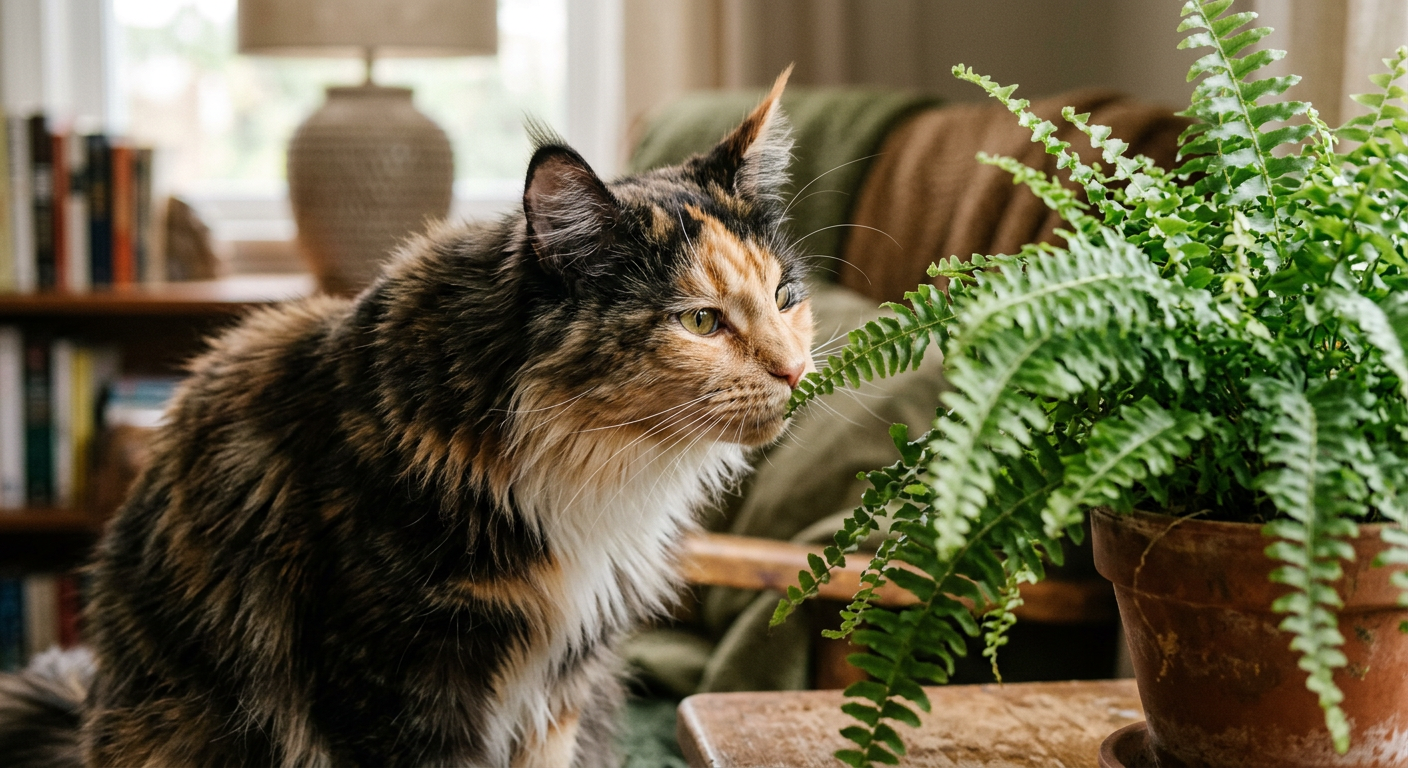
- Pothos and Philodendron: While popular for their trailing vines, these contain insoluble calcium oxalates which can cause mouth irritation and drooling.
If you have a Maine Coon or another large breed, their higher reach means you may need to reconsider hanging plants that might otherwise be out of a smaller cat's way. Always check the scientific name of a plant before bringing it home, as common names can be misleading.
Non-Plant Home Hazards to Monitor
Beyond the greenery, our homes contain various everyday items that curios cats might find interesting. Part of understanding cat-safe plants and home hazards involves looking at our cleaning supplies, decorations, and even our snacks. A proactive approach involves keeping these items in secure cabinets or out of reach.
Essential Oils and Fragrances
Many people use diffusers to make their homes smell lovely, but certain essential oils can be sensitive for a cat's respiratory system and skin. Oils like tea tree, peppermint, and citrus are best avoided in high concentrations around felines. Always ensure the room is well-ventilated if you are using scents.
Human Foods and Kitchen Snares
While we might want to share a treat, many human foods are not suitable for cats. Grapes, raisins, onions, and chocolate are the most common kitchen hazards. Additionally, small items like rubber bands, hair ties, and dental floss can be tempting "toys" that may lead to digestive blockages if swallowed.
Household Cleaners and Chemicals
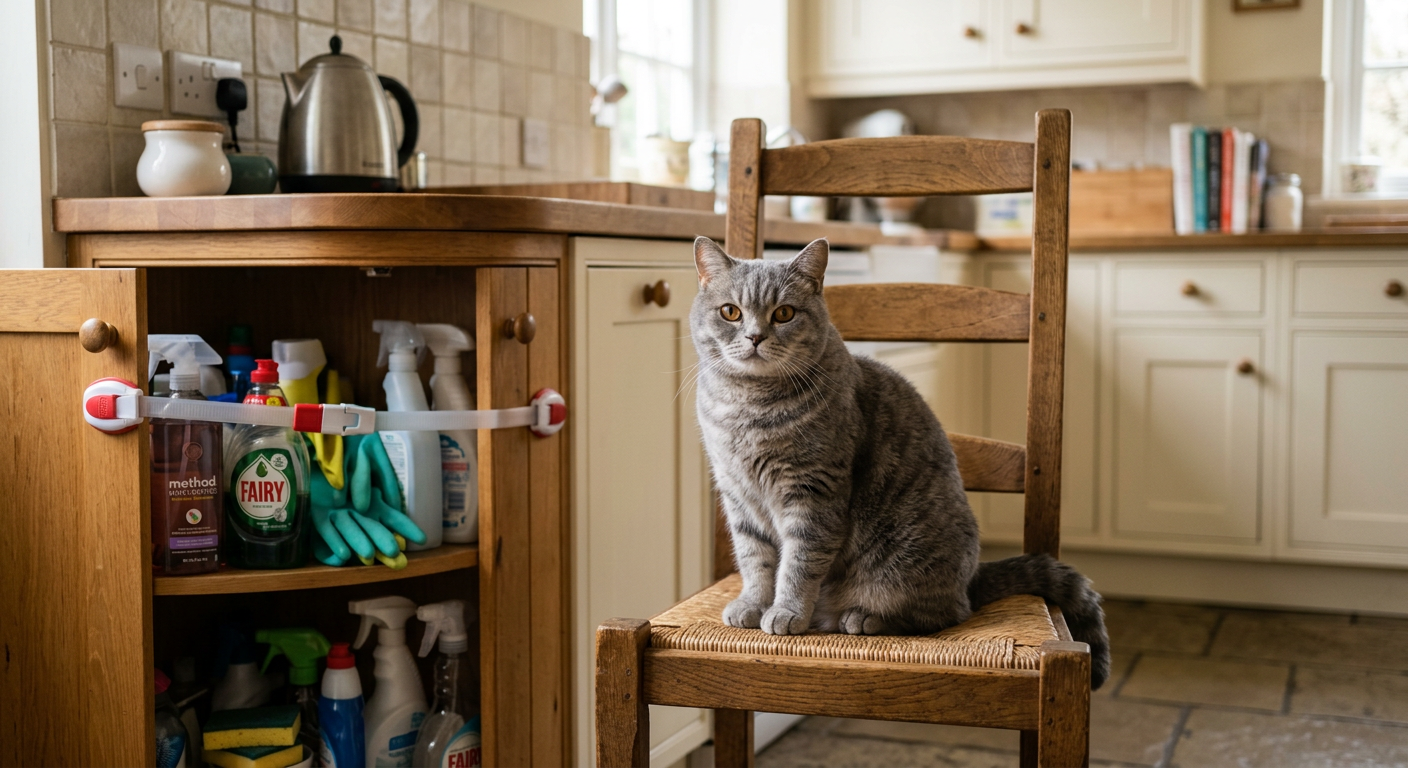
Standard floor cleaners and laundry pods can be problematic if a cat walks on a wet surface and then licks their paws. Opting for pet-safe cleaning products is a great way to maintain a tidy home while keeping your cat comfortable. If you are introducing a new pet to the family, our multi-cat household harmony tips can help you organize your home for multiple feline residents safely.
Creating a Safe Indoor Sanctuary
One of the best ways to keep your cat away from your prize-winning orchids is to provide them with their own "cat garden." Planting a small pot of wheatgrass, often sold as "cat grass," gives them a safe outlet for their chewing instincts. This can distract them from your other decorative plants and provide them with helpful fiber.
You can also use vertical space to your advantage. Placing your non-pet-friendly plants on high floating shelves or in hanging baskets makes them less accessible. However, remember that many cats are excellent jumpers, so "out of sight" is usually safer than just "up high."
Grooming as a Safety Measure
Keeping your cat well-groomed can actually help reduce the risks associated with household hazards. Regular brushing removes loose fur that might otherwise trap pollen from flowers or dust from household cleaners. For more on this, visit our cat grooming essentials guide to learn about the best tools for your pet's coat type.
What to Do if Your Cat Ingests Something Uncertain
Even with the best preparation, accidents can happen. If you suspect your cat has nibbled on a questionable plant or gotten into a household cabinet, stay calm. Immediate action and professional advice are your best tools in these situations.
Keep the number of your local veterinarian and a pet poison helpline posted on your refrigerator. If possible, take a photo of the plant or product label to help the professional identify the substance. Never try to make your cat throw up at home unless specifically instructed to do so by a medical professional, as some substances can cause more harm on the way back up.
Watch for signs like lethargy, changes in appetite, or unusual hiding behavior. These are often the first indicators that something in their environment has disagreed with them. By staying observant, you can ensure your cat receives the help they need quickly.
Conclusion
Balancing a love for interior design with the needs of a pet is entirely possible with a little research. By focusing on cat-safe plants and home hazards, you create a sanctuary where both your greenery and your feline friend can thrive. Remember that every cat is an individual—some may ignore plants entirely, while others are persistent nibblers.
Whether you are raising a British Shorthair or a playful Siamese, their safety depends on the environment you curate. Choose non-toxic plants like the Spider Plant, keep cleaners tucked away, and always consult a veterinarian if you have concerns about your pet’s wellness. A safe home is a happy home for everyone involved.