Why Does My Dog Sleep with Eyes Partly Open at Night
November 9, 2026
6 min read
Understanding Sleep Patterns in Dogs
Finding your canine companion resting with their eyelids slightly parted can be a surprising sight. You might wonder, why does my dog sleep with eyes partly open at night? In most cases, this is a completely normal physiological occurrence related to how dogs experience rest and protection.
The canine sleep cycle is quite different from our own, involving various stages that allow their bodies to recover. When a dog enters deep sleep, their muscles relax significantly, which can cause the eyelids to droop or remain partially open. This physical relaxation is often accompanied by the presence of a special anatomical feature called the nictitating membrane.
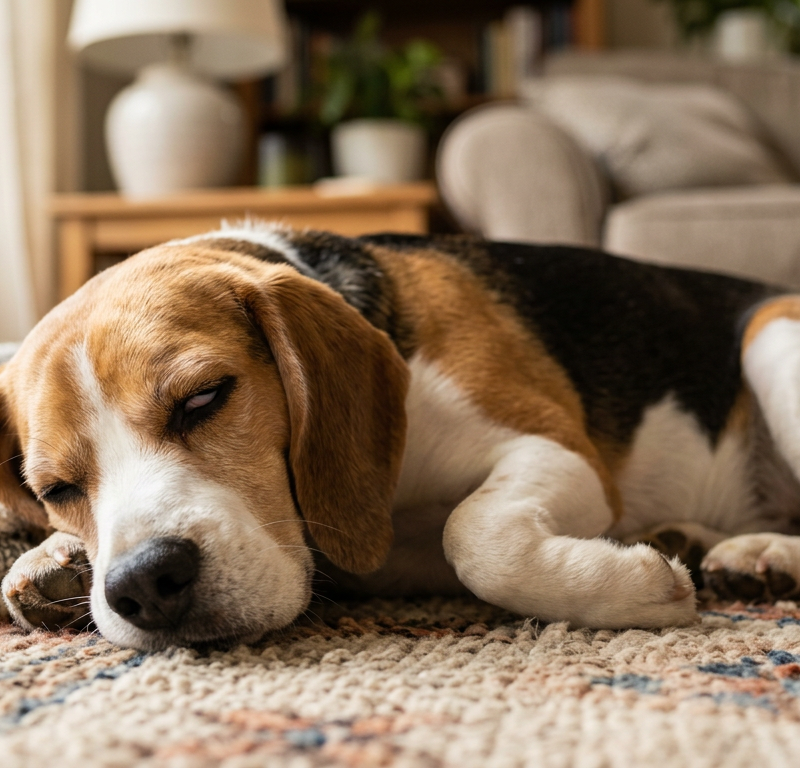
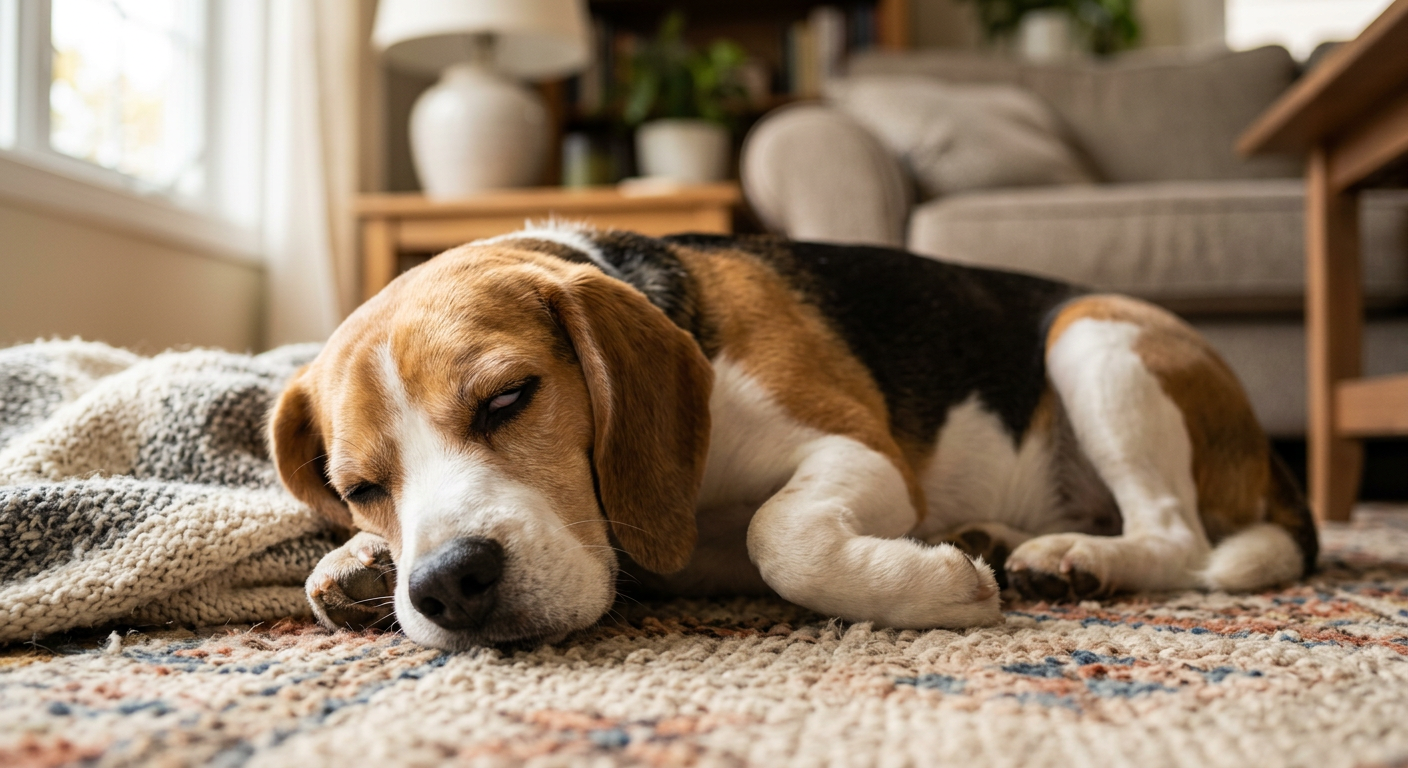
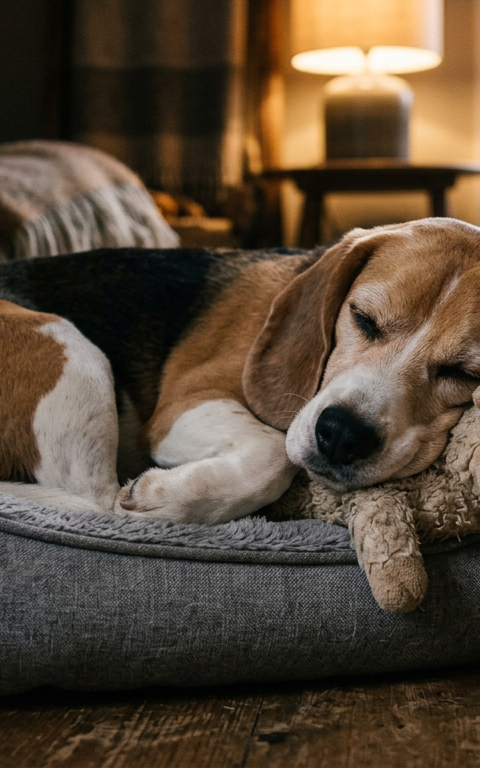
A Beagle sleeping soundly on a rug with its eyes slightly open showing the third eyelid.
The Role of the Third Eyelid
One reason it looks like your pet is staring while asleep is the nictitating membrane, or the third eyelid. This thin, opaque tissue moves horizontally across the eye to provide protection and moisture. When your dog is in a deep slumber, this membrane often closes while the outer lids remain slightly apart, giving the appearance of an "open" eye.
If you notice a whitish or pinkish film covering the eye during rest, you are likely seeing this protective layer in action. This is a sign of a healthy, functioning ocular system. To learn more about how aging affects these behaviors, you might explore our guide on old dog waking up confused at night.
The Biological Purpose of Open Eye Sleeping
From an evolutionary standpoint, dogs are both predators and, in the wild, potential prey. Sleeping with eyes cracked open serves as a biological survival mechanism. It allows the dog to detect sudden movements or changes in light even while they are resting.
This "sentinel" behavior is common in many mammals. While your pampered pet is safe in your living room, their instincts still tell them to stay somewhat alert to their surroundings. This state of semi-awareness helps them transition from sleep to action much faster than humans can.
REM Sleep and Eye Movement
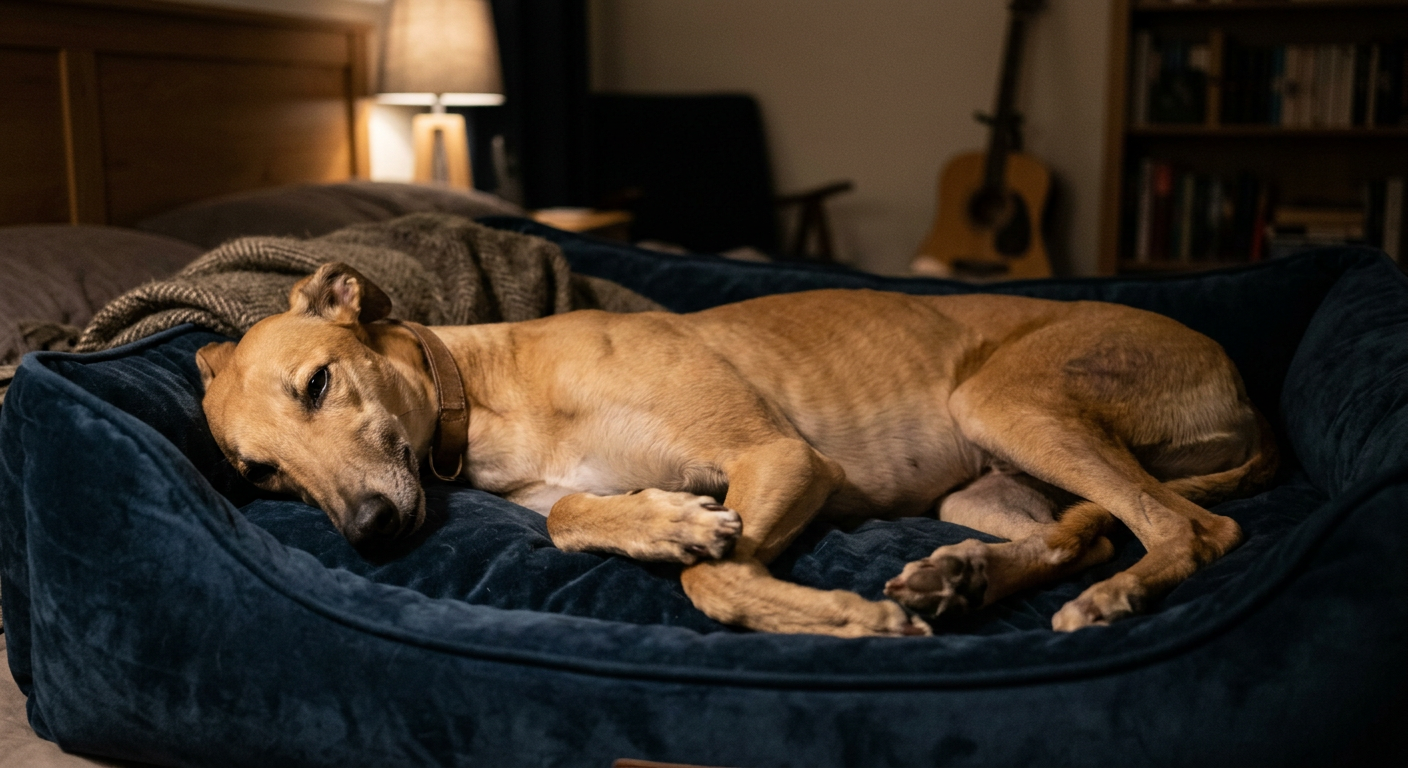
During the Rapid Eye Movement (REM) stage of sleep, dogs often experience vivid dreams. You might see their eyes twitching or rolling behind partially closed lids. This is often the time you will also notice muffled barks, whimpering, or "running" paws.
When your dog sleeps with their eyes slightly open during REM, it is a sign that they are processing the day's events. Their brain is highly active even though their body is in a state of temporary paralysis to prevent them from acting out their dreams.
A Greyhound twitching in its sleep with eyes partially open on a dog bed.
When to Consider Wellness Support
While occasional open-eye sleeping is normal, there are times when it might warrant a proactive conversation with your veterinarian. If the eyes appear excessively dry, red, or if there is a thick discharge, your pet may be experiencing lagophthalmos, a condition where the eyelids cannot close fully.
Checking for Eye Health
Keep an eye out for these signs during their waking hours:
Frequent pawing or rubbing at the eyes.
Excessive blinking or squinting.
Cloudiness in the cornea.
Increased redness in the white parts of the eye.
If you have a breed prone to prominent eyes, such as a French Bulldog, they may be more likely to show this behavior due to their facial structure. Brachycephalic breeds often have shallow eye sockets, which can make it physically harder for the lids to cover the entire eye during deep relaxation.
Environmental Factors at Night
The environment in your home can influence how deeply your dog sleeps and how their body reacts. Dry air from heaters during the winter can sometimes cause the eyes to stay slightly more open as the skin loses some elasticity. Using a humidifier can help keep your dog’s eyes and respiratory system comfortable.
Light levels also play a role. If there is a bright nightlight or streetlamp shining into the room, your dog might not fall into a sleep deep enough for full muscle relaxation, or conversely, their instincts might keep them in that "alert" partially-open state longer. For more on late-night activities, check out our post on a dog pacing the house at 2am suddenly.
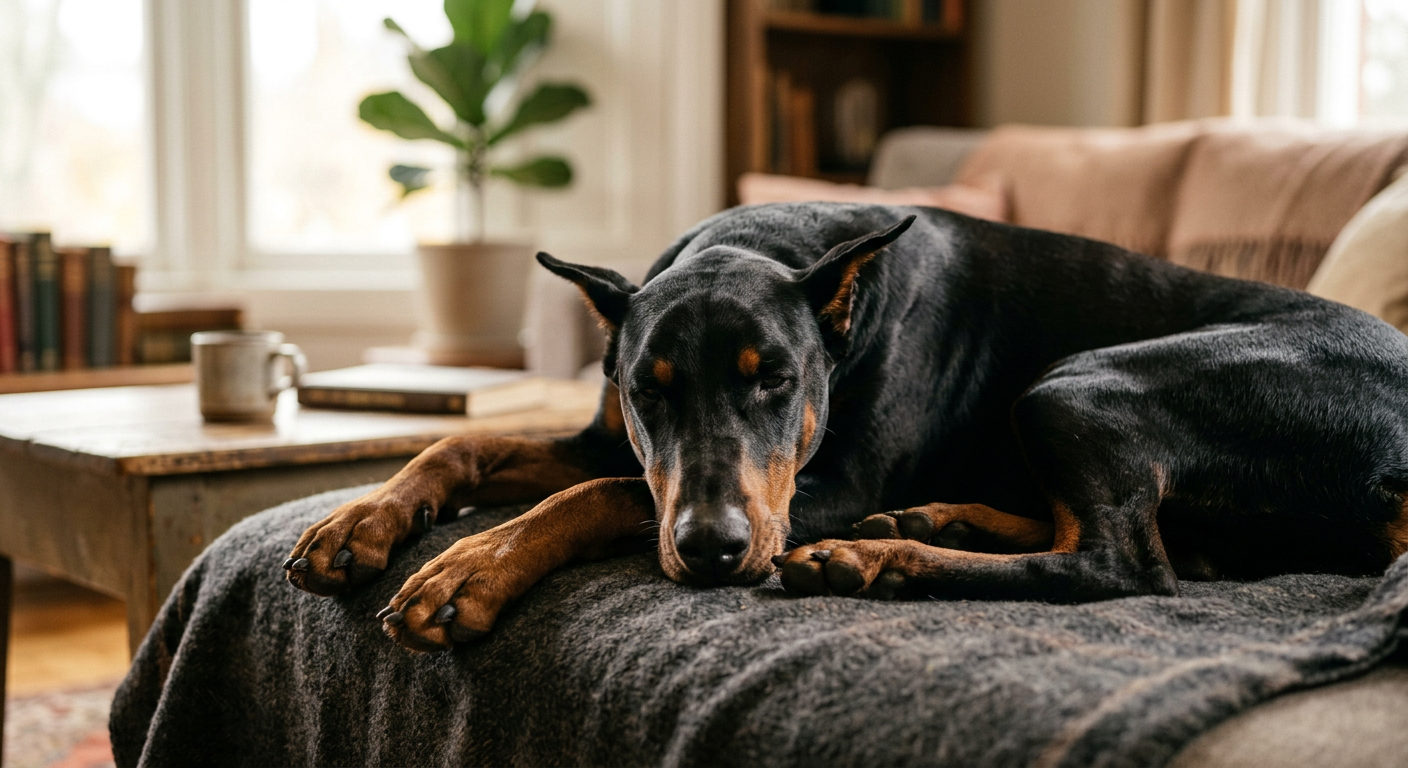
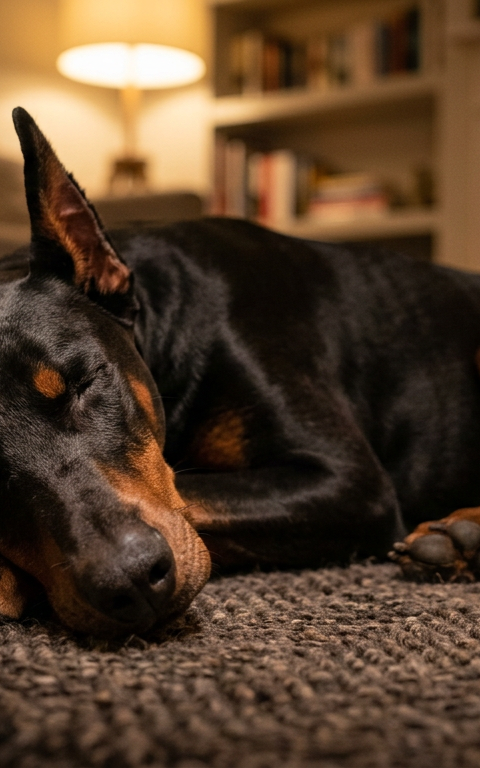
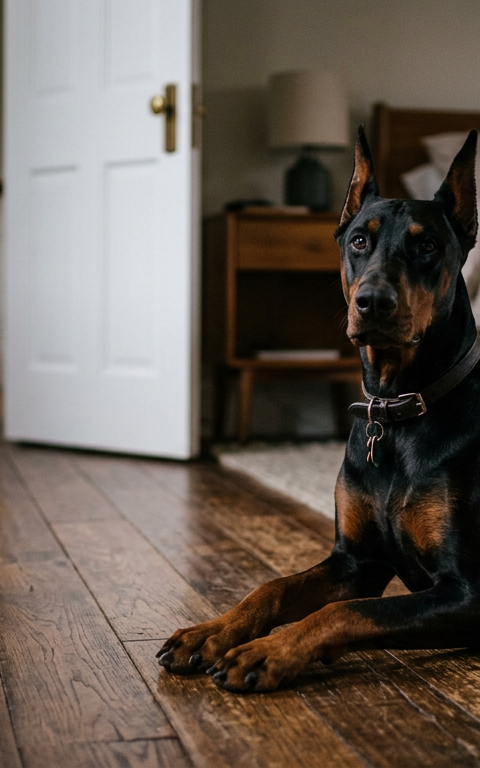
A Doberman Pinscher resting its head on its paws with eyes half-open.
Comparing Breed Tendencies
Different breeds exhibit different sleep styles. For example, if you compare a Beagle and a Poodle, you might find the hound breed more prone to "active" sleep with eyes open due to their high prey drive and sensory awareness. Larger breeds like the Great Dane also tend to sleep very deeply, leading to significant muscle relaxation that leaves the eyes slightly ajar.
Distinguishing Sleep from Seizures
A common concern for pet parents is whether the eye twitching and open-eye sleeping are signs of a seizure. Generally, a sleeping dog can be gently woken up by saying their name or a soft touch. Once awake, they should be alert and recognize you, even if they are a bit groggy.
A seizure usually involves stiffening of the limbs, foaming at the mouth, or a lack of awareness even after the event ends. If you are ever unsure, capturing a quick video of the behavior to show your vet is a great way to ensure your dog is staying healthy. Most of the time, that "creepy" staring is just a sign of a very good nap.
Conclusion
In summary, why does my dog sleep with eyes partly open at night is usually answered by a combination of deep muscle relaxation, the presence of the third eyelid, and ancient survival instincts. As long as the eyes look healthy and your dog is acting normally during the day, there is usually no cause for concern.
If you find yourself worrying about your pet's evening antics, remember that every dog has unique quirks. Whether they are dreaming of chasing squirrels or just resting their weary paws, their sleeping habits are a window into their fascinating biology. For more tips on nocturnal habits, read about why dogs act strange at night to better understand your furry friend's needs.
Frequently Asked Questions
Yes, it is common for dogs to sleep with their eyes cracked open due to muscle relaxation during deep REM sleep or their natural instinct to stay alert.
The third eyelid, or nictitating membrane, often slides across the eye during sleep to provide moisture and protection, even if the outer lids are open.
If your dog's eyes look red, inflamed, or have discharge, or if they seem unable to close their eyes while awake, consult your veterinarian to rule out dryness or infection.
We're passionate pet lovers and AI enthusiasts dedicated to helping you understand your furry friends better through the power of artificial intelligence.
AI Analysis
Free!
AI-Powered Pet Analysis
Understand Your Pet's Emotions
Our AI analyzes photos and videos to reveal what your pet is really feeling.