Watching two dogs interact at a park is a fascinating display of non-verbal communication. Among the most iconic moves in their repertoire is the play bow, a joyful gesture where a dog lowers their front end while keeping their rear high in the air. Understanding play bows and invitations is essential for any pet parent who wants to ensure their dog’s social interactions remain positive and balanced.
This gesture serves as a "meta-communication," essentially telling the other dog that everything following it is just fun and games. In this guide, we will break down the mechanics of the bow, how it differs from other postures, and how you can use this knowledge to foster better play sessions for your furry friend.
The Mechanics of the Canine Play Bow
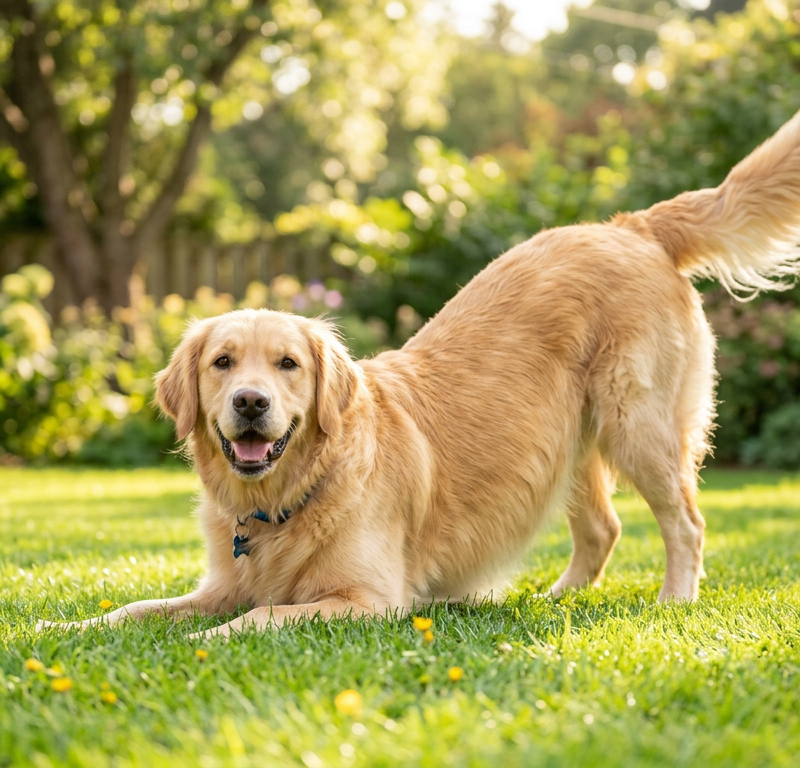
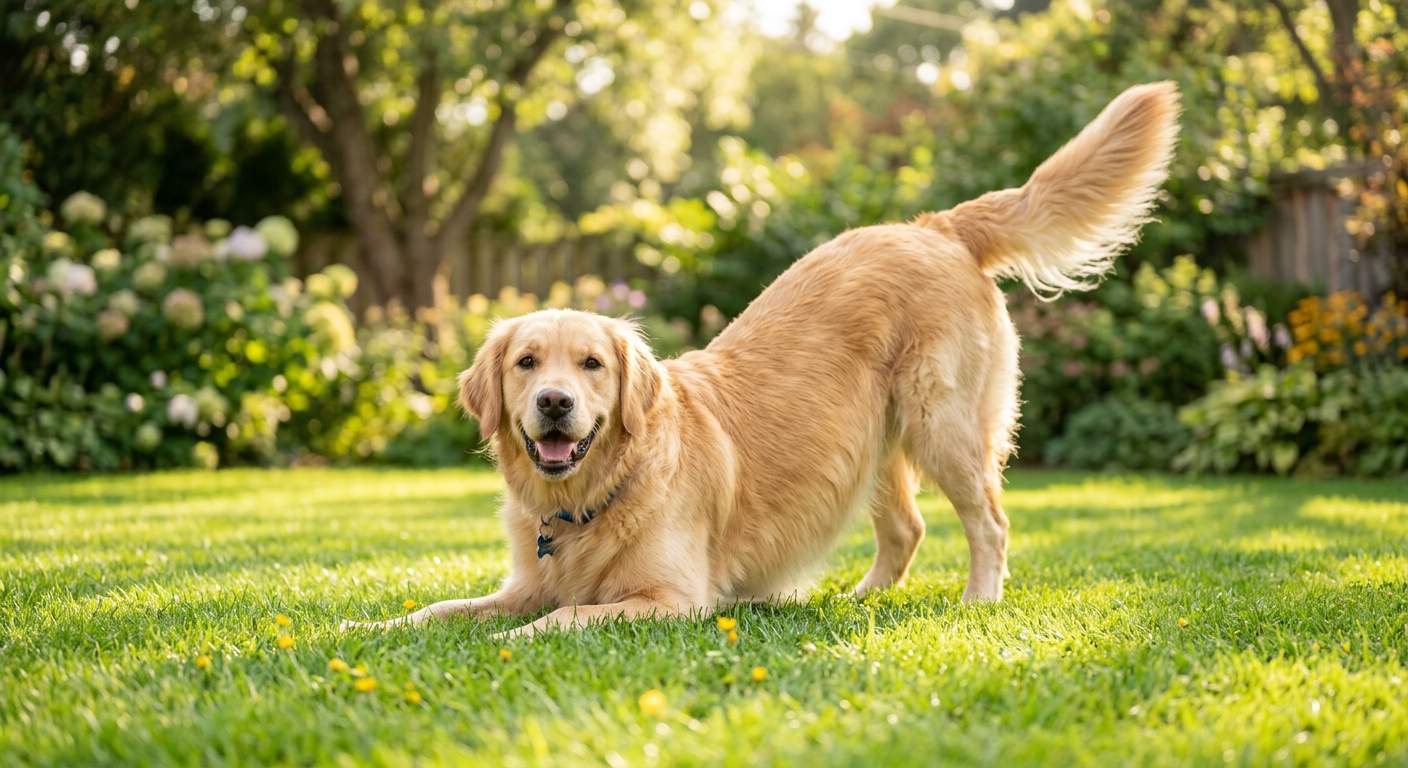
The classic play bow is easily recognizable. Your dog will drop their elbows to the ground, extend their front paws forward, and keep their hindquarters elevated. Often, this is accompanied by a wagging tail, a "soft" facial expression, and perhaps a playful bark or a bouncy movement.
Biologically, this position puts the dog in a "ready" state. They can spring forward to chase or dodge away if their partner lunges. It is a highly athletic stance that facilitates the quick turns and stops common in canine wrestling and tag. Learn more about the foundations of these movements in our complete guide to dog body language.
Why Dogs Use the Play Bow
Dogs use the bow to clarify their intentions. Since canine play often mimics hunting or fighting—featuring growls, nips, and pouncing—the bow acts as a disclaimer. It signals that the "attack" about to happen is not a real threat, but a friendly invitation to engage.
This signal is vital for maintaining peace. If a game of chase gets a little too intense, one dog may pause and offer a bow to reset the mood. It’s a way of saying, "We’re still having fun, right?" This helps prevent misunderstandings that could lead to tension or defensive behavior.
Recognizing Other Play Invitations
While the play bow is the most famous, it isn't the only way dogs invite one another to interact. Understanding play bows and invitations means looking at the "whole dog," from the tip of the nose to the base of the tail. Many dogs use a combination of several gestures to start a game.
For example, "bouncy" movements are a common invitation. Instead of walking in a straight, utilitarian line, a dog ready for play will move with a light, inefficient gait. They might hop, skip, or circle their intended playmate with exaggerated movements that show they are relaxed and energized.
The "Play Face"
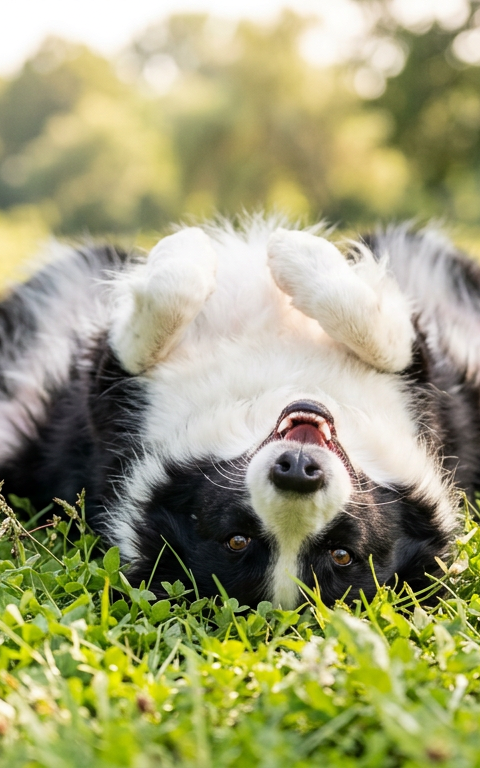
Keep an eye out for the "play face," which often accompanies a bow. This involves a relaxed, open mouth with the tongue slightly out and soft, squinty eyes. It looks remarkably like a human smile. This facial cue is a strong indicator that the dog’s intentions are pure and social.
Contrast this with a stiff, closed mouth or a hard stare, which usually indicates a need for space. If you are comparing how different breeds express this, you might notice varying facial structures. For instance, comparing the Golden Retriever vs Labrador Retriever often shows how social breeds utilize these open expressions frequently.
The Paw Flick and "Teasing"
Some dogs prefer a more direct approach to invitations. A dog might approach another and "flick" a paw toward them or gently nudge them with their nose before darting away. This is the canine equivalent of a game of "tag, you're it." It is a proactive invitation used to initiate a chase.
Distinguishing the Play Bow from Other Behaviors
While the play bow is generally a sign of excitement, it is important to distinguish it from a "stretch" or a "predatory posture." Context is everything in the world of canine communication. Learning the nuances helps you become a better advocate for your dog's wellness.
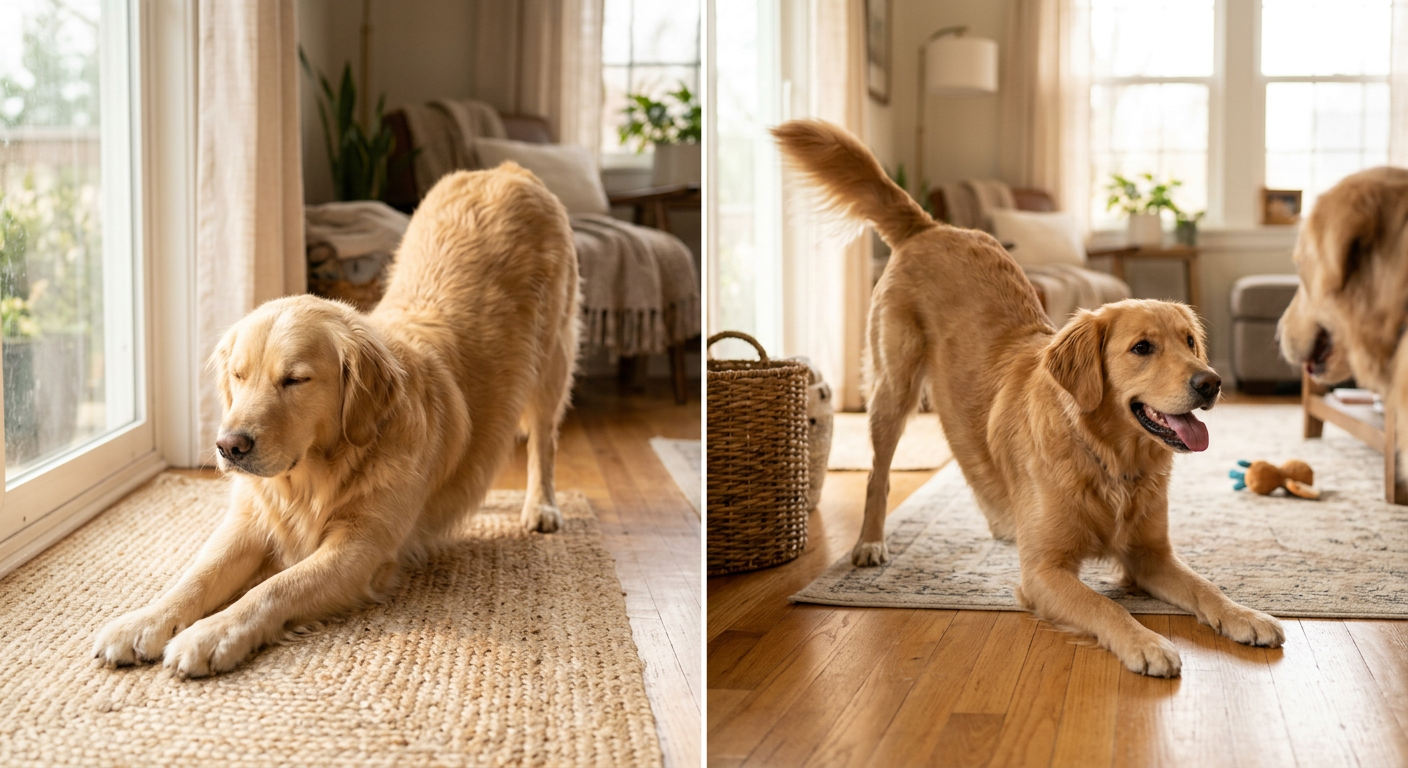
A morning stretch, often called a "yoga bow," looks similar but lacks the bouncy energy. During a stretch, the dog’s muscles are elongated, and they often hold the position for several seconds. In contrast, understanding play bows and invitations involves noticing the repetitive, jittery, and social nature of the movement.
The Downward-Facing Dog vs. Play Bow
When a dog is stretching, their tail is usually neutral or tucked, and their focus isn't necessarily on another individual. When they are bowing for play, their focus is locked on their partner, and their tail is often highly active. Check out our guide on decoding tail wags to see how the tail complements the bow.
Identifying Stiff Body Language
If a dog lowers their front end but holds their body very stiffly with a fixed stare, this may not be an invitation. Some dogs "stalk" before pouncing, which can be part of play, but if it is accompanied by a low, vibrating growl or pinned-back ears, it might be a sign that the dog is feeling over-aroused or cautious. Always consult a certified trainer if you are unsure about these subtle differences.
How Humans Can Use Play Bows
Did you know that you can participate in this language? Using your own version of a play bow can be a wonderful way to bond with your pet. By mimicking their natural invitations, you communicate on their level, which can increase their trust and engagement during training or fun time.
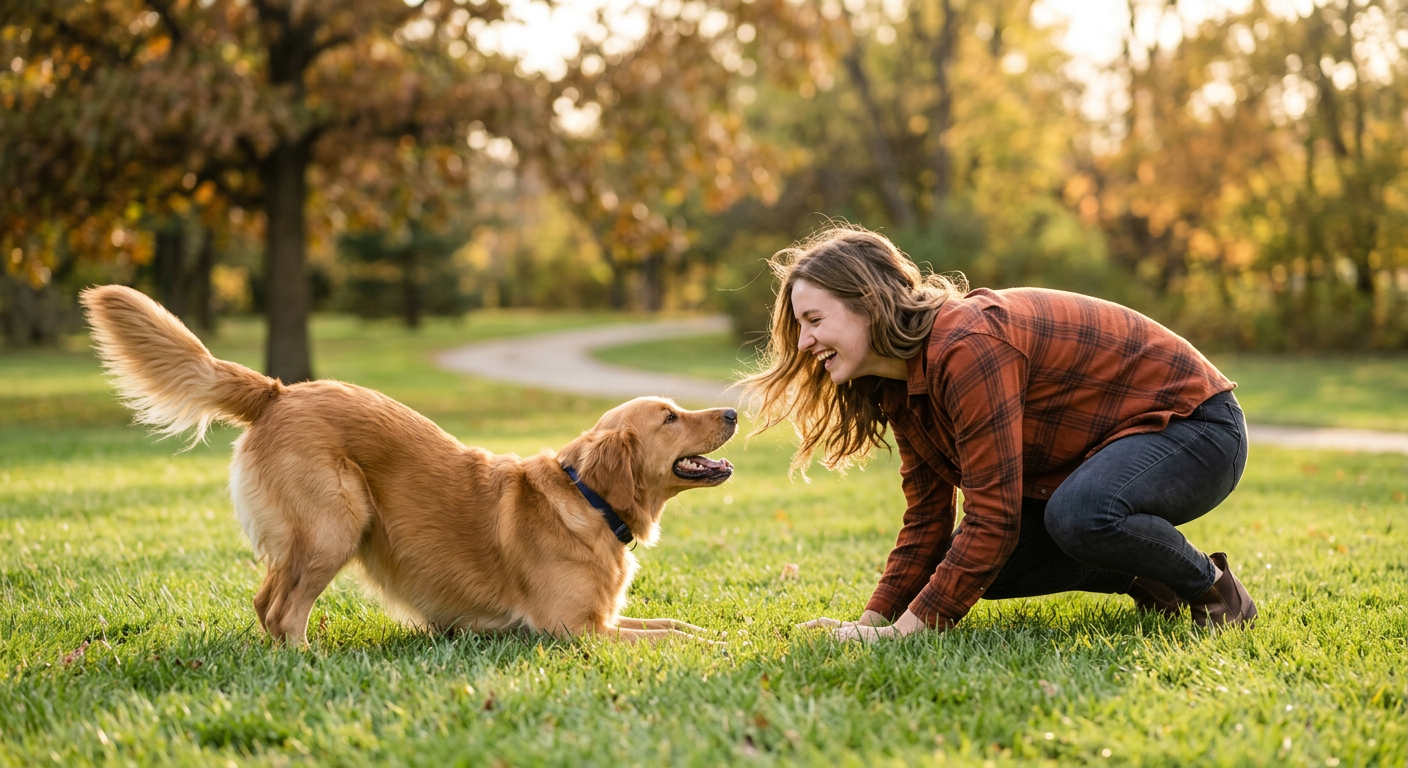
To "human bow," you can quickly drop your torso toward the ground or slap your hands lightly on your knees while taking a bouncy step back. Most dogs will immediately recognize this as an invitation to play. It’s a great way to start a session of hide-and-seek or indoor fetch.
Timing Your Invitations
Just like dogs, we should time our invitations appropriately. If your dog is tired, eating, or resting, it’s best to let them be. Understanding play bows and invitations means respecting the "no" as much as the "yes." If you offer a bow and your dog doesn't respond with excitement, they might just need a quiet nap instead.
As dogs age, their play style might change. A senior dog might still offer a "mini-bow" even if they can't jump around like they used to. Understanding the developmental stages of your pet is key. You can use our German Shepherd age calculator (or choose your dog's specific breed) to see where your dog is in their life cycle and adjust play intensity accordingly.
Monitoring Group Play Dynamics
In multi-dog environments like dog parks, understanding play bows and invitations becomes a safety tool. A healthy play session should involve a "give and take." You want to see both dogs offering bows, taking turns being the chaser, and pausing for self-handicapping.
Self-handicapping is when a larger or more skilled dog intentionally "weakens" their play style to accommodate a smaller or younger friend. They might roll onto their back or offer more play bows to ensure the other dog feels safe. If one dog is doing all the bowing and the other is not responding, it may be time to step in and give them a break.
When to Intervene
If the bouncy movements stop and the body language becomes linear and stiff, the play has likely shifted into something more serious. Watch for "mounting," excessive pinning, or yelping. A well-placed play bow can often de-escalate these moments, but as a pet parent, you should always be ready to redirect your dog if the invitations are being ignored.
Each breed has a slightly different "dialect." Some breeds, like the Siberian Husky, are very vocal during play, while others are more physical. Recognizing these breed-specific traits will help you interpret their invitations more accurately. Always keep a close eye on their ear positions to gauge their stress levels during social hours.
Conclusion
Understanding play bows and invitations is one of the most rewarding aspects of dog ownership. This simple gesture opens a window into your dog’s emotional world, revealing their desire for connection and joy. By recognizing the bow, the "play face," and the bouncy movements of a happy canine, you can ensure your dog stays socially confident.
Remember that every dog is an individual. While the patterns of play are universal, your dog has their own unique way of saying "Let’s have fun!" Keep observing, keep playing, and always prioritize your dog’s comfort and wellness by consulting a professional whenever you have concerns about their social behavior.