As a devoted pet parent, you likely feel a deep connection with your furry companion. However, because our canine friends communicate primarily through non-verbal cues, understanding your dog's body language is the essential bridge to building a truly harmonious relationship. By learning to decode the subtle signals in their ears, eyes, tails, and posture, you can better meet their needs and ensure they feel safe and supported in any environment.
Dogs are masters of communication, using every part of their body to express joy, curiosity, or a need for space. While we often rely on barking or whining to tell us how they feel, these vocalizations are usually the final step in a long chain of physical signals. This complete guide will walk you through the nuances of canine communication, helping you become a pro at reading your dog's mind.
The Foundations of Canine Communication
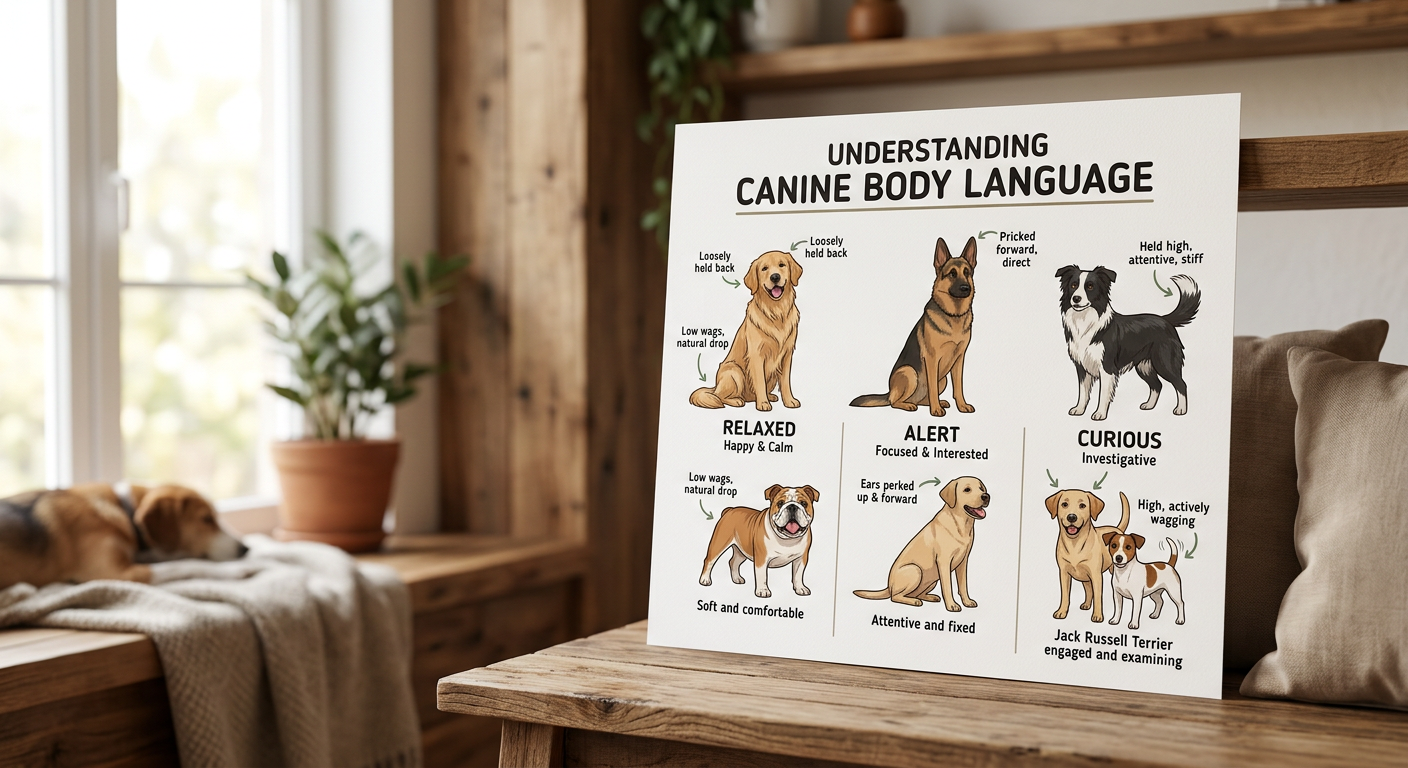
To begin mastering the art of observation, we must look at the dog as a whole rather than focusing on just one body part. A wagging tail, for instance, doesn't always mean a happy dog; its meaning changes based on the stiffness of the body and the position of the ears. Context is the most important factor when interpreting what your pet is trying to tell you.
The "Whole Dog" Approach
When you observe your dog, try to scan them from nose to tail. Look for tension in their muscles, the brightness of their eyes, and how they are distributing their weight. A relaxed dog will have a "loose" appearance, with soft curves and fluid movements. Conversely, a dog that is feeling uncertain may appear rigid or "frozen" in place.
Why Context Matters
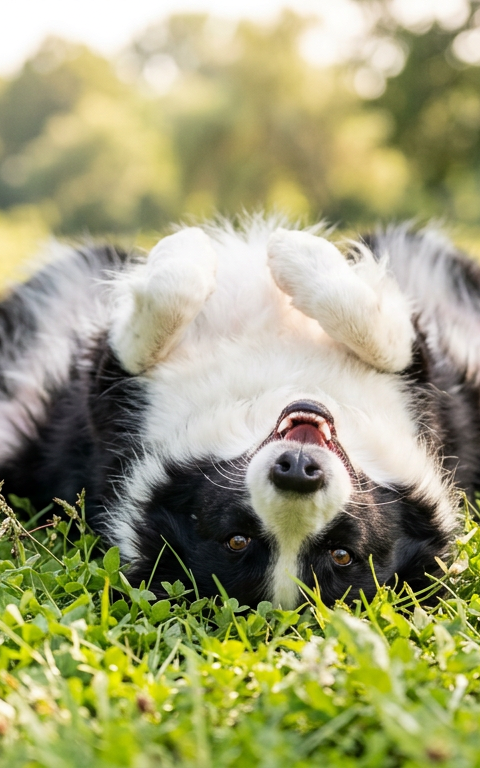
A dog rolling on their back during a play session is likely asking for a belly rub or showing trust. However, the same gesture during a tense encounter with a larger dog might be a "self-pacifying" signal intended to show they are not a threat. Always consider the surroundings, the presence of other animals, and your dog’s typical personality before drawing a conclusion.
Decoding the Eyes: Windows to the Canine Soul
A dog's eyes can tell you a great deal about their emotional state. Understanding the difference between a "soft" gaze and a "hard" stare is a foundational skill for any pet owner. Soft eyes, characterized by relaxed lids and a normal pupil size, indicate a dog that is comfortable and at peace.
The "Whale Eye" or Sclera
When a dog shows the whites of their eyes (the sclera), it is often referred to as "whale eye." This usually happens when a dog is feeling anxious or protective of a resource, like a toy or a bone. They might keep their head still while following a perceived threat with their eyes. If you see this, it is a gentle reminder to give your dog some space and reduce the pressure in the room.
Dilated Pupils and Staring
Dilated pupils can indicate high arousal, which could be excitement or a sign that they are feeling overwhelmed. A fixed, unblinking stare is often a way dogs communicate that they are intensely focused on something. In social settings, breaking eye contact is actually a sign of politeness in the dog world, showing that they have no interest in conflict.
Ear Positions and Their Meanings
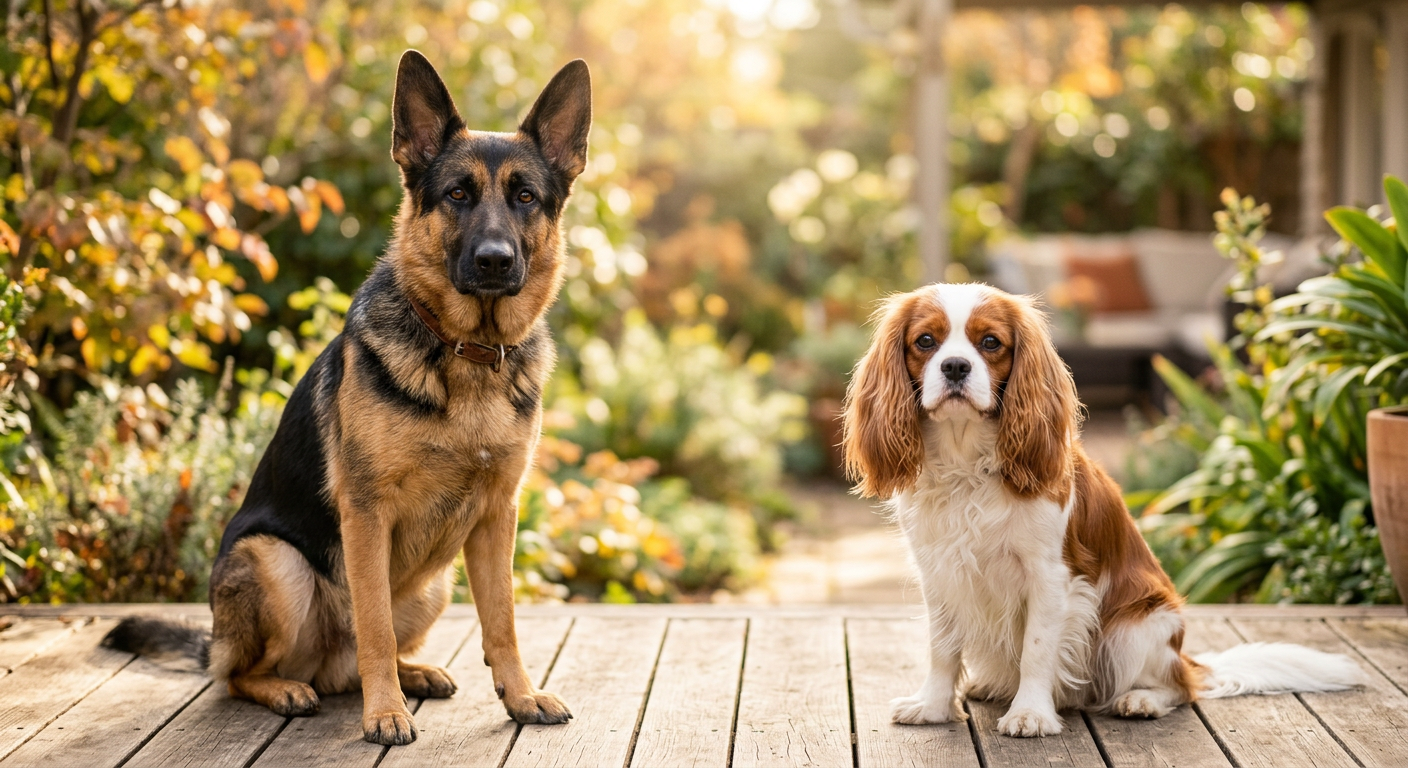
While ear shapes vary wildly between breeds—from the upright ears of a German Shepherd to the long, floppy ears of a Cavalier King Charles Spaniel—the base of the ear tells the story. Learning to watch the "root" of the ear is key to understanding your dog's body language regardless of their breed profile.
Relaxed and Neutral
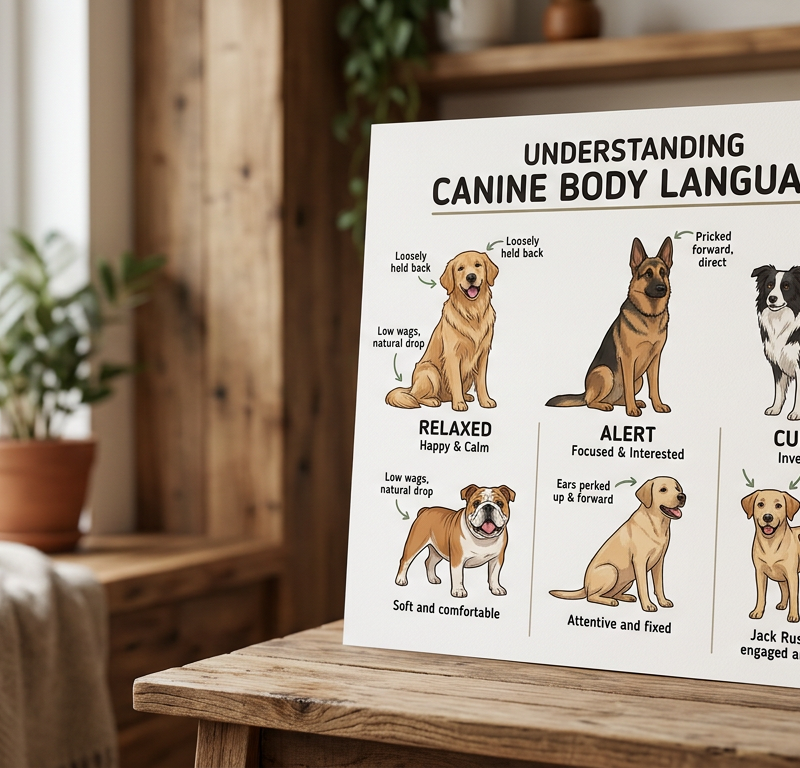
In a relaxed state, a dog’s ears sit in their "natural" position. For a Golden Retriever, this might be slightly to the side; for a Husky, they may point slightly outward. This indicates that the dog is calm and not currently processing any significant environmental stressors.
Forward and Alert
When ears move forward, the dog is likely curious or focused on a sound or sight. This "pricked" position shows engagement. It is common to see this when you grab the leash for a walk or when they hear a distant neighborhood sound. It is a sign of an active, inquisitive mind.
Pinned Back or Flattened
Ears that are pulled back against the head often indicate a desire for peace or a feeling of uncertainty. If the ears are pinned very tightly, the dog might be feeling particularly sensitive. Pairing this with a low body posture suggests they are looking for reassurance and a calm environment.
The Tale of the Tail: Beyond the Wag
Perhaps the most misunderstood part of canine communication is the tail. Many people assume a wagging tail always equals a happy dog, but this is a common misconception. The tail is actually an indicator of arousal and intent, not just joy.
Height and Speed
The height at which a dog carries its tail reflects its confidence level. A tail held at mid-height, wagging in broad strokes (often moving the whole hind end), is generally a sign of a friendly, happy dog. A very high, stiff tail that vibrates rapidly is a sign of high arousal, while a tucked tail suggests a need for comfort and security.
The Direction of the Wag
Fascinatingly, research suggests that the direction of a wag can indicate how a dog feels. A wag that leans more to the right side of the dog's body is often associated with positive feelings toward a person. A wag leaning toward the left may indicate more cautious feelings. While subtle, these are the types of details pet experts look for when assessing canine wellness.
Mouth, Lip, and Breath Signals
A dog’s mouth can be just as expressive as a human’s face. From the "submissive grin" to the "long lip," paying attention to the mouth area provides great insight into their comfort levels during social interactions.
The Relaxed, Open Mouth
A happy dog often has a slightly open mouth with a relaxed tongue hanging out. This is frequently seen during play or after a satisfying walk. It is a sign that the dog is physically and mentally at ease. If you are comparing breeds, such as a Labrador Retriever vs. Golden Retriever, you'll notice both breeds frequently display this "happy pant."
Lip Licking and Yawning
When dogs lick their lips (outside of mealtime) or perform a giant yawn, they aren't necessarily hungry or tired. These are often "calming signals." Dogs use these gestures to soothe themselves or to tell others around them that they mean no harm. It is a beautiful, peaceful way dogs navigate social tension.
Body Posture and Movement
How a dog moves through space tells you about their overall confidence and well-veing. Proactive care involves noticing when these movements change, as physical stiffness can sometimes be an early indicator that a dog needs a break or a veterinary check-up.
The Play Bow
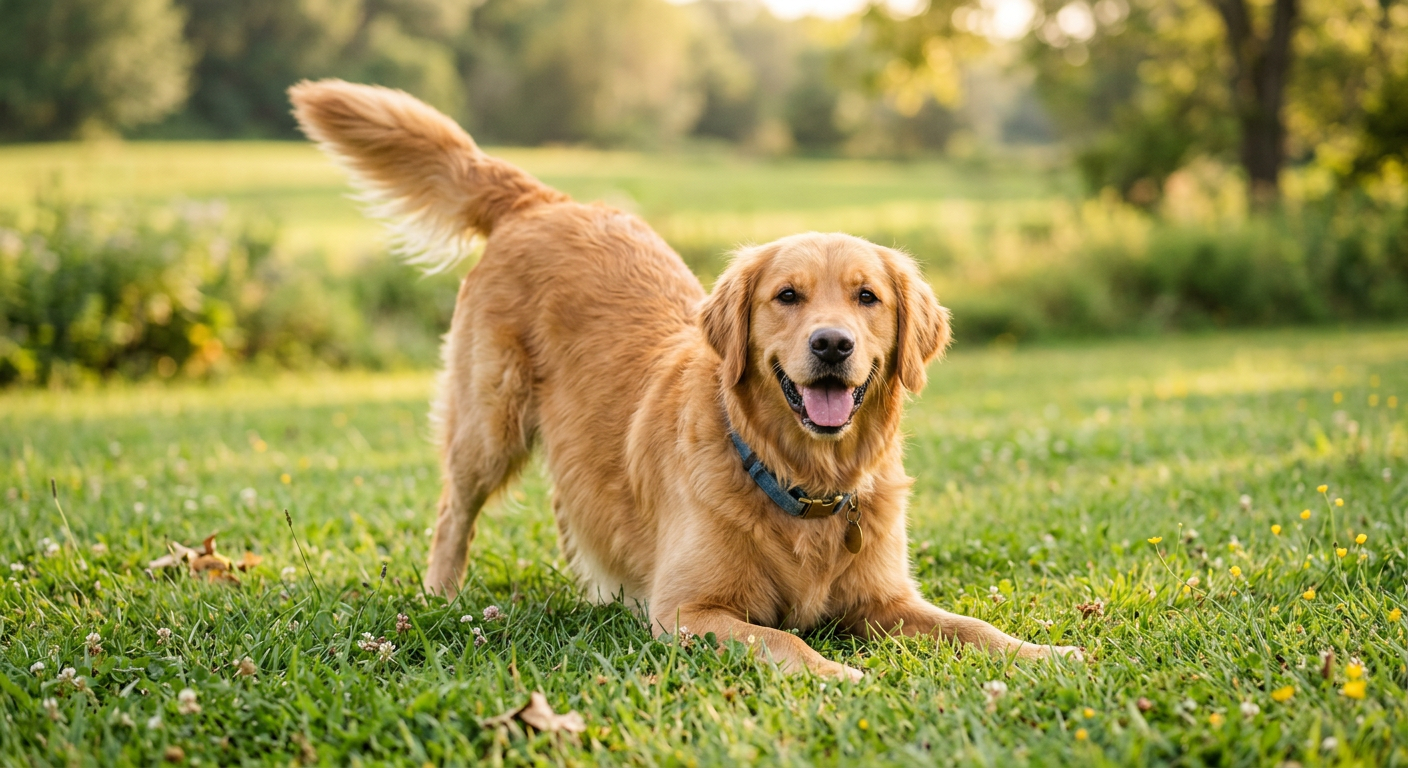
The classic "play bow"—where a dog lowers their front end while keeping their rear in the air—is the universal canine signal for "Everything I do next is just for fun!" It is an invitation to play and a way to ensure that any roughhousing is understood as a game. It is one of the most joyful expressions in the canine repertoire.
Leaning and Weight Distribution
A dog that leans its body toward you is often seeking affection and connection. On the other hand, a dog that shifts its weight onto its back legs is likely feeling a bit hesitant and is prepared to move away if needed. Monitoring these subtle shifts helps you respect your dog's boundaries in real-time.
Practical Tips for Proactive Pet Owners
Understanding your dog's body language is a journey, not a destination. Each dog is an individual with their own "dialect." By spending time observing them in different settings, you will become the world's leading expert on your own pet.
- Take Video: Record your dog playing at the park and watch it back in slow motion. You'll see dozens of signals you missed in real-time.
- Respect the "No": If your dog shows signs of discomfort, like turning their head away or licking their lips, acknowledge it by giving them space. This builds immense trust.
- Consult Professionals: If you notice sudden changes in body language or posture, it is always a good idea to consult a veterinarian or a certified positive-reinforcement trainer to ensure your pet is feeling their best.
By mastering these cues, you aren't just watching your dog; you are finally "listening" to them. This deeper level of communication fosters a bond built on mutual respect and understanding, ensuring a happy, healthy life for your best friend.
Seeing something in your pet that these signals do not quite explain? Record a short clip and run it through the AI pet symptom checker for a friendly read on movement, breathing and vocal cues.