When you notice a rabbit not eating hay only pellets, it is natural to feel a bit concerned about their dietary balance. Hay is the most critical part of a rabbit's diet, providing the fiber necessary for digestive motility and dental health. If your rabbit is suddenly favoring the crunchy, concentrated flavor of pellets over their usual timothy hay, it is usually a sign that they need a little help getting back to their natural grazing habits.
Rabbits are hindgut fermenters, meaning their entire digestive system relies on a constant flow of long-strand fiber. While pellets are convenient and nutrient-dense, they do not provide the mechanical "chewing" action required to wear down a rabbit’s continuously growing teeth. Identifying why they have become "pellet junkies" is the first step in restoring their wellness.
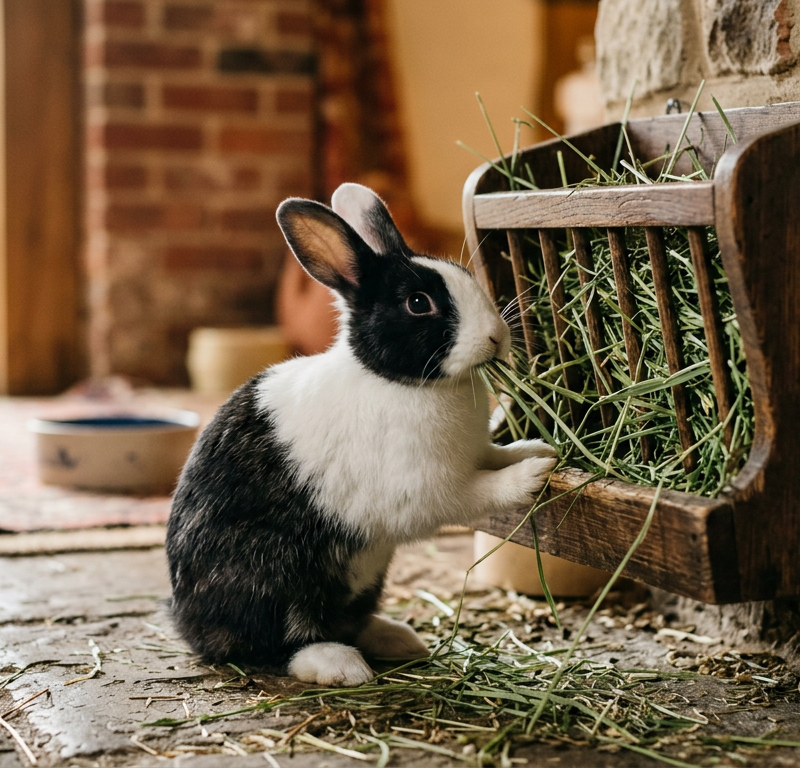
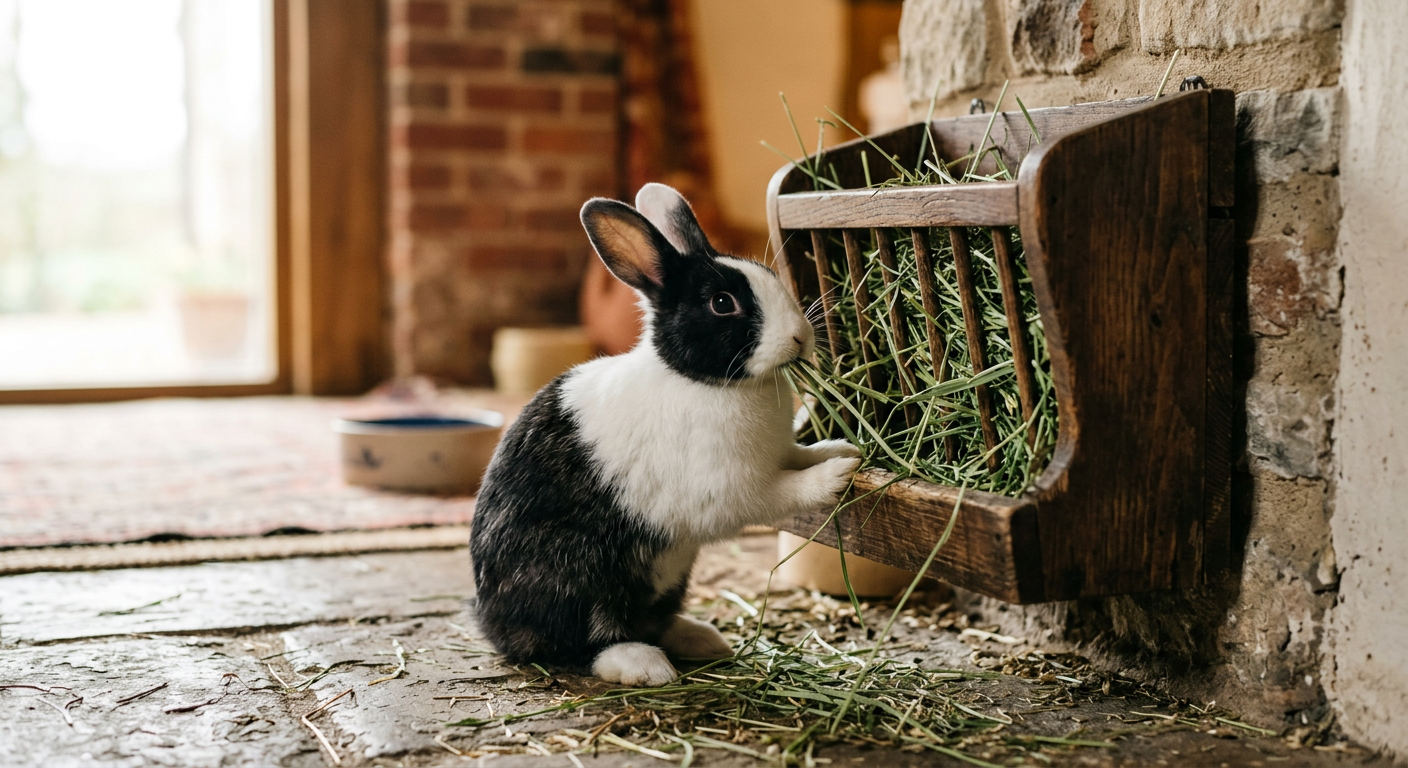
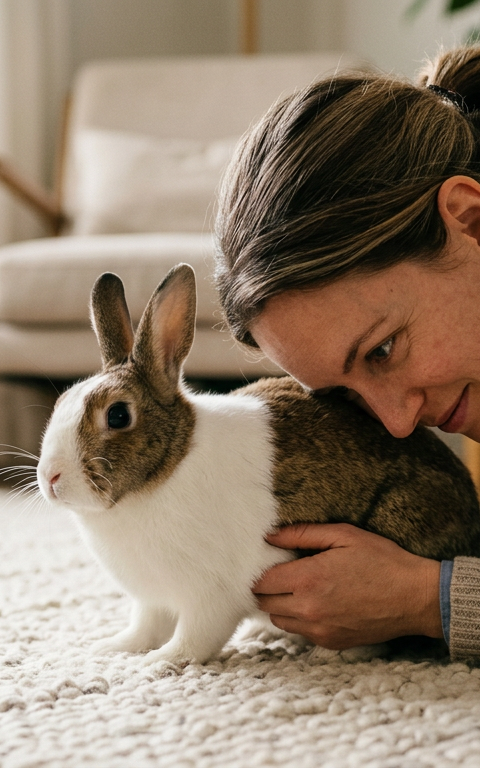
A fluffy Dutch rabbit happily munching on a large pile of fresh green timothy hay in a bright room.
Potential Dental Wellness Considerations
One of the most common reasons for a change in eating habits is dental discomfort. Rabbit teeth grow throughout their entire lives, and if they aren't worn down by grinding hay, they can develop sharp points called spurs. These spurs can make chewing tough, fibrous hay painful, leading the rabbit to choose softer pellets instead.
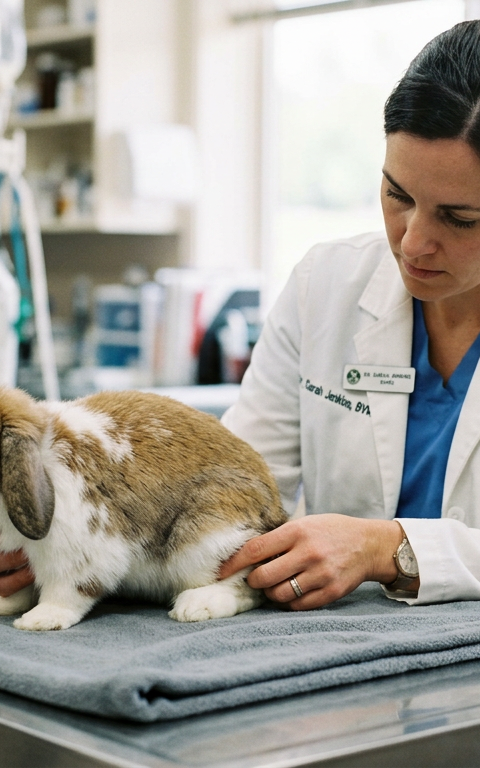
If your rabbit seems interested in food but drops hay after a few nibbles, it might be time for a professional dental checkup. A veterinarian can look deep into the mouth to ensure the molars are aligned and healthy. Addressing dental issues early can quickly get your bunny back to enjoying their favorite forage.
The Role of Selectivity and Taste
Sometimes, a rabbit refusing forage is simply a matter of preference or boredom. Pellets are designed to be highly palatable, often containing molasses or concentrated fats that taste much better to a rabbit than plain dried grass. If you provide an unlimited supply of pellets, your bunny may simply be filling up on the "candy" and ignoring their "vegetables."
Feeding too many treats or high-calorie snacks can also spoil their appetite. In many cases, transitioning back to a hay-heavy diet requires a bit of "tough love" by limiting the daily pellet ration. This encourages the rabbit to turn to their hay rack when they feel a rumbly tummy.
How to Encourage Your Rabbit to Eat More Hay
Reintroducing hay as the primary food source takes patience and a few clever strategies. Since hay should make up about 80% of your rabbit's total intake, making it accessible and exciting is key. You can try experimenting with different types of hay to see if a new texture or scent sparks their interest.
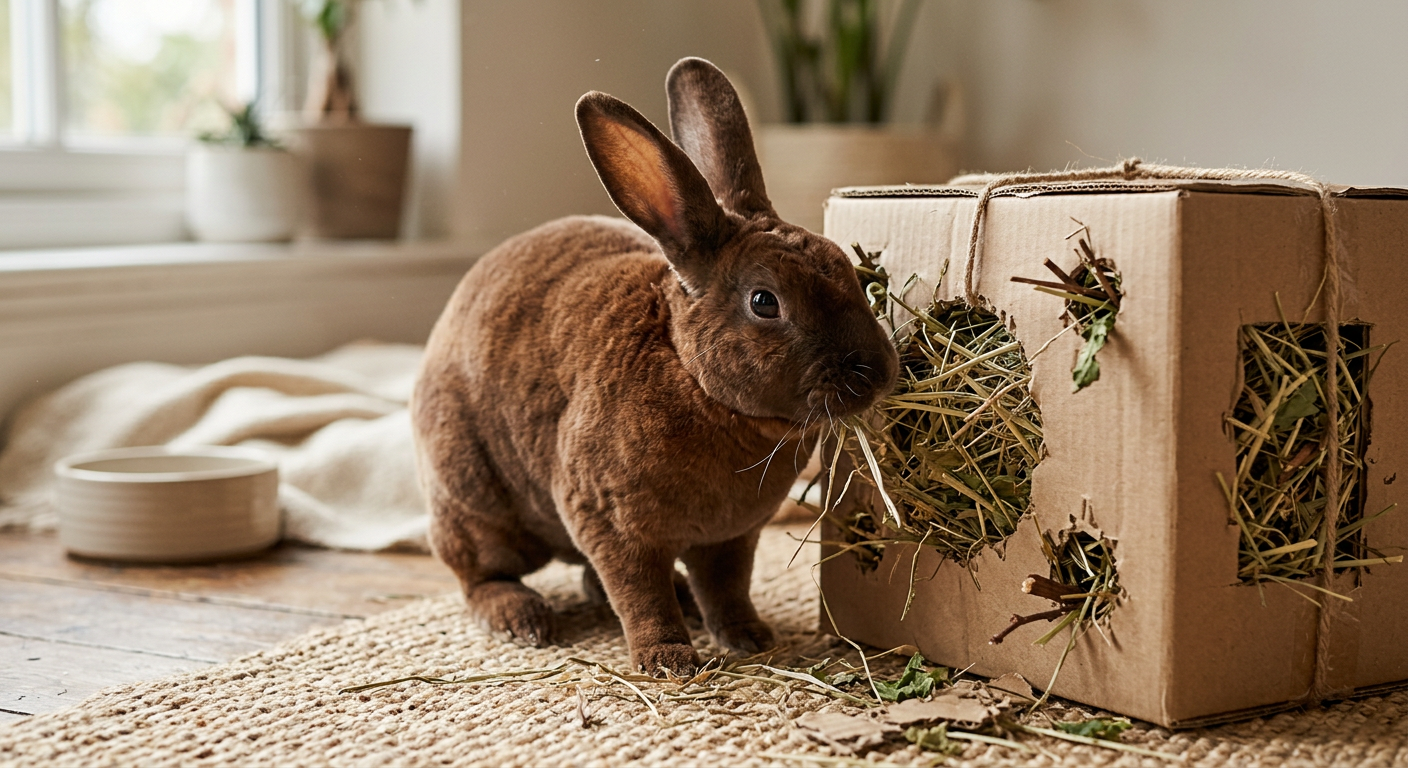
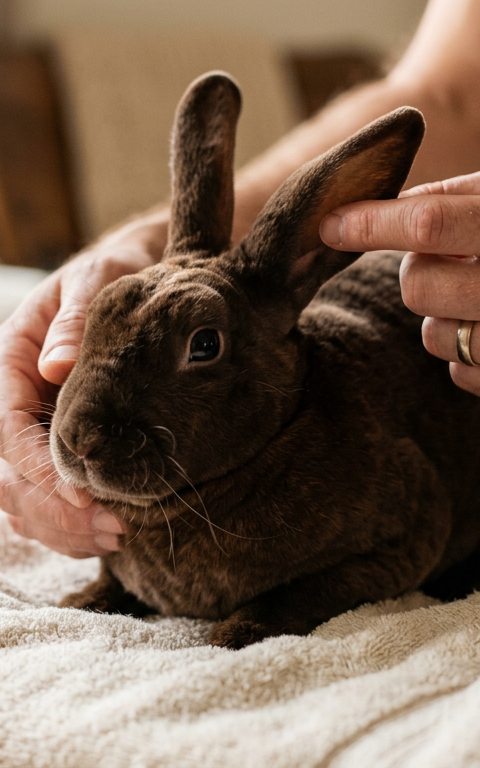
A brown Rex rabbit investigating a cardboard foraging box filled with hay and hidden treats.
Mix Hay Varieties: Try blending Timothy hay with Orchard grass, Oat hay, or Meadow hay. Each has a different flavor profile and nutritional makeup.
Limit Pellet Portions: Most adult rabbits only need 1/4 to 1/2 cup of pellets per 6 lbs of body weight. Check your measurements to ensure you aren't overfeeding.
Make Hay Fun: Stuff hay into toilet paper rolls or wicker balls. Rabbits love to work for their food, and this turns mealtime into a stimulating game.
Evaluate Hay Quality: Ensure your hay is green, fragrant, and free of dust. Old, yellowed hay is much less appealing to a discerning bunny.
The Importance of Freshness and Location
Rabbits are often "multitaskers" when it comes to their bathroom habits. Placing a fresh pile of hay directly in or right next to their litter box can significantly increase consumption. Many rabbits enjoy munching while they go, and having the hay right there makes it an easy choice.
If you have recently changed brands or batches of hay, your rabbit might be reacting to a change in scent or dust levels. Just like us, rabbits appreciate fresh ingredients. Store your hay in a cool, dry place with good airflow to keep it from becoming stale or moldy.
Monitoring Your Rabbit's Digestive Health
When a rabbit stops eating hay, their digestive speed can slow down. It is important to monitor their litter box habits closely during this transition. You want to see plenty of round, dry droppings. If you notice any changes in the size or frequency of their waste, it could indicate their gut isn't moving as efficiently as it should.
For more information on monitoring your pet's bathroom habits, you might find our guide on a rabbit not eating cecotropes helpful for understanding their unique digestive cycle. Proper fiber intake is the best way to ensure their system stays balanced.
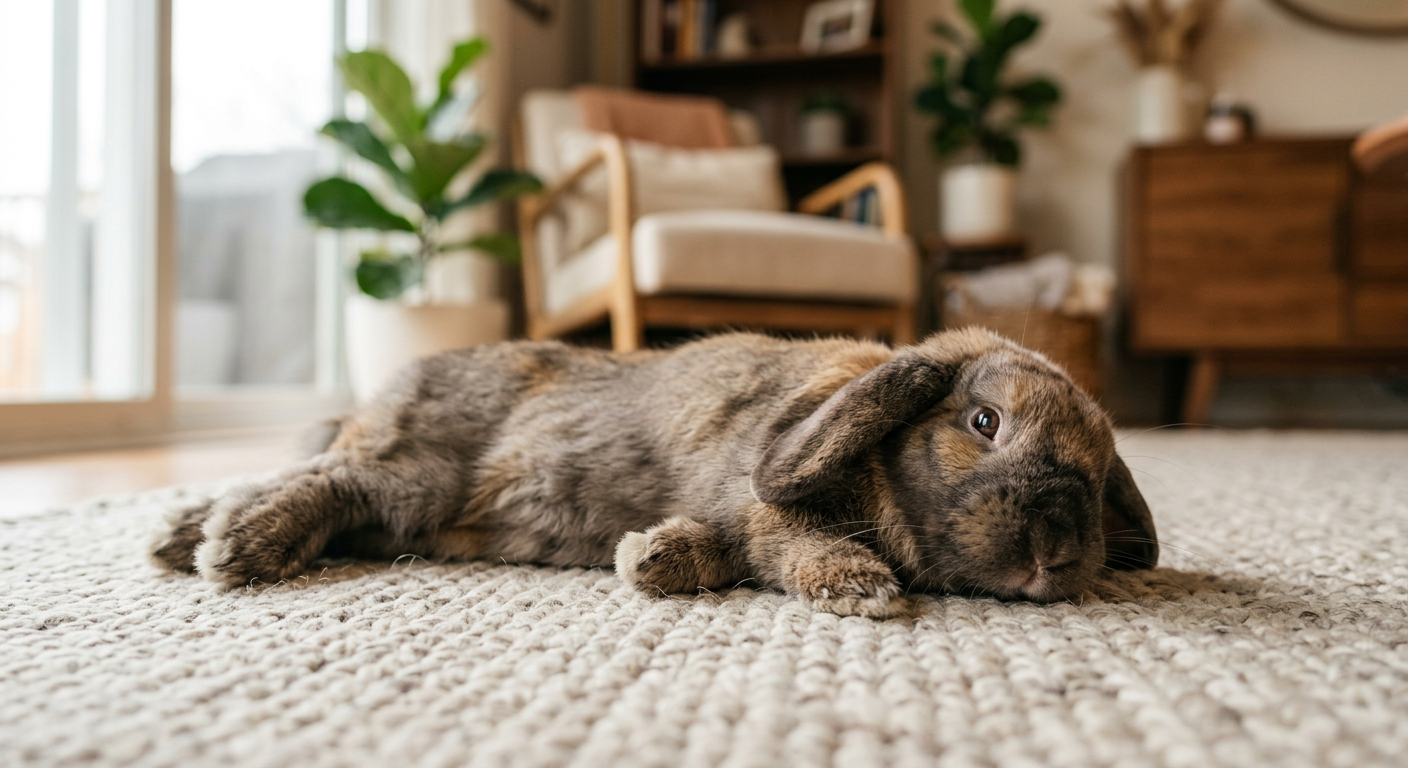
A Holland Lop rabbit lying comfortably on a rug next to a bowl of fresh water.
Checking for Other Signs of Discomfort
While a preference for pellets is often behavioral, it is a good idea to watch for other physical signs. If your rabbit is also sneezing repeatedly or appearing lethargic, the lack of hay consumption could be part of a larger wellness puzzle. A healthy rabbit should be active and curious about their environment.
Observe how they chew. Are they tilting their head to one side? Are they drooling or "chin wetting"? These are signs that the preference for soft food is related to mouth pain rather than just being a picky eater. Always consult a rabbit-savvy vet if you see these behaviors alongside a refusal to eat hay.
Creating a Long-Term Healthy Diet Plan
A balanced rabbit diet is the foundation of a long and happy life. Once you have ruled out medical issues, focus on creating a consistent routine. This includes a constant supply of fresh water, a measured amount of high-quality pellets, a handful of leafy greens, and, most importantly, unlimited hay.
Transitioning Your Rabbit Safely
Never cut off pellets entirely overnight, as this can cause stress. Instead, gradually reduce the amount of pellets over two weeks while increasing the variety of hay offered. You can also try "topping" the hay with a few bits of dried herbs like parsley or cilantro to make the hay pile smell more enticing.
For those who have multiple pets and want to keep an eye on their developmental stages, using resources like our French Bulldog age calculator or other breed-specific tools can help you manage the diverse needs of a multi-animal household. While rabbits and dogs have very different diets, the principle of foundational nutrition remains the same.
When to Consult a Veterinarian
If your rabbit stops eating entirely—including their favorite pellets—this is a medical emergency that requires immediate veterinary attention. Rabbits cannot go long without food before their system begins to shut down. However, if they are still eating pellets but ignoring hay, you have a window of time to address the issue through behavioral changes and a dental checkup.
A proactive approach to their diet ensures that their teeth stay healthy and their gut stays moving. By being observant and patient, you can help your rabbit rediscover the joy of munching on hay, setting them up for years of vibrant health.
Summary of Support for Hay Eating
To recap, if you find your rabbit not eating hay only pellets, consider these steps:
Schedule a dental exam to rule out painful tooth spurs.
Reduce pellet portions to the recommended daily amount.
Offer a variety of high-quality, fragrant hays.
Incorporate hay into toys and near the litter box to encourage natural foraging.
With consistent effort and the right environment, most rabbits will eventually return to their hay-loving ways. Keeping their diet fiber-forward is the best gift you can give your long-eared friend. Fall in love with the sound of your rabbit happily crunching away—it's the sound of a healthy bunny!
Frequently Asked Questions
Most rabbits prefer pellets because they are more flavorful and easier to chew. If your rabbit has unlimited access to pellets, they may fill up on them and ignore their essential hay "vegetables."
Rabbits' teeth grow constantly. If they don't eat enough hay to grind their teeth down, they can develop sharp spurs that make chewing tough fiber painful, though they may still manage softer pellets.
An adult rabbit typically needs only about 1/4 to 1/2 cup of pellets per 6 lbs of body weight daily. Overfeeding pellets is the most common reason rabbits stop eating their hay.
Yes, you can try mixing Timothy hay with Orchard grass or Oat hay. Adding dried herbs like peppermint or cilantro to the hay pile can also make it more enticing for a picky eater.
We're passionate pet lovers and AI enthusiasts dedicated to helping you understand your furry friends better through the power of artificial intelligence.
AI Analysis
Free!
AI-Powered Pet Analysis
Understand Your Pet's Emotions
Our AI analyzes photos and videos to reveal what your pet is really feeling.