When your furry friend flops onto their back and offers up their tummy, it is one of the most endearing sights a pet parent can witness. This charming posture is a cornerstone of canine communication, yet it often carries multiple meanings depending on the context. By diving into a detailed dog belly exposure explained, you can better understand what your companion is trying to tell you through this vulnerable display.
At its heart, showing the belly is a sign of immense trust. Because the abdomen houses a dog's vital organs and lacks the protection of a ribcage or thick muscle, exposing it to the world is a significant gesture. Whether they are seeking a belly rub or showing respect to a pack member, your dog is using their body to foster a deeper bond with those around them.
The Foundations of Trust and Safety
One of the primary reasons dogs roll over is to signal that they feel safe and secure in their environment. In the wild, a dog would rarely expose such a sensitive area unless they were certain no threats were present. When your dog does this in your living room, they are essentially saying they trust you completely with their well-being.
This behavior often stems from the early days of puppyhood. Mother dogs frequently flip their pups over to groom them and stimulate digestion. This early physical contact creates a lifelong association between belly exposure and feelings of comfort, care, and maternal warmth. As they grow, they carry this behavior into their adult lives as a way to maintain social harmony.
Using Body Language to Diffuse Tension
In the world of dog communication, rolling over isn't always an invitation for a massage. Sometimes, it serves as a "appeasement" or "deference" gesture. If a dog feels slightly overwhelmed by a larger dog or an assertive human, they may show their underside to communicate that they are not a threat and wish to avoid conflict.
You can usually tell the difference between a happy "rub my belly" roll and an appeasement roll by looking at the rest of their body. In an appeasement scenario, you might notice:
- The tail is tucked tightly against the belly or wagging stiffly.
- Their ears are pinned back against the head.
- They may lick their lips or turn their head away.
- The body appears tense rather than loose and floppy.
Understanding these subtle cues is essential for respectful interaction. If you notice these signs, it is often best to give the dog some space rather than reaching in for a pet, as they are currently seeking reassurance rather than physical play. For more on these subtle signals, check out our guide on understanding dog body language.
Distinguishing Contentment from Submission
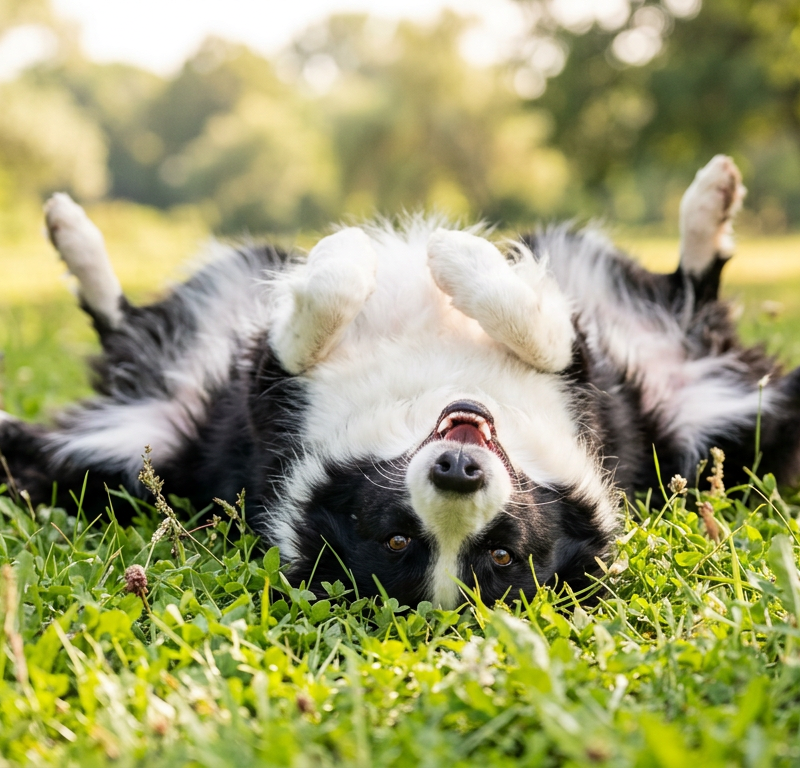
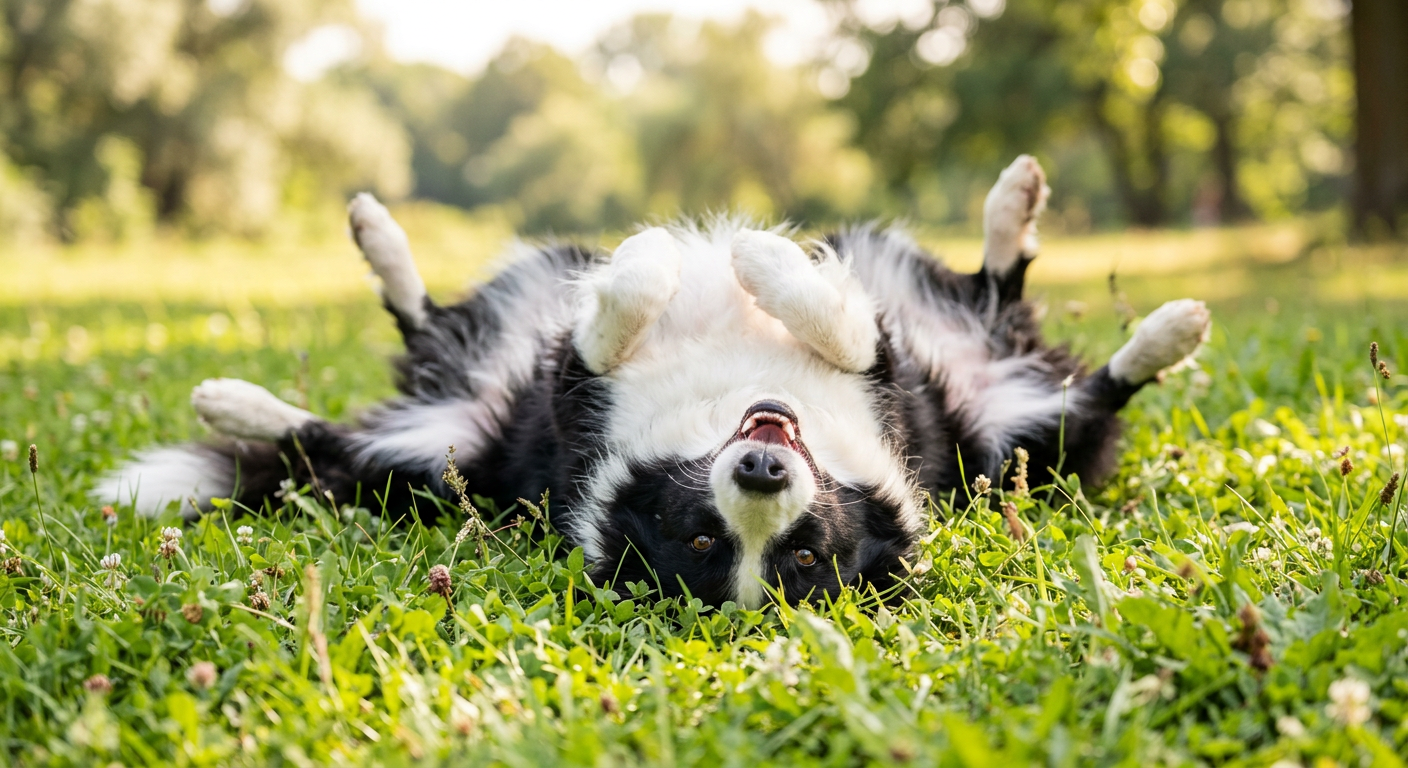
The "happy belly" roll is distinct and easy to recognize once you know what to look for. A content dog will have a relaxed mouth, possibly with their tongue lolling out. Their eyes will be soft, and their paws will likely hang in a "limp" or "begging" position. This is the classic invitation for affection that most owners recognize instantly.
Interestingly, some breeds are more prone to this than others. For instance, a French Bulldog might roll over frequently due to their stout build and social nature. On the other hand, more reserved breeds like the German Shepherd might only show this level of vulnerability to their most trusted family members.
The Role of Play Invitations
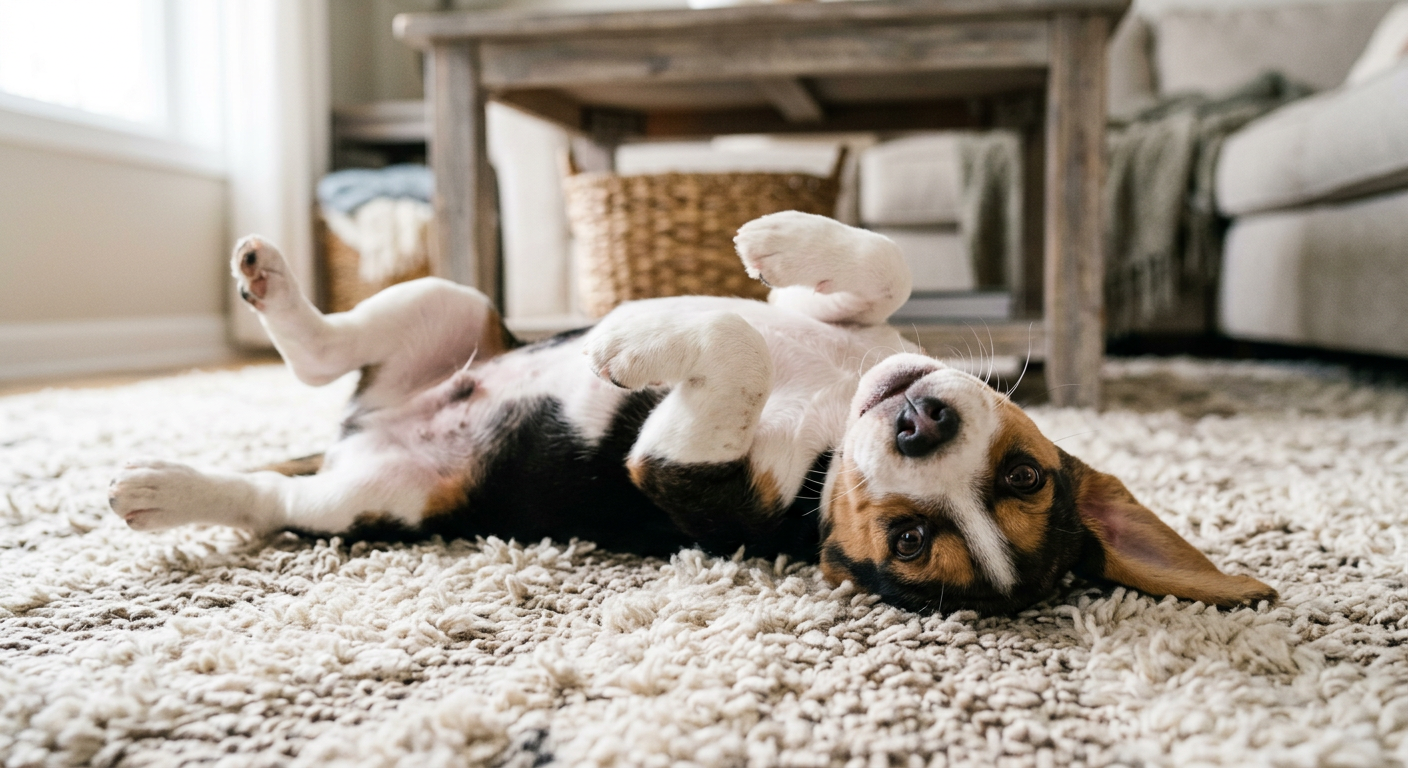
Sometimes, a dog will flip onto their back during a vigorous session of play. This "self-handicapping" allows the dog to continue the game from a less advantageous position, making the play fair for a smaller or less athletic partner. It is a sign of a socially intelligent dog who knows how to keep the fun going without being overbearing.
This fits perfectly into the spectrum of play signals. You might see a belly roll followed quickly by a play bow. To learn more about how dogs initiate games, read our article on understanding play bows and invitations. These movements work together to create a complex and beautiful "dance" of social interaction.
Cooling Down and Comfort
The dog belly exposure explained isn't always about social communication; sometimes it is purely about biology. Dogs have less hair on their bellies, and the skin there is thinner. When a dog is feeling warm, rolling onto their back helps them dissipate heat more efficiently. Exposure to a cool breeze or a tiled floor can provide instant relief on a hot day.
In addition to temperature regulation, lying on the back is simply comfortable for many dogs. Much like humans enjoy different sleeping positions, some dogs find that "the cockroach" (lying flat on the back with legs in the air) relieves pressure on their spine and allows their muscles to fully relax. This is especially common during deep sleep cycles.
When to Consult a Professional
While rolling over is usually a positive or neutral behavior, shifts in how your dog presents their underside can sometimes indicate discomfort. If your dog suddenly stops rolling over when they previously loved it, or if they seem to guard their belly area, it may be time for a proactive care visit to the veterinarian.
Abdominal sensitivity can be a sign of many wellness considerations, ranging from simple gas to more complex digestive issues. Your vet can perform a physical exam to ensure that your dog's "no-touch" zone isn't caused by physical soreness. Always observe changes in behavior as they are often the first tool our pets use to tell us they aren't feeling their best.

Respecting Personal Space
Even though most of us can't resist a soft dog tummy, it's important to remember that every dog is an individual. Just because a dog is showing their belly doesn't always mean they want a rub. Some dogs feel vulnerable when touched in that area and may prefer a scratch behind the ears instead. To see how different breeds handle touch and interaction, you can compare Golden Retrievers and Labradors to see which tends to be more "belly-heavy" in their affection style.
Final Thoughts on Canine Vulernability
As we have seen through this dog belly exposure explained, the act of rolling over is a multi-faceted tool in the canine kit. It tells a story of trust, temperature control, playfulness, and social etiquette. By paying attention to the surrounding context—like ear position and tail movement—you can respond to your dog in a way that makes them feel heard and respected.
Next time your dog rolls over at your feet, take a moment to look at the whole picture. If they are wiggly, relaxed, and breathing softly, go ahead and give them that belly rub! It's one of the best ways to reinforce the bond of love and security you share with your best friend.