Sharing your home with multiple animals brings immense joy, but reading multi-pet household dynamics requires a keen eye for subtle communication. Whether you have two dogs, a trio of cats, or a mix of different species, the social structure of your home is constantly evolving. Understanding these interactions is the first step toward maintaining a peaceful environment where every pet feels secure and valued.
Every pet has a unique personality and social history that influences how they interact with their housemates. By observing their body language and daily routines, you can gain deep insights into their relationships. Modern technology now makes this even easier, helping owners identify shifts in mood and social standing that might otherwise go unnoticed.
The Foundation of Social Structures
In a home with several animals, a social hierarchy naturally forms. This structure isn't about "dominance" in the traditional sense, but rather about how resources like food, attention, and resting spots are shared. Reading multi-pet household dynamics involves recognizing who yields to whom and which pets are the most confident in social settings.
For example, you might notice that one cat always eats first, or one dog consistently claims the best spot on the sofa. These are not signs of conflict, but rather a settled social order that helps prevent disagreements. When these routines are stable, the household remains calm. For more on how these individual personalities shine through, you might enjoy reading about what your pet's facial expressions mean in a social context.
Recognizing Affiliative Behaviors
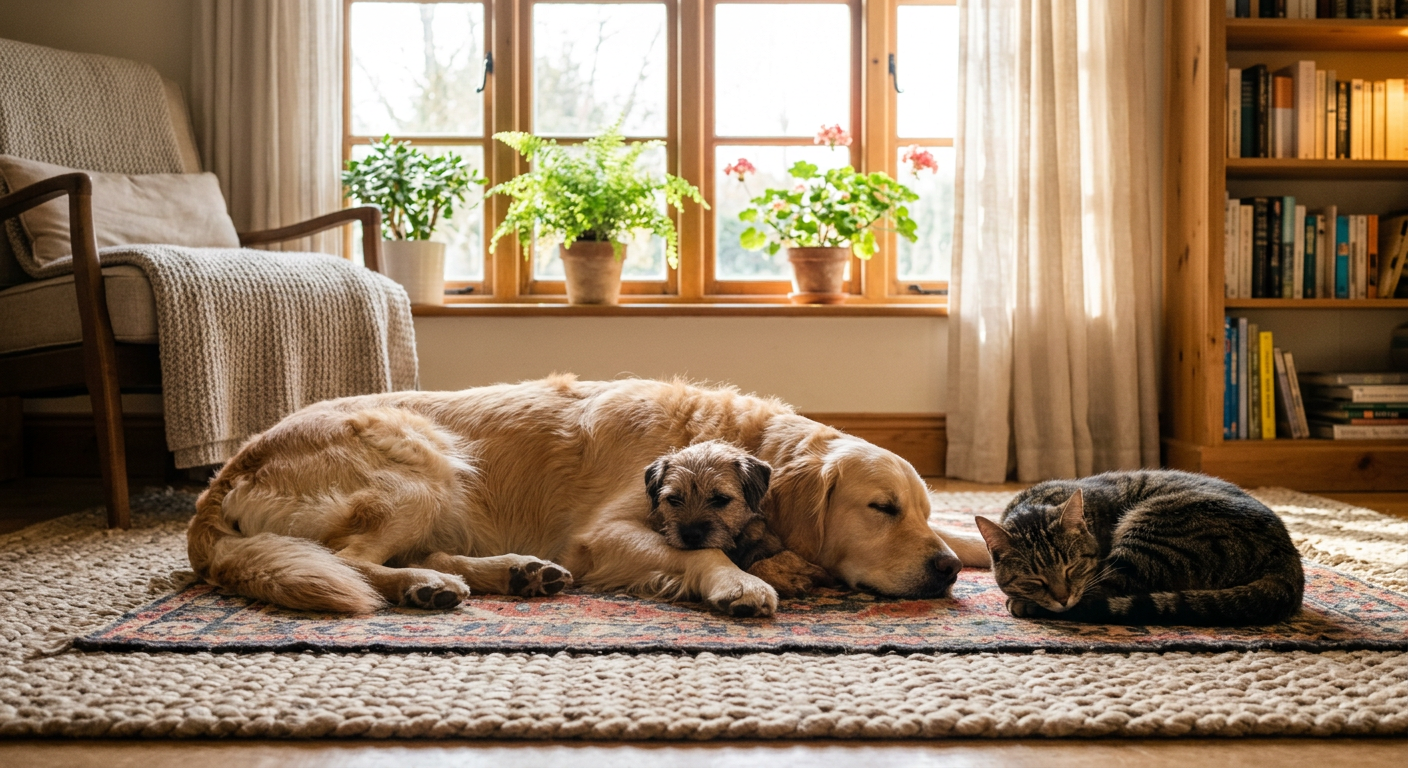
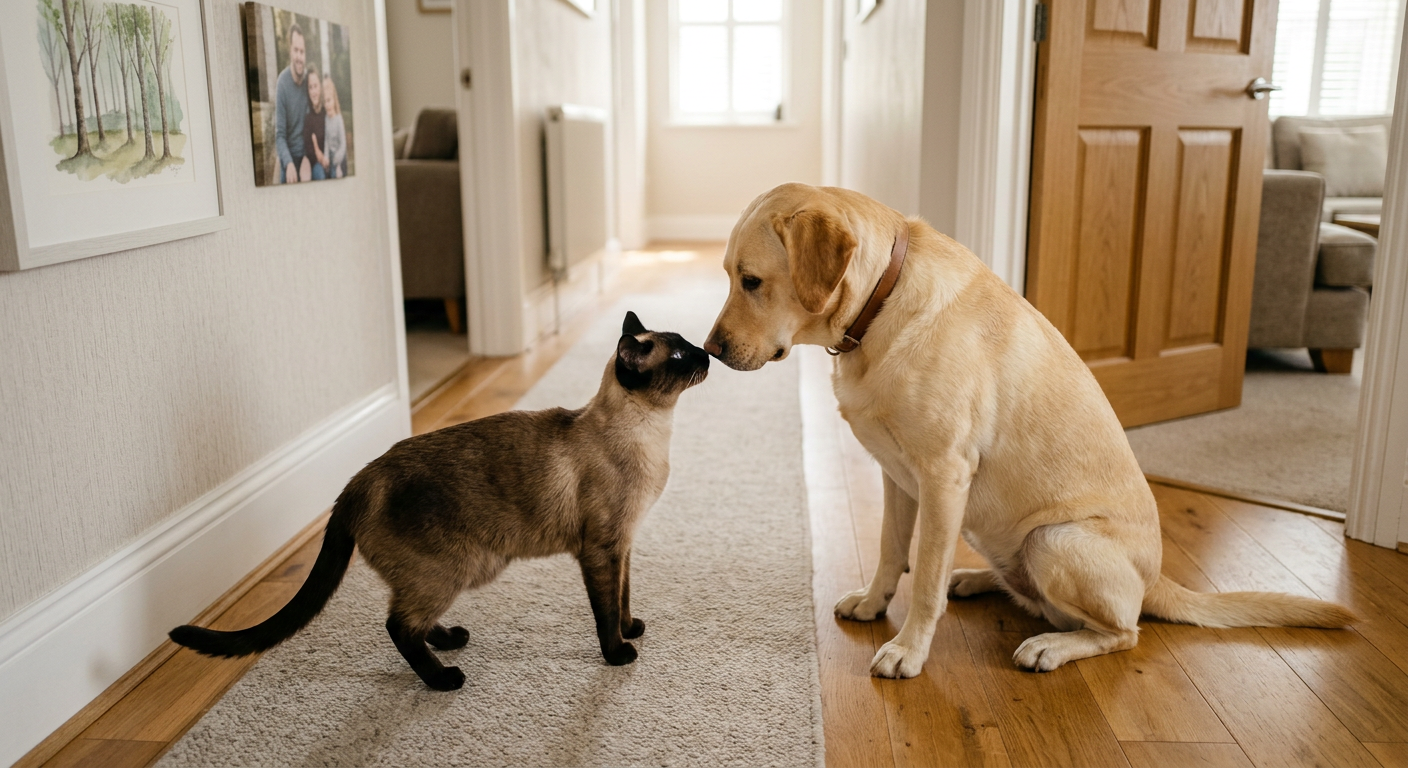
Affiliative behaviors are actions that promote social bonding. In cats, this often includes "allogrooming," where they lick each other's heads and necks. In dogs, it might look like leaning against one another or engaging in gentle, rhythmic play. These behaviors are the "glue" that holds the multi-pet group together.
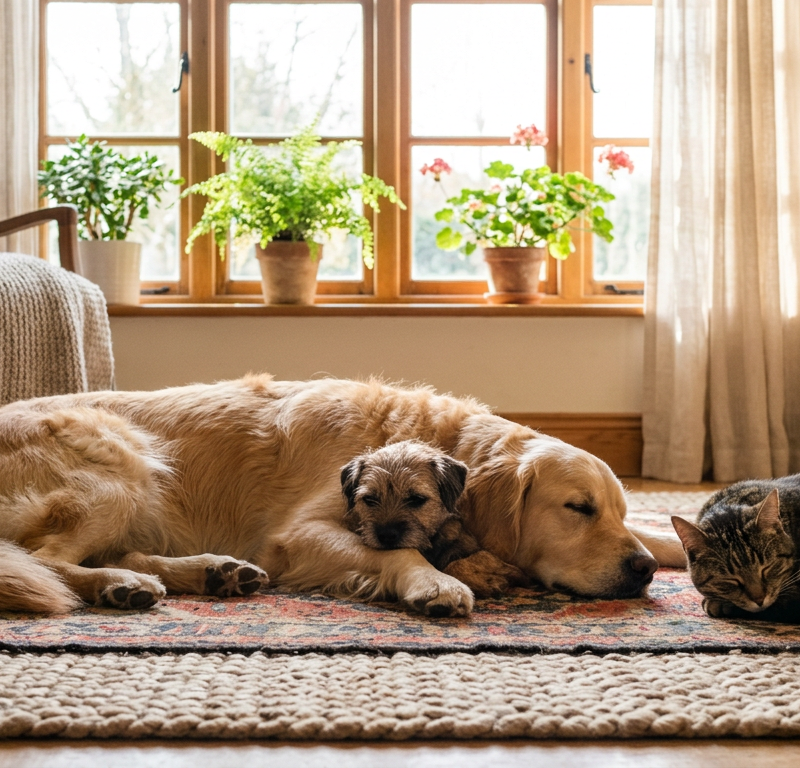
When you see your pets sleeping together or touching paws, you are witnessing high-quality social bonding. These positive interactions suggest that your reading multi-pet household dynamics is on the right track, as the animals feel safe enough to be vulnerable with one another. Tracking these moments over time can help you see the long-term health of their friendship.
Common Communication Signals
Animals communicate through a complex language of scents, sounds, and posture. In a multi-pet setting, these signals are often directed at housemates rather than humans. A stiff tail, a diverted gaze, or a slight lip curl are all ways pets tell each other to "back off" or "give me space."
Understanding these cues is essential for proactive care. If one pet is constantly moving away when another enters the room, they may be feeling overwhelmed. By reading multi-pet household dynamics through their physical spacing, you can intervene before minor tensions escalate into loud disagreements. You can also use our Golden Retriever age calculator to see how life stages might impact the energy levels and patience of your pets during these interactions.
The Role of Play
Play is a vital component of social health, but it can sometimes be difficult to distinguish from actual friction. Healthy play involves role reversals—one pet is the "chaser" and then becomes the "chasee." There are also plenty of pauses where both animals take a breath and check in with each other.
If you notice that one pet is always the "victim" and never the "aggressor," the play may be one-sided. Reading multi-pet household dynamics during playtime requires looking for loose, wiggly bodies. If bodies become stiff or movements become very fast and silent, it might be time to redirect their energy with a toy or a snack break.
Resource Management and Harmony
Many disagreements in a multi-pet home stem from "resource guarding." This happens when an animal feels their access to something valuable—like your lap, a favorite toy, or a food bowl—is being threatened. Managing these resources is a key part of maintaining balance.
To support a positive atmosphere, ensure there are enough resources for everyone plus one extra. This means three water bowls for two pets, or four scratching posts for three cats. When pets feel there is an abundance of resources, they are less likely to feel competitive. This proactive approach makes reading multi-pet household dynamics a much more pleasant experience for the owner.

Individual Time and Decompression
Even the best of friends need time apart. Reading multi-pet household dynamics involves recognizing when a pet is "socialed out" and needs a quiet corner to rest. High-traffic areas can be stressful for older pets or those who are more introverted by nature.
Providing "safe zones" like crates, high shelves, or separate rooms allows each animal to decompress. When pets are given the choice to opt out of social interaction, they are often more relaxed when they choose to join the group later. Comparing different breeds, such as a French Bulldog vs Poodle, can also give you insight into how different energy levels might interact in a shared space.
Using Technology to Monitor Dynamics
It can be challenging to keep an eye on your pets 24/7, especially when you are at work or running errands. This is where AI technology and mood tracking tools become invaluable. These tools can help you observe patterns in how your pets interact when you aren't in the room.
By using data to assist in reading multi-pet household dynamics, you can identify if certain times of day are more stressful than others. Perhaps the morning routine is too chaotic, or the evening "zoomies" are causing friction. Modern apps allow you to log these interactions and see the "big picture" of your household's social health. To learn more, check out our guide on tracking your pet's mood over time.
Identifying Subtle Shifts
Sometimes the changes in a household are so gradual that we don't notice them until a problem arises. A pet might start sleeping further away from the group, or they might stop initiating play. These are subtle clues that the social dynamic is shifting.
Consistently reading multi-pet household dynamics allows you to catch these changes early. Whether it's a health issue or a social misunderstanding, addressing the change quickly ensures your pets feel supported. If you suspect a wellness consideration is behind a behavioral change, always consult with a veterinarian to rule out physical discomfort.
Nurturing Long-Term Friendships
Building a harmonious home is a marathon, not a sprint. It requires patience and a commitment to understanding each animal as an individual. By consistently reading multi-pet household dynamics, you create an environment where your pets can truly thrive together.
Celebrate the small wins—a shared nap, a calm greeting, or a synchronized play session. These moments are the reward for your careful observation and management. With the right blend of intuition and technology, like that found in understanding pet emotions with AI technology, you can ensure your multi-pet family remains a source of happiness for everyone involved.
Every home is a unique ecosystem. By remaining observant and proactive, you become the best advocate for your pets' emotional well-being. Reading multi-pet household dynamics is a skill that grows over time, leading to a deeper bond between you and your beloved animals.