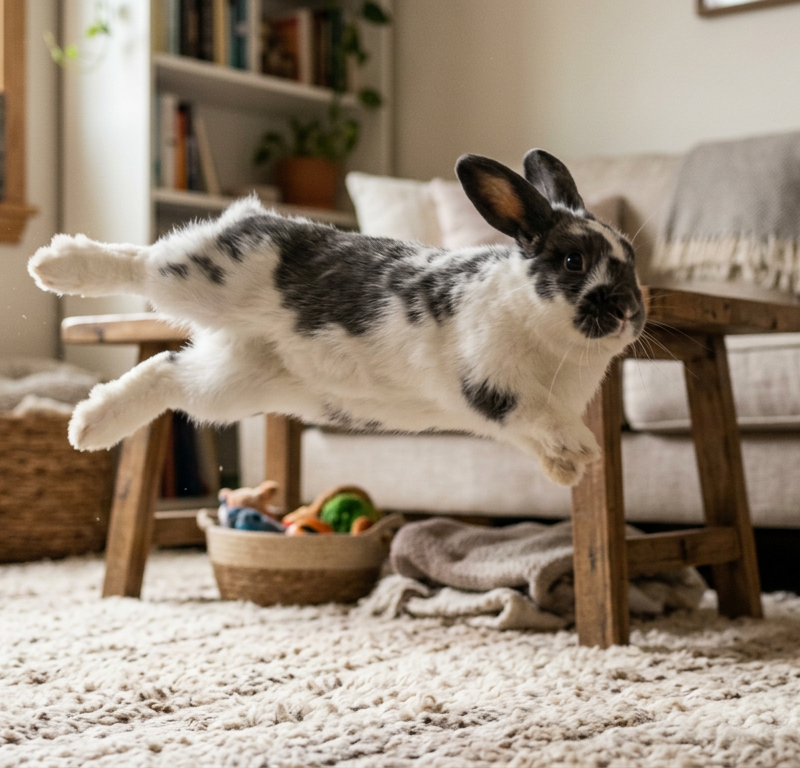
If you have ever witnessed your rabbit suddenly twist in mid-air, kick their heels out, and dart across the room, you have seen one of nature’s most joyful displays. This behavior is known as a binky. However, many owners feel a moment of confusion when they see their rabbit binkying then hiding is this normal for a healthy bunny? The short answer is yes, this sequence of behaviors is quite common and usually reflects your rabbit's natural instincts.
Understanding why your rabbit shifts from high-energy celebration to a quiet hiding spot requires looking at the world through a prey animal's eyes. While a binky is a sign of pure happiness, the physical exertion and the "exposed" nature of the move can trigger a quick return to safety. By learning to read these cues, you can ensure your home environment supports your rabbit's emotional and physical well-being.
To better understand your rabbit's developmental stage during these energetic bursts, you might find it helpful to explore our guide on decoding rabbit behavior. Knowing how their age impacts their energy levels can also provide context for these sudden "zoomies" and hiding sessions.
The Science of the Rabbit Binky
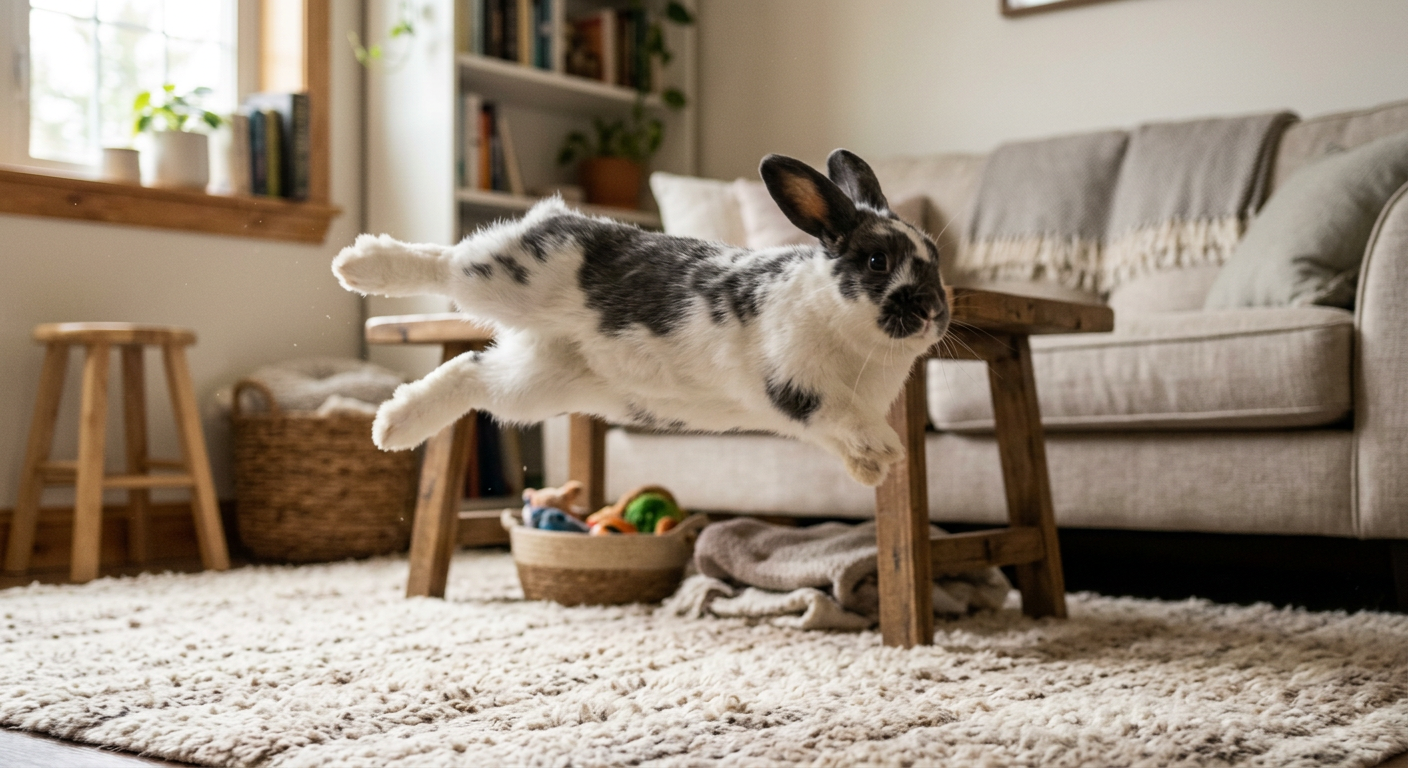
A binky is more than just a jump; it is a full-body expression of safety and contentment. When a rabbit feels secure in their environment and has excess energy, they perform this acrobatic maneuver. It involves a leap into the air followed by a flick of the head or a twist of the body. Sometimes it includes a "thump" of the back legs upon landing, though this is different from the warning thumps you might hear at night.
Biologically, these movements are linked to the release of endorphins. In the wild, similar movements are used to evade predators, but in a domestic setting, they are repurposed for play. When your rabbit binkies, they are essentially telling you that they feel "free" enough to let their guard down. It is the gold standard of rabbit happiness.
Variations of the Binky
Not all binkies look the same. Some rabbits perform a "half-binky," which is just a quick flick of the ears or a minor head twitch. Others might perform "the zoomies," where they lap the room at high speeds before launching into the air. If you notice your rabbit being particularly active at late hours, you might also want to read about rabbit thumping at 3am to distinguish between play and communication.
Why Rabbit Binkying Then Hiding Is Normal Behavior
If your rabbit follows a massive jump with a dash under the sofa, you aren't seeing a mood swing. You are seeing a survival strategy. Rabbits are crepuscular prey animals, meaning they are most active at dawn and dusk. Their biology is hardwired to keep them away from open spaces where they might be spotted by a hawk or a fox.
The "binky then hide" sequence usually happens for a few specific reasons:
- The Need to Recharge: Binkying is an explosive aerobic activity. A rabbit might hide simply because they have used up their immediate "burst" of energy and need a quiet place to catch their breath.
- Safety Instincts: After making a scene with a big jump, a rabbit’s instinct may whisper that they have drawn too much attention to themselves. Hiding allows them to survey the room from a safe vantage point.
- Game of Hide and Seek: Many rabbits use hiding as part of the play itself. They may binky, hide, and then peak out to see if you are watching, waiting for you to interact or offer a treat.
- Sensory Overload: Sometimes a binky is so intense that the rabbit startles themselves. Retreating to a box or tunnel helps them recalibrate their senses.
Creating the Perfect Play and Hide Environment
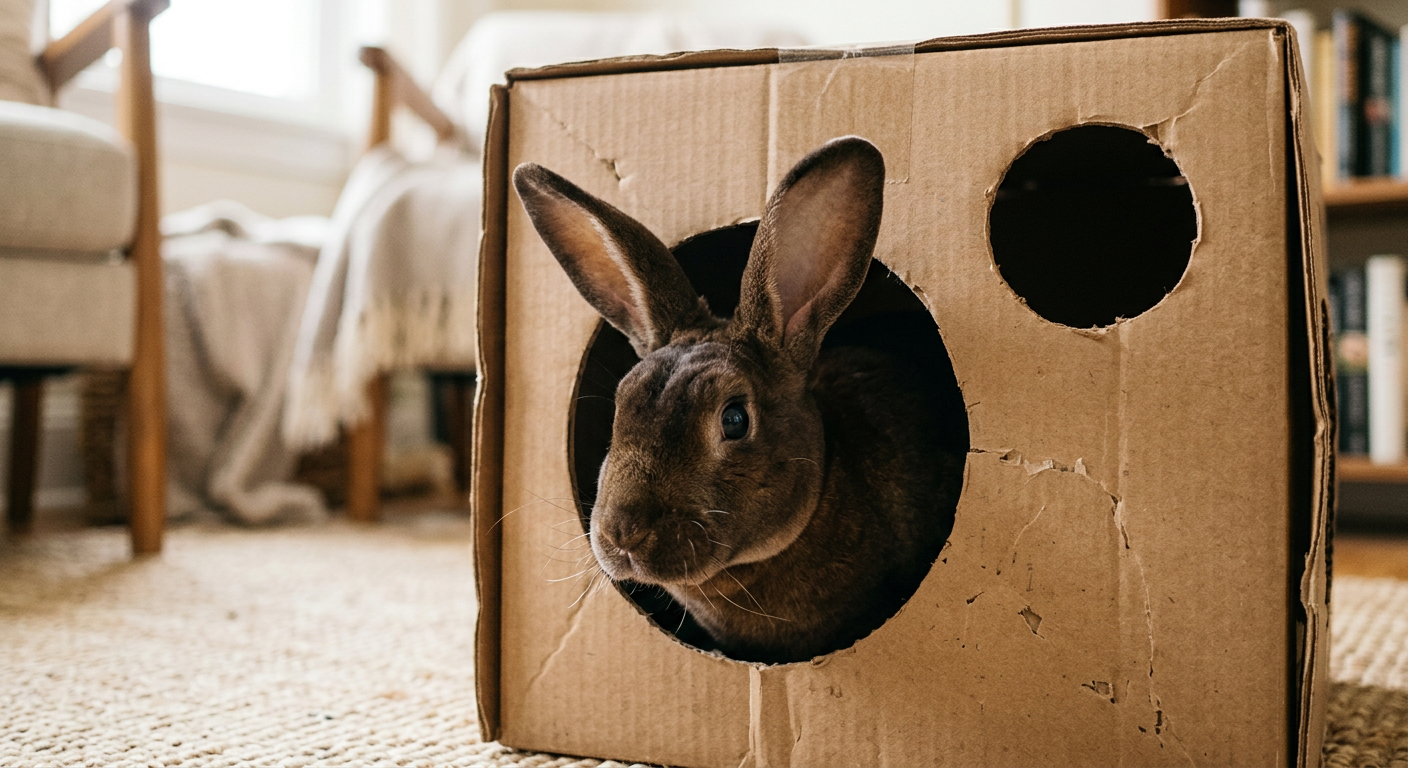
Since hiding is a natural conclusion to a binky session, providing the right "furniture" for your rabbit is essential. A rabbit who has nowhere to go after a binky may become stressed. Proactive care involves setting up several safe zones throughout their primary exercise area.
Cardboard boxes are the most cost-effective and popular options. By cutting two holes in a box—an entrance and an exit—you provide the rabbit with a "bolt hole" that makes them feel secure. High-quality hay tunnels and fabric "snuggle cups" also serve as excellent landing spots after a high-energy lap of the room.
Floor Traction Matters
If your rabbit seems to hide more than binky, check your flooring. Rabbits do not have pads on their feet like dogs or cats; they have fur. Hardwood or tile floors can be slippery and scary for them. Adding large area rugs or interlocking foam mats can give them the grip they need to feel confident enough to binky in the first place. You will often see a rabbit binky onto a rug and then immediately hide on the hardwood because the rug feels like "safe ground."
When Should Hiding Be a Concern?
While rabbit binkying then hiding is normal in a playful context, perpetual hiding without any activity can be a sign that something is off. Wellness considerations for rabbits often revolve around their activity levels and appetite. If your rabbit stops binkying entirely and stays in their hiding spot for hours, refusing treats or hay, it is time to consult a veterinarian.
Rabbits are masters at hiding pain. A sudden decrease in "joyful" behaviors like binkying could indicate dental issues, gastrointestinal stasis, or joint discomfort. Observing the transition from play to rest is key. A healthy rabbit will hide for a few minutes then come back out for more interaction or a snack. A rabbit in discomfort will remain hunched and withdrawn.
Comparing Rabbit Behavior to Other Pets
It can be helpful to compare these energy bursts to other pets you might be familiar with. For instance, the "zoomies" in a rabbit are very similar to the frantic running seen in dog breeds. If you have a Beagle vs Poodle, you might notice different styles of play, much like different rabbit breeds have different binky styles. Larger rabbits, like Flemish Giants, may have more grounded binkies, while smaller breeds like Netherland Dwarfs are often more acrobatic.
Regardless of the breed, the core motivation remains the same: a feeling of safety leads to physical expression. If your rabbit is binkying, you are doing a great job of providing a low-stress, "bunny-proofed" environment where they feel they can truly be themselves.
Summary of the Binky-Hide Loop
In conclusion, observing your rabbit binkying then hiding is this normal part of their daily routine that highlights the balance between their joy and their instincts. It is a sign of a happy, well-adjusted pet who feels comfortable enough to play but remains smart enough to stay safe. By providing plenty of tunnels, rugs, and hiding spots, you are supporting their natural rhythm.
Always keep a close eye on your rabbit's overall demeanor. As long as the hiding is interspersed with moments of curiosity, eating, and the occasional spectacular mid-air twist, your bunny is likely thriving. Enjoy these displays of happiness—they are the ultimate "thank you" from your long-eared companion.