Understanding your long-eared companion starts with a simple realization: rabbits speak a silent language. Because they are prey animals, they have evolved to communicate through subtle shifts in posture, ear movement, and nose twitches. Decoding rabbit body language and behavior allows you to build a deeper bond with your pet and ensures their emotional needs are met daily.
When you first bring a rabbit home, you might notice they are experts at hiding their feelings. However, once you learn the rhythmic patterns of their movements, a whole world of personality opens up. From the joy of a mid-air twist to the quiet dignity of a loafing rabbit, every gesture tells a story about their comfort level and social standing within your home.
The Basics of Rabbit Communication Styles
Rabbits primarily use visual cues and scents to interact with their environment. Unlike dogs that bark or cats that meow, a rabbit’s "voice" is found in the angle of their ears and the tension in their spine. Observing these physical markers is the first step toward successful bunny behavior interpretation.
The ears are perhaps the most expressive part of a rabbit’s body. When they are facing forward and slightly apart, your rabbit is likely curious and engaged. If they are pinned flat against the back, this can indicate a need for space or a defensive posture. Learning to read these signals helps prevent misunderstandings between you and your pet.

Nose twitching is another tell-tale sign of their inner state. A fast-moving nose generally indicates high interest or excitement, while a slower twitch suggests a state of relaxation. If the nose stops moving entirely, the rabbit might be highly focused or momentarily startled as they process new information in their surroundings.
The Language of the Tail and Feet
While small, the rabbit's tail provides significant clues. A wagging tail—often seen as a quick flick—can sometimes be a sign of defiance or "talking back" after being told no. Conversely, a relaxed, downward tail signifies a rabbit that feels secure in its territory.
Foot movements are equally vital for understanding rabbit gestures. Thumping the hind legs is a famous behavior used to signal perceived danger or annoyance. If you hear this sound frequently at night, you may want to investigate our guide on rabbit thumping at 3am every night to understand the environmental triggers involved.
Joyful Expressions and Playful Movements
When a rabbit feels truly safe and happy, they perform movements that are unmistakable once you know what to look for. These "happy dances" are the hallmark of a well-adjusted house rabbit. Seeing these behaviors is a great sign that your rabbit’s habitat and social life are thriving.
The "Binky" is the ultimate expression of rabbit joy. This occurs when a rabbit leaps into the air, twists their body, and perhaps flicks their feet. It is a spontaneous burst of energy that shows they are feeling playful and secure. Smaller versions, known as "half-binkies," might just involve a quick head flick or a tiny hop.
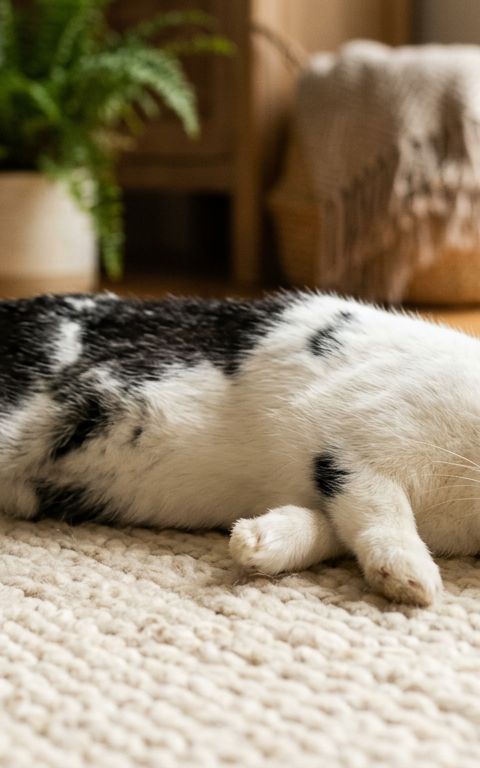
- The Bunny Flop: A sudden roll onto their side or back, showing their belly. This indicates total trust.
- Zoomies: Running at high speeds around the room, often circling furniture or your legs.
- The Loaf: Tucking all four paws under the body to look like a loaf of bread, showing they are calm but alert.
- Chinning: Rubbing their scent glands (under the chin) on objects to claim them as part of their territory.
Social Grooming and Interaction
Grooming is a cornerstone of rabbit social signals. In the wild, rabbits live in complex social groups where grooming reinforces bonds and establishes hierarchy. If your rabbit licks your hand or your clothes, they are showing you immense affection and accepting you as part of their "warren."
Sometimes, a rabbit will nudge you with their nose. This is often a demand for attention or a request for you to move out of their way. If you are petting them and they put their head flat on the floor, they are "asking" for more scratches, specifically around the ears and forehead.

Interpreting Subtle Signs of Discomfort
Because rabbits are naturally stoic, signs of discomfort or stress can be quite hushed. Developing a keen eye for these subtle changes is an essential part of proactive wellness care. A rabbit that is usually active but suddenly becomes withdrawn may be experiencing environmental stress or a change in health status.
One common sign of tension is the "tense crouch." Unlike the relaxed loaf, a tense rabbit will have their weight shifted forward on their paws, ready to bolt. Their eyes may appear wider, showing more of the white (the sclera) than usual. This is a clear signal to provide them with a quiet hiding spot.
Recognizing Environmental Stressors
Changes in the household, such as new pets or loud noises, can influence rabbit emotional cues. If you are considering adding a different animal to your home, it helps to understand the temperaments of other breeds. For example, comparing the calm nature of a French Bulldog and a Poodle can help you decide which canine companion might best suit a home with a sensitive rabbit.
Persistent hiding is another sign to watch for. While rabbits naturally love tunnels and boxes, a rabbit that refuses to come out for treats or social time may be feeling overwhelmed. Always ensure your rabbit has "safe zones" where they can retreat without being disturbed by humans or other household pets.
The Importance of Sound in a Silent World
While mostly quiet, rabbits do make a variety of soft sounds. These vocalizations are often missed by owners who aren't listening closely. Each sound corresponds to a specific emotional state, ranging from pure bliss to mild irritation.
Tooth Purring: This is a soft, rhythmic grinding of the teeth when a rabbit is being petted. It creates a vibration you can feel on their head. It is the rabbit equivalent of a cat's purr and signifies deep relaxation and contentment.
Grunting or Oinking: These quick, soft sounds usually accompany circling behavior. It is often a sign of excitement, or in some cases, a territorial warning if they feel their space is being invaded during feeding time. If your rabbit is not spayed or neutered, this can also be part of a courtship ritual.

Warning Sounds to Note
While tooth purring is positive, loud tooth grinding is different. If the grinding is loud enough to be heard from across the room and is accompanied by a hunched posture, it is a sign of discomfort. In such cases, a visit to a veterinarian is highly recommended to check for underlying wellness considerations.
Hissing or growling are rare but clear indicators of a rabbit that feels threatened. If a rabbit growls, they are giving a fair warning to back off. Respecting these boundaries is crucial for maintaining a trusting relationship with your pet. Never force interaction if your rabbit is expressing a need for distance.
Building Trust Through Movement and Space
To master the art of decoding rabbit body language and behavior, you must meet them at their level—literally. Spending time sitting on the floor allows the rabbit to approach you on their terms. This reduces the "predator" vibe that humans can sometimes project when standing over a small animal.
When a rabbit approaches you and circles your feet, they are engaging in a social greeting. Most rabbits prefer to be the ones to initiate contact. By learning their specific bunny body language patterns, you can respond in a way that makes them feel understood. For instance, mimicking their "nose-to-nose" greeting by gently touching their forehead can be a very bonding experience.
Wellness and Age Considerations
As rabbits age, their energy levels and body language may shift. A senior rabbit might "binky" less frequently or prefer the "loaf" position more often to rest their joints. Maintaining a consistent environment becomes even more important as they grow older to keep them feeling secure.
If you have other pets in the house, like a dog, their age and activity level will also impact your rabbit's comfort. You might be curious about how a dog's age compares to your rabbit's lifecycle. Using tools like the Border Collie age calculator can provide perspective on the different life stages of your household companions.
In conclusion, becoming an expert at decoding rabbit body language and behavior is a journey of patience and observation. By paying attention to the flick of an ear, the speed of a nose twitch, and the joy of a flop, you are speaking your rabbit's language. This proactive approach to communication leads to a happier, more harmonious life for both you and your long-eared friend. Always remember that significant changes in behavior warrant a consultation with a rabbit-savvy veterinarian to ensure your pet stays in peak health.