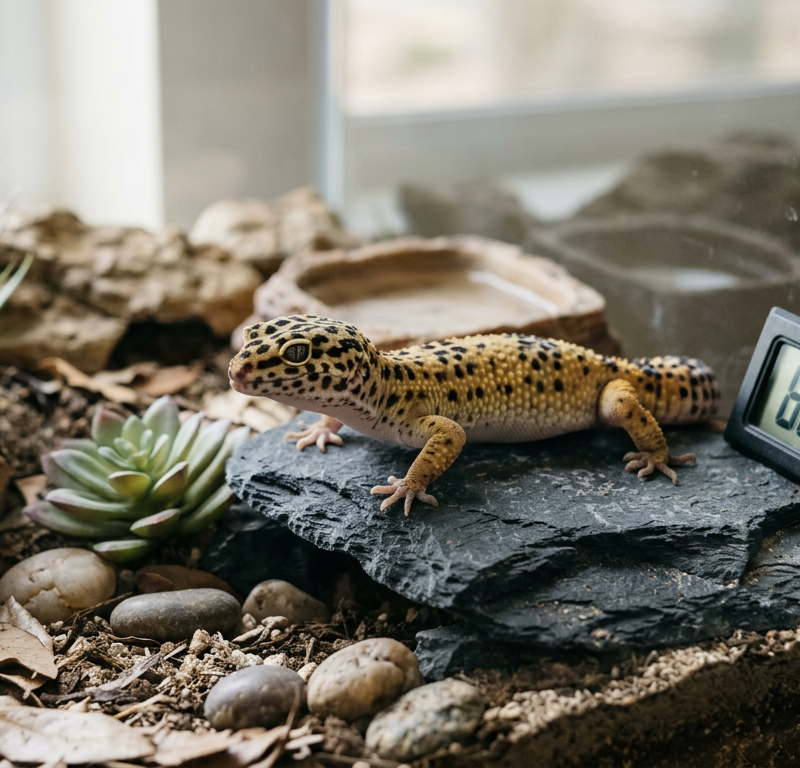
Discovering that your leopard gecko has not been eating for two weeks can feel unsettling for any reptile enthusiast. These hardy lizards are known for their healthy appetites, particularly when they are young and growing. However, it is important to remember that reptiles have much slower metabolisms than mammals, and a leopard gecko not eating for two weeks is a situation that often has a logical explanation.
Understanding the context behind this behavior is the first step in proactive care. Leopard geckos are resilient creatures, and while a two-week span of fasting requires your attention, it does not always signal an emergency. By observing their habitat, body condition, and recent environmental changes, you can often identify the root cause and help your pet return to their regular feeding schedule.
Evaluating Your Gecko Habitat and Temperatures
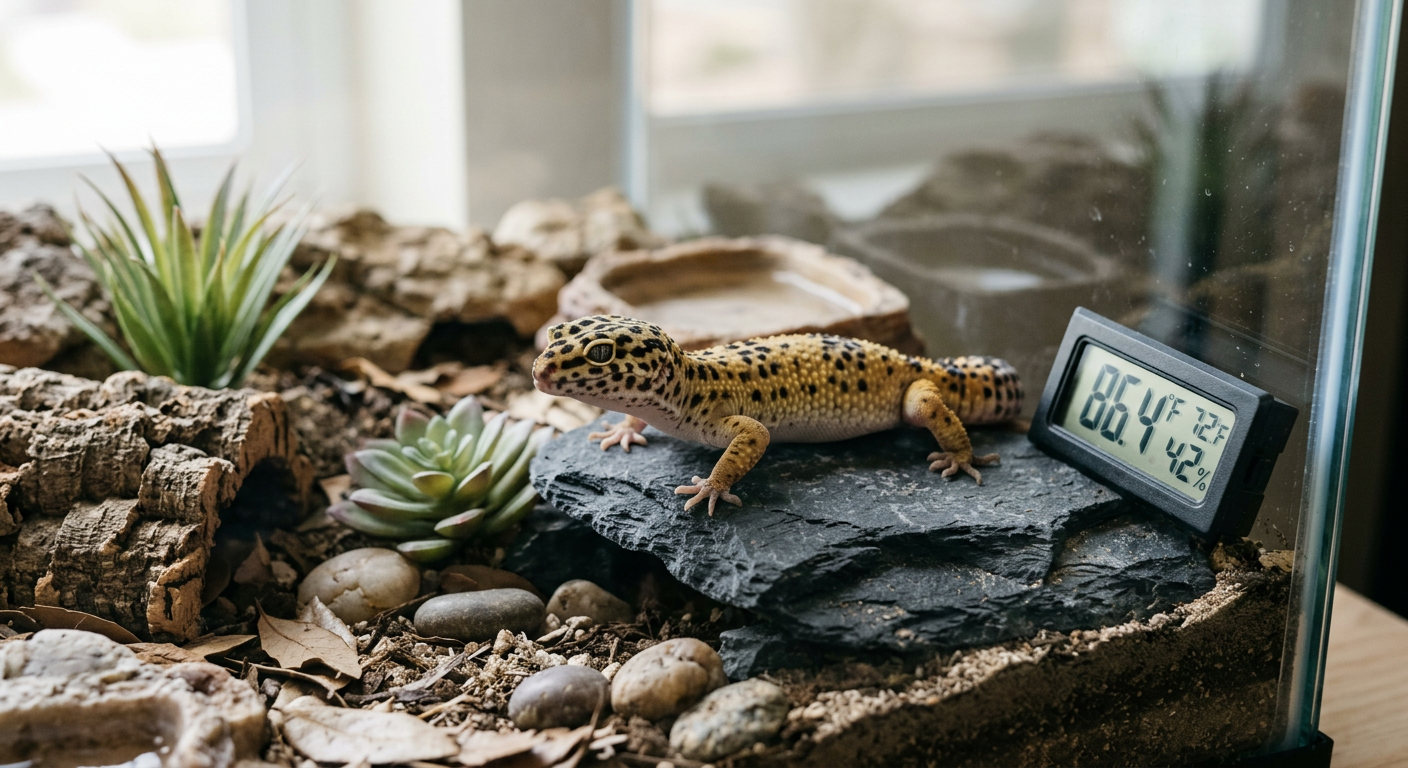
The most common reason for a reptile to stop eating is an issue with their environment. Leopard geckos are ectothermic, meaning they rely entirely on external heat sources to regulate their body temperature and digest their food. If the enclosure is too cool, their digestive enzymes cannot function properly, leading them to refuse meals to prevent food from sitting undigested in their gut.
Check your thermometer readings immediately. The warm side of the tank should ideally stay between 88°F and 92°F, while the cool side should be in the mid-70s. If your heat mat or ceramic heat emitter has lost its efficiency, your gecko may enter a state of semi-dormancy. Ensuring proper thermal gradients is a fundamental part of lizard wellness.
Thermostat Accuracy and Placement
Sometimes the equipment is working, but the placement of the sensor is inaccurate. Ensure your thermostat probe is located directly on the surface where your gecko rests. Using a digital infrared thermometer gun can provide a more accurate secondary reading of the floor temperature compared to wall-mounted analog gauges.
The Role of Proper Lighting
While leopard geckos are crepuscular, a consistent day-night cycle is vital for their biological clock. If the lights are left on for 24 hours or if the room remains too dark during the day, it can stress the animal. Stress is a major contributor to appetite loss in captive reptiles.
Seasonal Changes and Brumation Impacts
If you notice your leopard gecko isn't interested in food during the late autumn or winter months, they may be experiencing "brumation." This is a natural, biological process similar to hibernation where reptiles slow down their activity levels and metabolism in response to cooler temperatures and shorter daylight hours.
Even if you keep your indoor climate controlled, geckos can often sense the subtle changes in atmospheric pressure and light quality outside. During this time, they may hide more often and refuse food for several weeks. As long as they are not losing significant weight in their tail, this is often a normal seasonal transition.
To learn more about how different species react to environmental cues, you might enjoy our article on reading behavior in reptiles and aquarium fish. Understanding these subtle signs can make you a more confident pet parent.
Identifying Shedding Cycles and Stress Factors
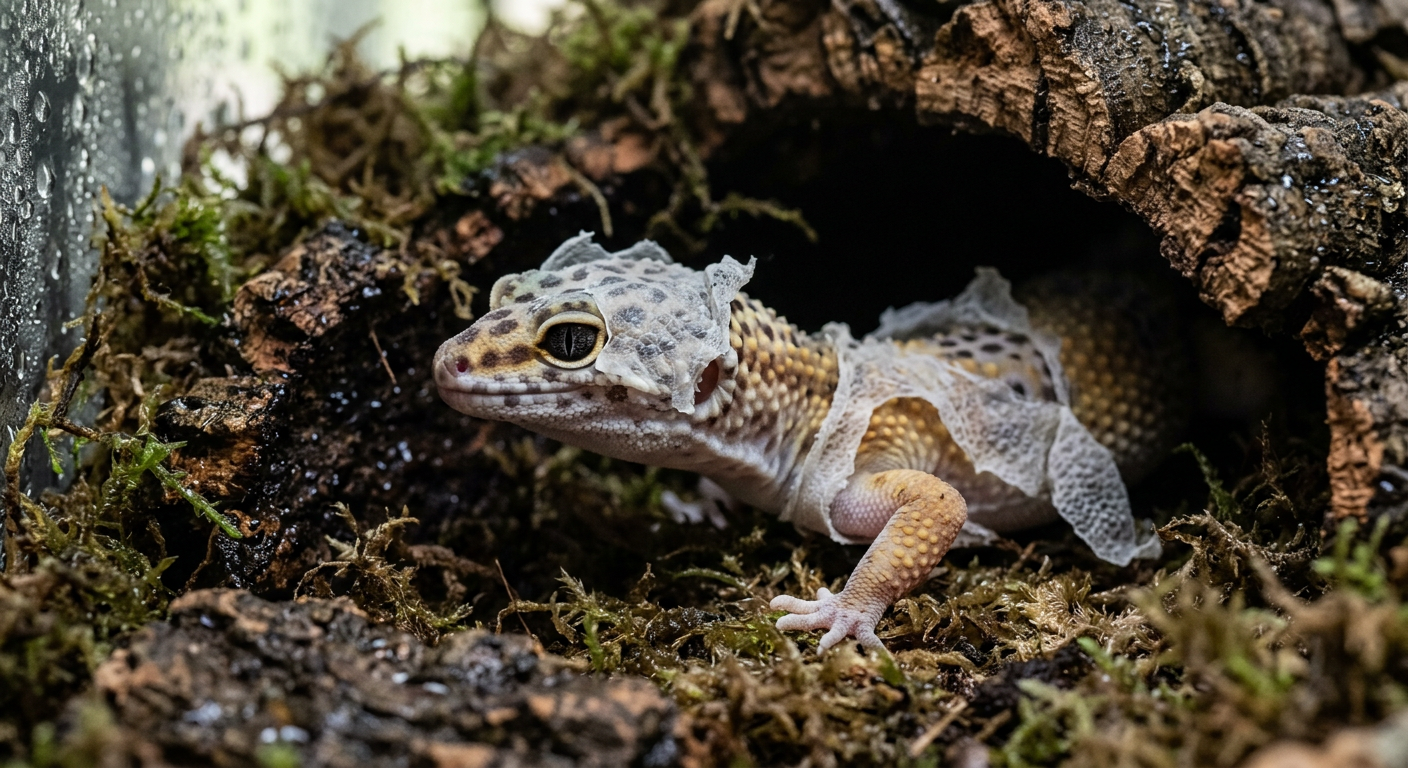
Another common reason for a temporary hunger strike is the shedding process, also known as ecdysis. In the days leading up to a shed, a leopard gecko's skin will turn dull and grayish. During this period, their skin becomes tight and uncomfortable, often causing them to lose interest in hunting until the old skin is fully removed.
Stress can also play a significant role. Common stressors include:
- Moving the enclosure to a new room or a high-traffic area.
- Adding a new cage mate (note: leopard geckos are generally solitary).
- Aggressive handling or over-handling by owners.
- Changes in the type or size of the feeder insects provided.
If you have recently moved or rearranged the tank, give your gecko at least 7 to 10 days to settle in without much interaction. This "quiet time" allows their cortisol levels to drop, which naturally encourages their appetite to return. For those interested in how other popular pets compare in terms of care needs, you can check out comparisons like the French Bulldog vs Poodle to see how different animals require unique environmental stability.
Health and Wellness Considerations
While many causes are environmental, sometimes a leopard gecko not eating for two weeks can stem from a health issue like impaction or parasites. Impaction occurs when a gecko accidentally ingests substrate, such as loose sand, which blocks their digestive tract. This is why many keepers prefer paper towels, tile, or specialized reptile carpets.
Internal parasites are another wellness consideration. If your gecko has a "thin" look despite having been eating recently, or if their droppings look unusual, a veterinarian can perform a fecal exam. Catching these issues early is part of being a proactive caregiver for your scaly friend.
When to Consult a Veterinarian
You should seek professional advice if the appetite loss is accompanied by lethargy, sunken eyes, or a significant thinning of the tail. The tail is where leopard geckos store their fat reserves; if the tail remains plump, they generally have enough energy to sustain a short fast. However, if the tail is thinner than the neck, it is time for a check-up.
Encouraging Your Gecko to Eat Again
Once you have verified that the temperatures are correct and your gecko isn't shedding, you can try a few gentle methods to stimulate their appetite. Variety is often key. If you always feed mealworms, try offering a few dubia roaches or a protein-rich hornworm. The movement of a different insect can sometimes trigger a dormant hunting instinct.
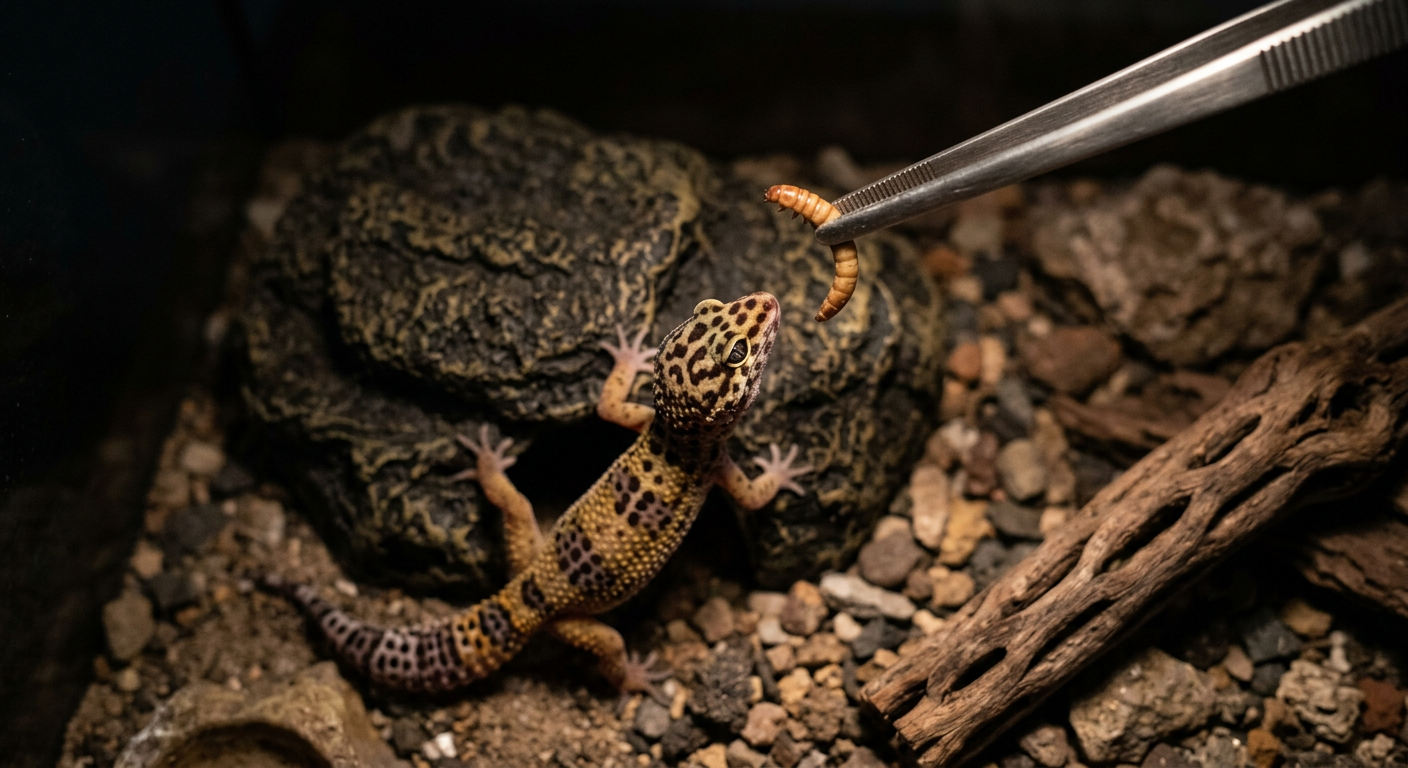
Ensure you are gut-loading your insects with nutritious vegetables 24 hours before feeding them to your gecko. This ensures that when your pet does eat, they are getting the maximum nutritional benefit. Additionally, don't forget to dust your insects with calcium and Vitamin D3, as nutritional deficiencies can also lead to a lack of interest in food.
Creating a Low-Stress Feeding Environment
Try feeding your gecko in the evening when they are naturally most active. Dim the lights in the room and avoid making sudden movements. Some geckos are "shy eaters" and prefer to have their food left in a shallow, escape-proof bowl so they can hunt in private during the night.
Conclusion
Seeing your leopard gecko not eating for two weeks can be a source of worry, but it is often a signal to adjust their care routine rather than a cause for alarm. By double-checking your habitat temperatures, monitoring for signs of shedding, and providing a stress-free environment, most keepers find their geckos return to eating within a short time. Always keep an eye on their tail thickness as a guide for their overall energy reserves, and consult a reptile veterinarian if you notice any physical signs of illness. With patience and attentive care, your leopard gecko will likely be back to their happy, hungry self soon.