Seeing your aquatic friends struggling for air is a concerning experience for any hobbyist. You might find yourself wondering why you see your fish gasping at surface but tank is clean and the water looks crystal clear. While a visually tidy aquarium is a great start, the underlying cause of respiratory distress often involves factors we cannot see with the naked eye.
Aquatic environments are delicate ecosystems where balance is key. Even when the glass is sparkling and the gravel is vacuumed, the invisible chemistry of the water dictates how well your fish can breathe. Understanding these hidden variables is the first step toward restoring a peaceful, healthy environment for your pets.
Understanding Why Fish Gasp for Air
When a fish hangs out near the top of the aquarium and appears to be "gulping" or "piping," they are usually trying to access the oxygen-rich layer of water at the very surface. In many cases, this indicates that the dissolved oxygen levels in the deeper parts of the tank are insufficient for their needs.
It is important to remember that fish do not breathe water; they extract dissolved oxygen from it using their gills. If the oxygen concentration drops, their natural instinct is to move to the surface where gas exchange with the atmosphere is highest. This behavior is a clear communication that something in their environment requires adjustment.
Common Causes of Low Oxygen Levels
Even in a clean tank, several factors can deplete the oxygen supply. One of the most common reasons for a sudden drop in oxygen is water temperature. Warm water holds significantly less dissolved oxygen than cooler water. During summer months or due to a heater malfunction, a spike in temperature can leave your fish breathless.
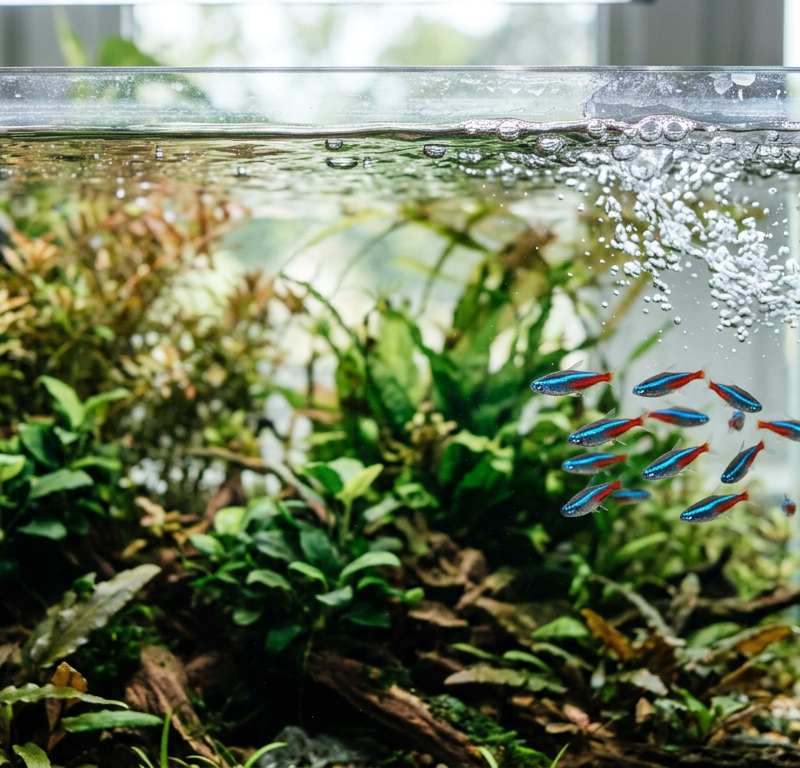
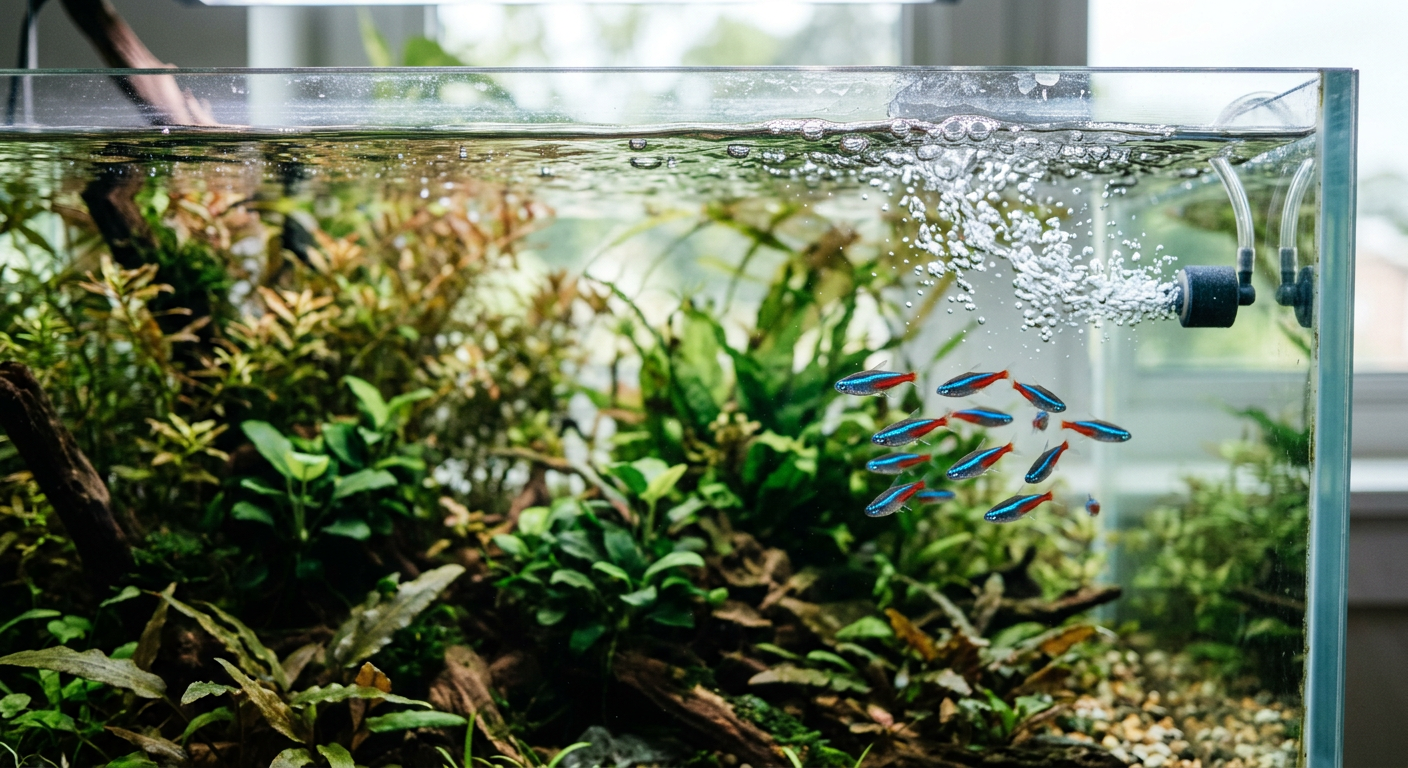
Another factor is the lack of surface agitation. Oxygen enters the water through the surface, and carbon dioxide escapes the same way. If your filter output is gentle or you lack an air stone, the water surface may become stagnant. This creates a barrier that prevents fresh oxygen from mixing into the water column.
Overstocking and Organic Load
Sometimes, the "cleanliness" of a tank is deceptive. If you have too many fish in a small space, they may simply be consuming oxygen faster than the environment can replenish it. Even if you perform regular water changes, a high bio-load increases the demand for oxygen by both the fish and the beneficial bacteria living in your filter.
You can learn more about how different species interact with their environment by checking out our guide on reading behavior in reptiles and aquarium fish. Just as reptiles show stress through movement, fish use the water column to signal their comfort levels.
The Invisible Dangers of Ammonia and Nitrites
A tank that looks clean can still be chemically "unseen." Ammonia and nitrites are toxic byproducts of fish waste that are completely invisible. While we often associate these with cloudy water, they can peak in clear water too, especially in newer setups or after a deep cleaning that accidentally removed beneficial bacteria.
Nitrite poisoning is particularly relevant when fish are gasping. Nitrites enter the bloodstream and bind to hemoglobin, making it impossible for the fish's blood to carry oxygen. This is often called "brown blood disease." The fish may be surrounded by oxygen, but their bodies cannot physically process it, leading them to gasp at the surface in a desperate attempt to find relief.
The Role of pH Fluctuations
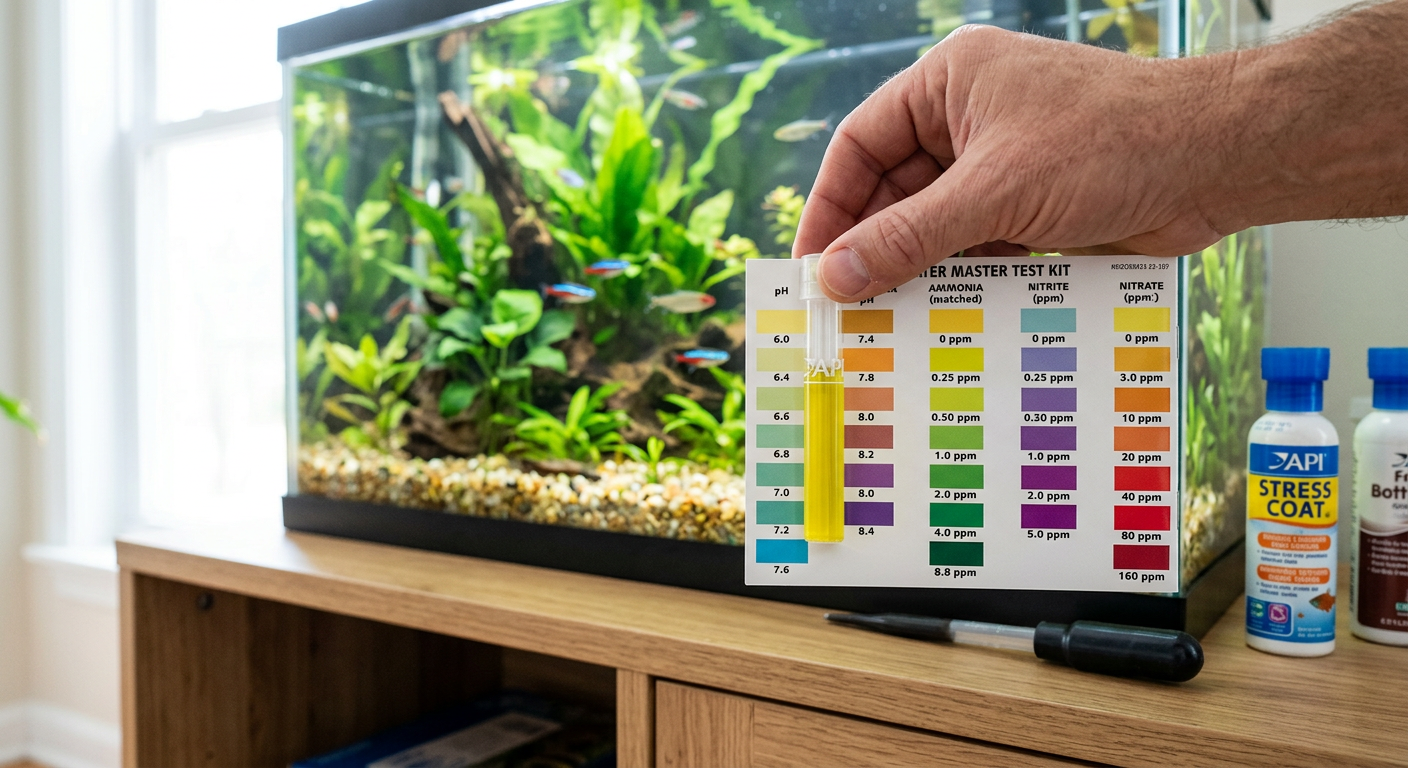
Rapid changes in pH levels can also cause respiratory distress. If the pH drops too low (acidosis) or rises too high (alkalosis), it can damage the delicate gill tissues of your fish. Damaged gills are less efficient at extracting oxygen, forcing the fish to work harder to breathe even if the water itself is well-oxygenated.
How to Increase Oxygenation Quickly
If you notice your fish struggling, there are several immediate steps you can take to improve their comfort. These proactive wellness steps are designed to stabilize the environment while you investigate the root cause.
- Lower the Water Level: If you use a HOB (Hang-On-Back) filter, lowering the water level slightly will cause the returning water to splash more, increasing surface agitation.
- Add an Air Stone: Using an air pump with a bubbler is the most effective way to break the surface tension and facilitate gas exchange.
- Perform a Water Change: A 25-30% water change with dechlorinated water of the correct temperature can provide an immediate boost of fresh oxygen and dilute any potential toxins.
- Check Your Heater: Ensure the temperature is within the ideal range for your specific species. If the water is too warm, gradually lower the setting.
While these steps help in the short term, consistent monitoring is essential. If the behavior continues despite these changes, it is time to consult a veterinarian who specializes in aquatic medicine or a professional aquarium service provider.
When Medicated Treatments Cause Issues
Ironically, trying to help your fish can sometimes lead to breathing difficulties. Many common aquarium medications, especially those used to treat fungal or bacterial infections, can reduce the oxygen-carrying capacity of the water. Some treatments create a slight film on the surface or change the water density.
If you are currently medicating your tank and notice gasping, you must increase aeration immediately. Most medication labels will include a warning to add an extra air stone during treatment for this very reason. It is a vital part of proactive care during any wellness recovery period.
Preventing Future Respiratory Distress
Maintaining a healthy aquarium involves more than just cleaning the glass. Routine testing with a liquid test kit is the only way to ensure the invisible parameters are safe. Aim to test for ammonia, nitrites, and nitrates at least once a week.
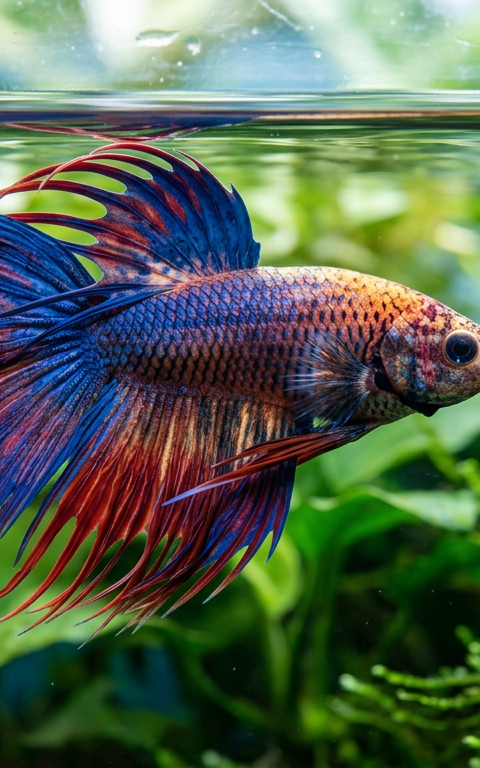
Consider the long-term balance of your tank. If you are comparing pet needs, much like looking at a French Bulldog vs Poodle to see which fits your lifestyle, you must research the specific oxygen requirements of your fish species. High-energy fish like Danios require much more oxygen than slower-moving species like Betta fish.
In conclusion, seeing your fish gasping at surface but tank is clean is a signal that the invisible balance of your aquarium has shifted. By focusing on surface agitation, temperature control, and water chemistry, you can ensure your aquatic pets live a long, comfortable life. Always prioritize observation and don't hesitate to seek professional advice when your underwater world feels out of balance.