If you have ever watched your feline friend slowly extend a paw to nudge a glass toward the edge of a counter, you know the mix of curiosity and confusion it creates. You might wonder why cats knock things off tables with such deliberate focus. While it can be a bit frustrating to clean up spilled water or broken trinkets, this common feline behavior is actually a fascinating look into their natural instincts and intelligence.
Understanding why cats knock things off tables requires us to look at the world through their eyes. For a cat, the home isn't just a living space; it is a complex environment full of potential prey, interesting textures, and opportunities for social interaction. By exploring these motivations, pet owners can learn to manage the behavior while strengthening their bond with their furry companions.
The Hunting Instinct at Work
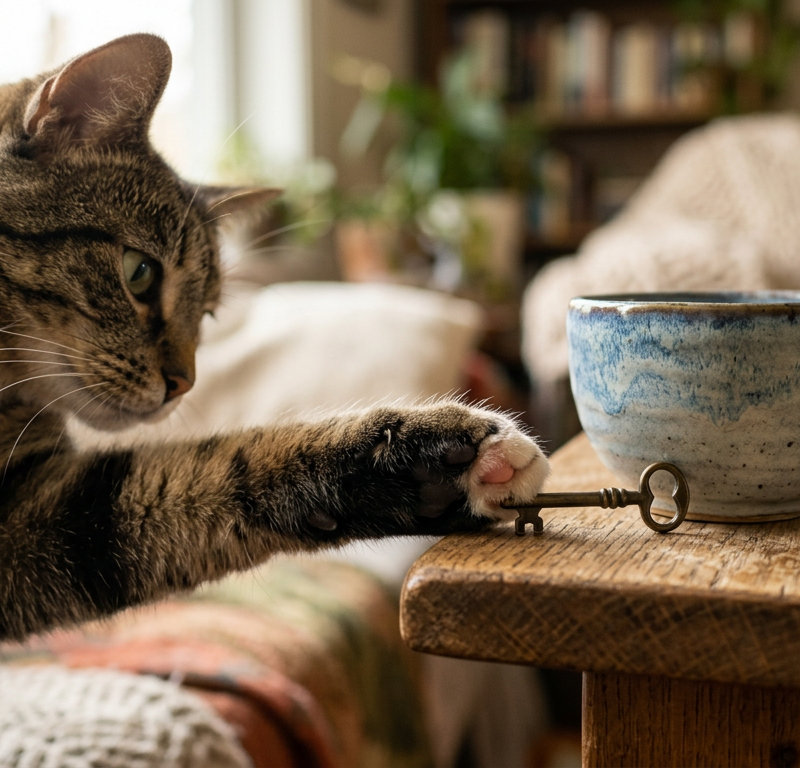
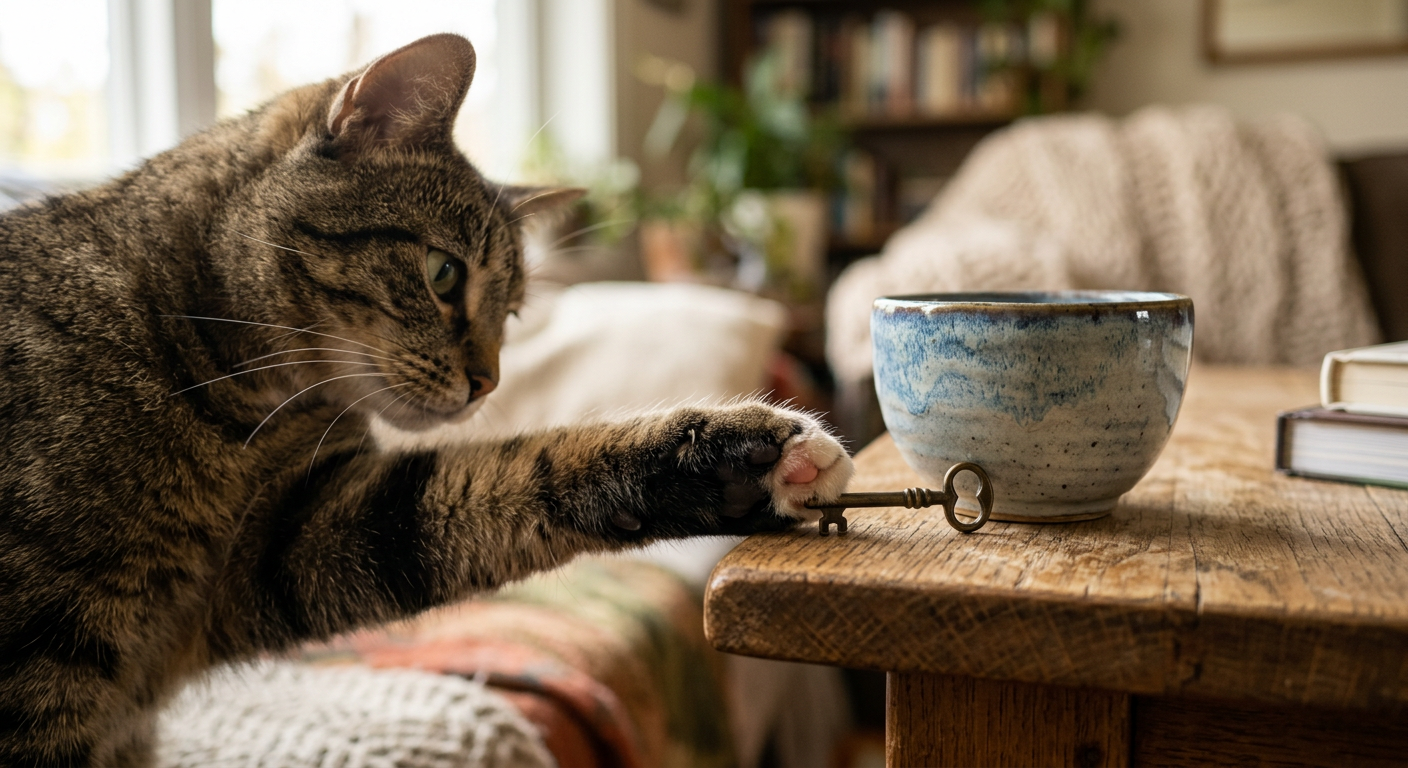
One of the primary reasons why cats knock things off tables is rooted deep in their biological history as solitary hunters. In the wild, cats use their sensitive paws to test whether a small creature is alive, injured, or safe to approach. When your cat bats at a pen or a set of keys, they are essentially performing a predatory test.
Testing for Movement
To a cat, a stationary object might be "hiding" its potential for movement. By giving it a sharp tap or a gentle slide, they are checking to see if it will scurry away like a mouse or a beetle. This tactile exploration is a fundamental part of how they process information about their surroundings.
Refining Motor Skills
Even for indoor cats who have never seen a real mouse, the urge to practice hunting remains strong. Manipulating objects on a high surface allows them to refine their paw-eye coordination and timing. It is a form of self-directed training that keeps their reflexes sharp and their minds engaged.
Seeking Engagement and Attention
Cats are highly observant creatures, and they are excellent at learning cause-and-effect relationships. If your cat learns that the sound of a falling remote control brings you running into the room, they have successfully discovered a way to get your attention. This interactive element is a major factor in why cats knock things off tables regularly.
The Power of Your Reaction
Even if you are coming over to tell them "no" or to move them away from the table, your cat views this as a successful social interaction. For some cats, negative attention is still better than no attention at all. They might use this behavior specifically when they feel it is time for dinner or play.
Establishing a Routine
Many owners notice this behavior occurs at specific times of the day, such as early in the morning or right before their usual feeding time. Over time, the cat learns that knocking something over is the most effective "alarm clock" to get their human out of bed. You can find more about how cats use sounds and actions to communicate in our guide to understanding cat meowing patterns.
Sensory Exploration and Curiosity
Beyond hunting and attention-seeking, cats are naturally curious animals. They use their paws as secondary sensory organs, almost like human hands. The pads of their paws are filled with nerve endings that help them detect vibrations, temperatures, and textures.
Understanding Sound and Gravity
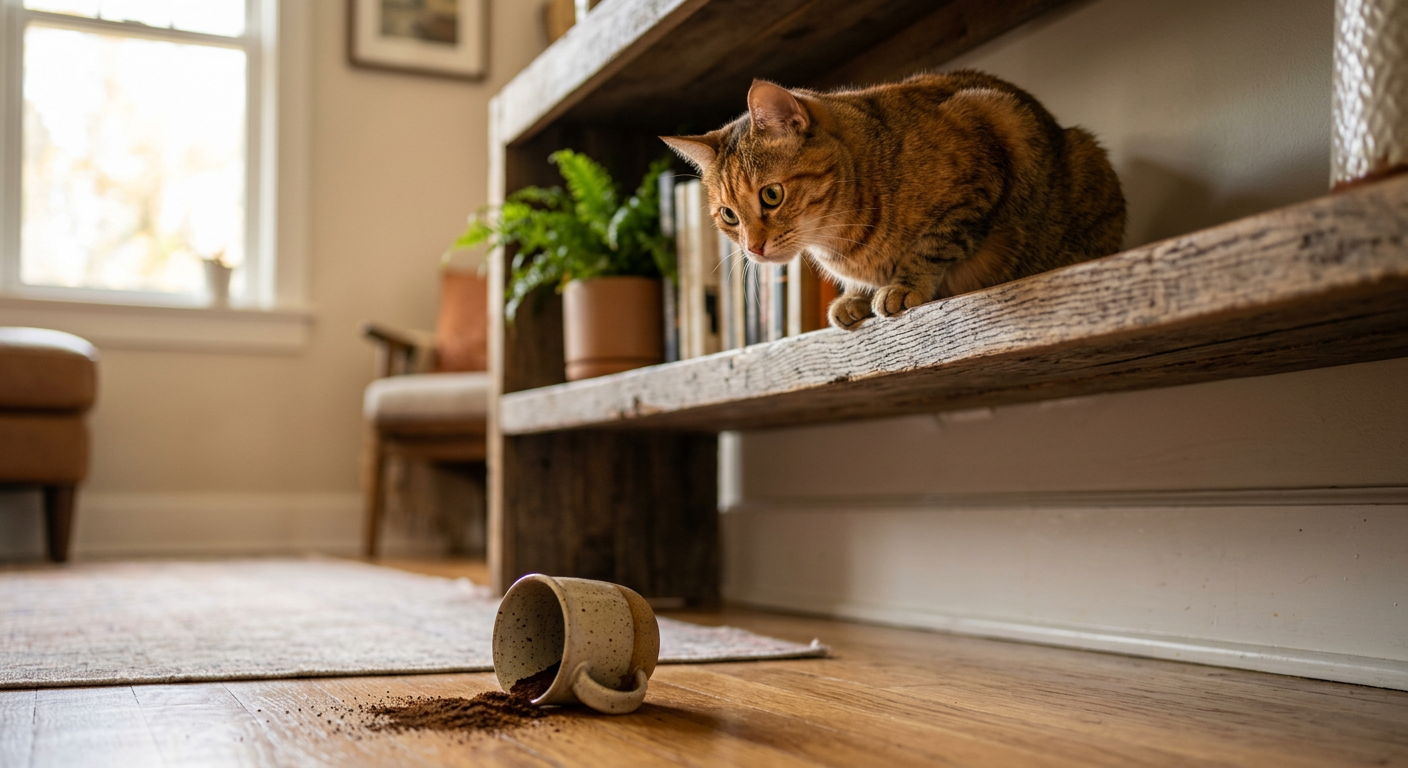
When a cat watches an object fall and hit the floor, they are observing physics in action. The sound the object makes upon impact provides them with information about the material of the object and the floor. This curious exploration helps them map out the "rules" of their indoor territory.
Tactile Feedback
Sometimes, a cat might be attracted to how an object feels. A smooth glass surface or a crinkly piece of paper provides unique tactile feedback. Moving these items across a table allows the cat to experience those sensations more deeply, leading to the eventual nudge off the edge.
Environmental Enrichment and Boredom
A lack of mental stimulation can often lead to "paws-on" mischief. If a cat does not have enough toys or activities to occupy their time, they will find their own ways to stay entertained. This is why cats knock things off tables more frequently when they are left alone for long periods without play.
The Need for Vertical Play
Cats naturally crave high vantage points. Tables, counters, and shelves are their preferred "lookouts." When these surfaces are cluttered with human items, the cat sees them as obstacles in their path. Clearing a path by knocking objects over is a simple way for them to reclaim their territory.
Strategic Toy Placement
To reduce this behavior, it is helpful to provide "legal" objects for them to play with. Investing in cat trees or dedicated wall shelves can give them the vertical space they need. If you are curious about how specific breeds handle indoor environments, you might enjoy comparing the needs of a Maine Coon vs British Shorthair regarding space and activity levels.
How to Manage the Behavior
While we now understand why cats knock things off tables, living with the consequences can still be a challenge. The goal is not to punish the cat—as they are simply following their instincts—but rather to redirect the behavior toward more appropriate outlets.
Creating a Cat-Safe Zone
The most immediate solution is to "cat-proof" your surfaces. Avoid leaving fragile or heavy items near the edges of tables. Using museum wax or double-sided tape on specific areas can also discourage cats from stepping there, as they generally dislike sticky textures on their paws.
Scheduled Play Sessions
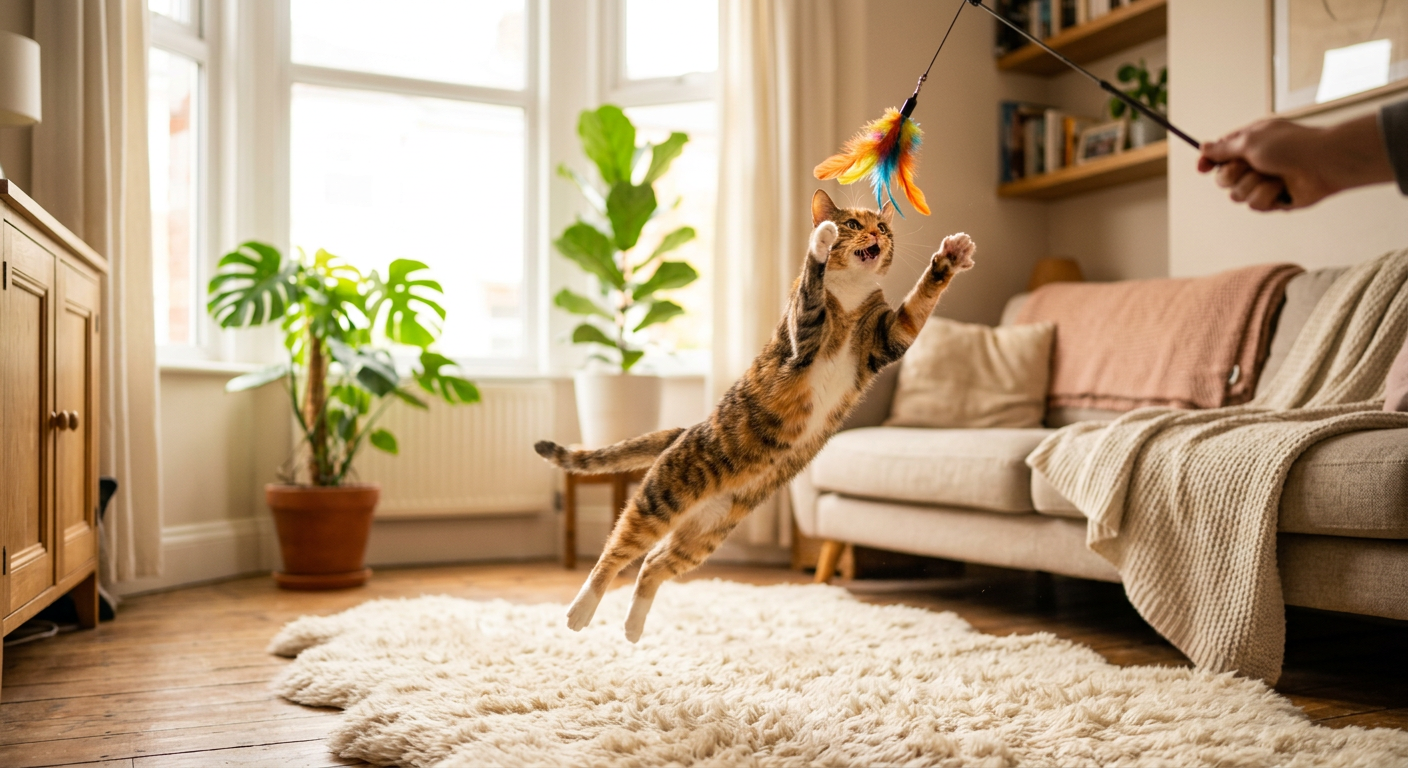
Providing high-intensity play twice a day can drain your cat's hunting energy. Use feather wands or laser pointers to simulate the chase. When a cat has successfully "hunted" a toy, they are much less likely to go looking for trouble on your nightstand. Enrichment is a vital part of feline wellness and psychological health.
Interpreting Body Language
Watching your cat's body language before they strike can tell you a lot about their mood. Is their tail twitching with excitement, or are they giving you a slow, deliberate look? Understanding these cues helps you intervene before the glass hits the floor. For a deeper dive into these subtle signals, read our post on decoding your cat's behavior.
The Role of the Slow Blink
Sometimes, after a cat knocks something over, they might look at you and blink slowly. While it feels like they are being cheeky, this is actually a sign of trust and relaxation. To learn more about this specific eye contact, check out our article on the meaning behind slow blinks.
When to Consult a Professional
In rare cases, a sudden increase in destructive behavior or restlessness could indicate underlying stress or a medical issue. If your cat seems unusually frantic or if their behavior changes overnight, it is always a proactive step to consult with your veterinarian. They can help rule out any health concerns that might be affecting your cat's temperament.
Conclusion
Ultimately, why cats knock things off tables is a blend of biology, curiosity, and a desire for companionship. By recognizing that this isn't an act of spite, but rather a display of their natural brilliance, we can create a home environment that satisfies their needs while keeping our valuables safe. With a little patience and the right enrichment, you and your cat can coexist peacefully alongside all your favorite table-top decorations.