Finding that your dog suddenly terrified of stairs can be a puzzling experience for any pet owner. One day your companion is racing up to the bedroom, and the next, they are rooted to the spot at the bottom of the flight. This change in behavior is rarely random and usually serves as a communication tool for an underlying issue.
Understanding this shift requires looking at the world through your dog's eyes. It could be a matter of physical comfort, a previous negative experience, or even age-related changes. By identifying the root cause, you can help your furry friend regain their confidence and mobility.
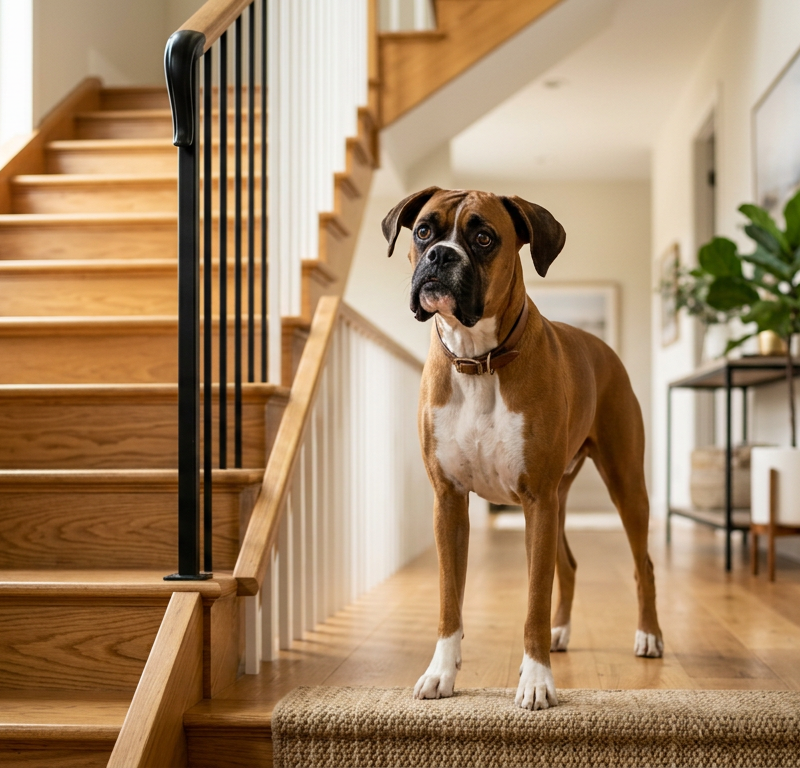
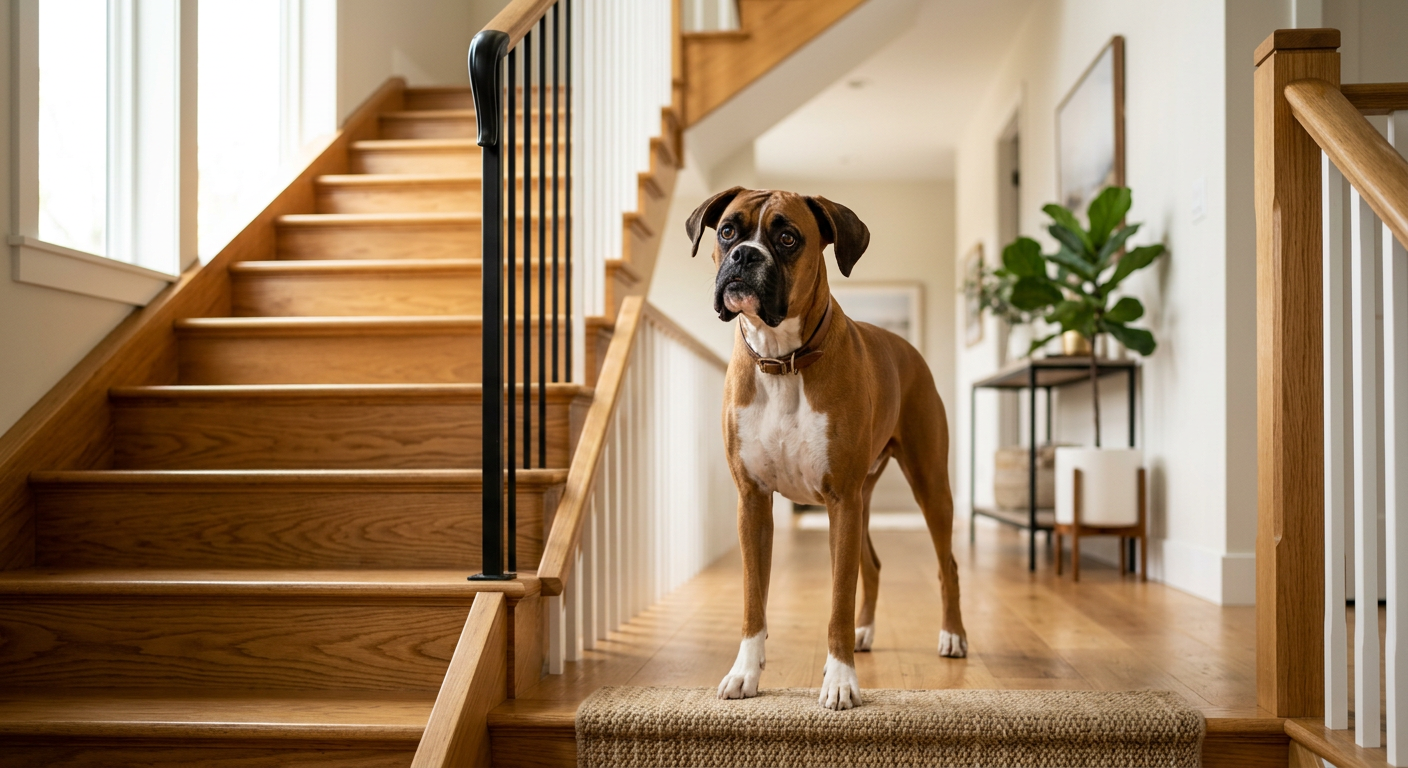
A worried Boxer dog standing at the bottom of a wooden staircase looking up with hesitation.
Physical Discomfort and Wellness Considerations
The most common reason for a sudden aversion to stairs is physical discomfort. Navigating an incline puts specific pressure on a dog's joints, particularly the hips, knees, and spine. If your dog is experiencing a new ache or an injury, the stairs represent a source of pain rather than a path to their favorite human.
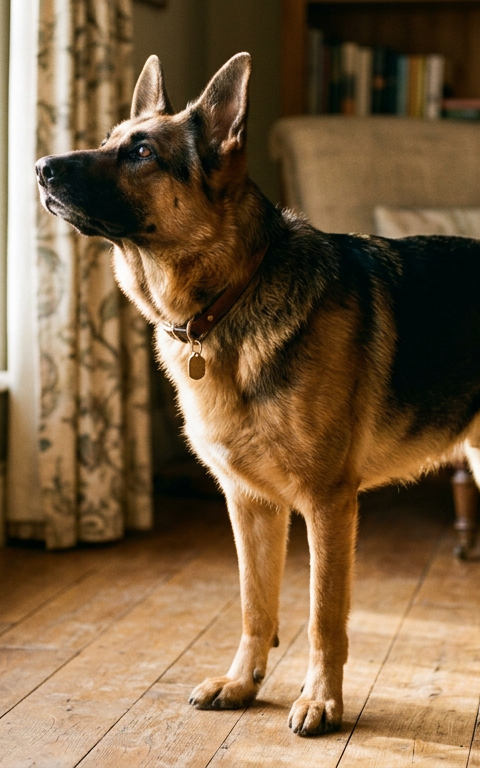
Conditions like arthritis or hip dysplasia often manifest as a reluctance to climb. You might notice this more in certain breeds as they get older. If you own a larger breed, checking a German Shepherd age calculator or similar tool can help you understand if your dog is entering their senior years, where joint issues become more prevalent.
Vision Changes and Depth Perception
For a dog, stairs are a series of visual challenges. If a dog's vision begins to cloud due to cataracts or other wellness considerations, the edges of the steps become blurry. This makes it difficult for them to judge where to place their paws safely.
When a dog cannot see where the next step begins, they may feel a sense of vertigo or insecurity. This is especially true in dim lighting or on stairs with patterns that create optical illusions. If your dog seems to hesitate specifically at dusk or dawn, their eyesight may be the primary factor.
Environmental Factors and Household Changes
Sometimes the issue isn't with the dog, but with the stairs themselves. Small changes in your home environment can have a big impact on your dog's willingness to navigate different levels. A dog may become wary if they feel the "ground" beneath them is no longer reliable.
Slip-prone surfaces are a major deterrent. If you have recently polished your hardwood stairs or if your dog had a minor slip that you didn't witness, they may now associate the staircase with a lack of traction.
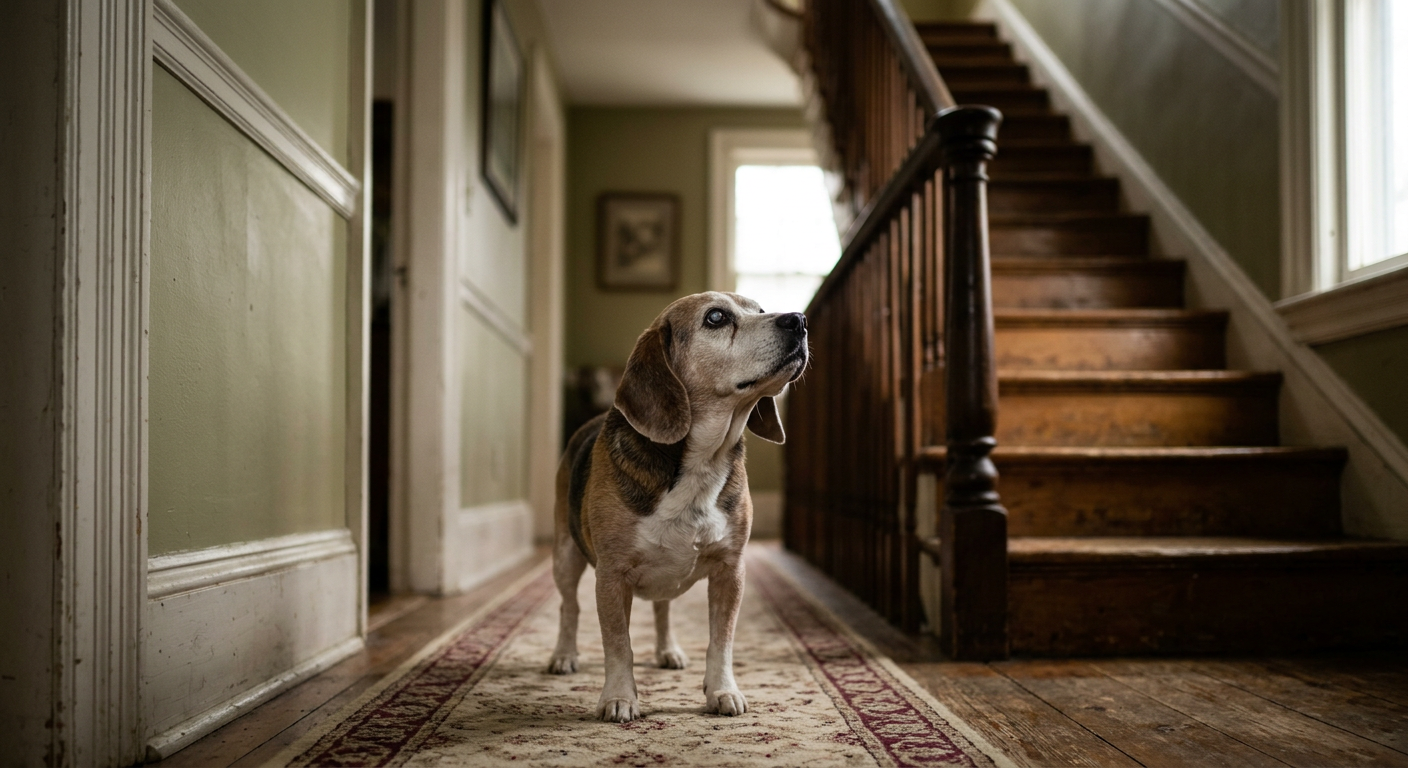
A senior Beagle looking up at a staircase in a dimly lit hallway.
Negative Associations and Traumatic Events
Dogs are excellent at associative learning. If a loud noise occurred while they were on the stairs—such as a door slamming or something falling—they might link that scary sound to the location. Similarly, if they tripped or pinched a paw, that single event could be enough to trigger a lasting fear.
This type of behavioral shift is similar to when a dog starts acting weird and hiding for no reason. They are trying to avoid a space they now perceive as unsafe. Patience is key when dealing with these emotional associations.
The Impact of Aging on Confidence
As dogs age, their cognitive function and physical strength naturally shift. A senior dog may feel less steady on their feet, leading to a "better safe than sorry" mentality. Understanding your dog's life stage is vital for setting realistic expectations for their activity levels.
* Loss of muscle mass in the hind legs making the climb harder.
* Reduced spatial awareness making the descent feel steeper.
* Increased sensitivity to cold surfaces like tile or stone steps.
* Generalized anxiety that often accompanies canine cognitive dysfunction.
How to Help Your Dog Overcome Stair Anxiety
Once you have consulted with a veterinarian to rule out medical issues, you can begin the process of rebuilding your dog's confidence. This process should always be gentle and reward-based. Never force or pull a dog up the stairs, as this will likely increase their fear.
Start by making the environment more "dog-friendly." If your stairs are slippery, consider adding carpet treads or non-slip strips. Improve the lighting in the stairwell so your dog can clearly see the edge of every step.
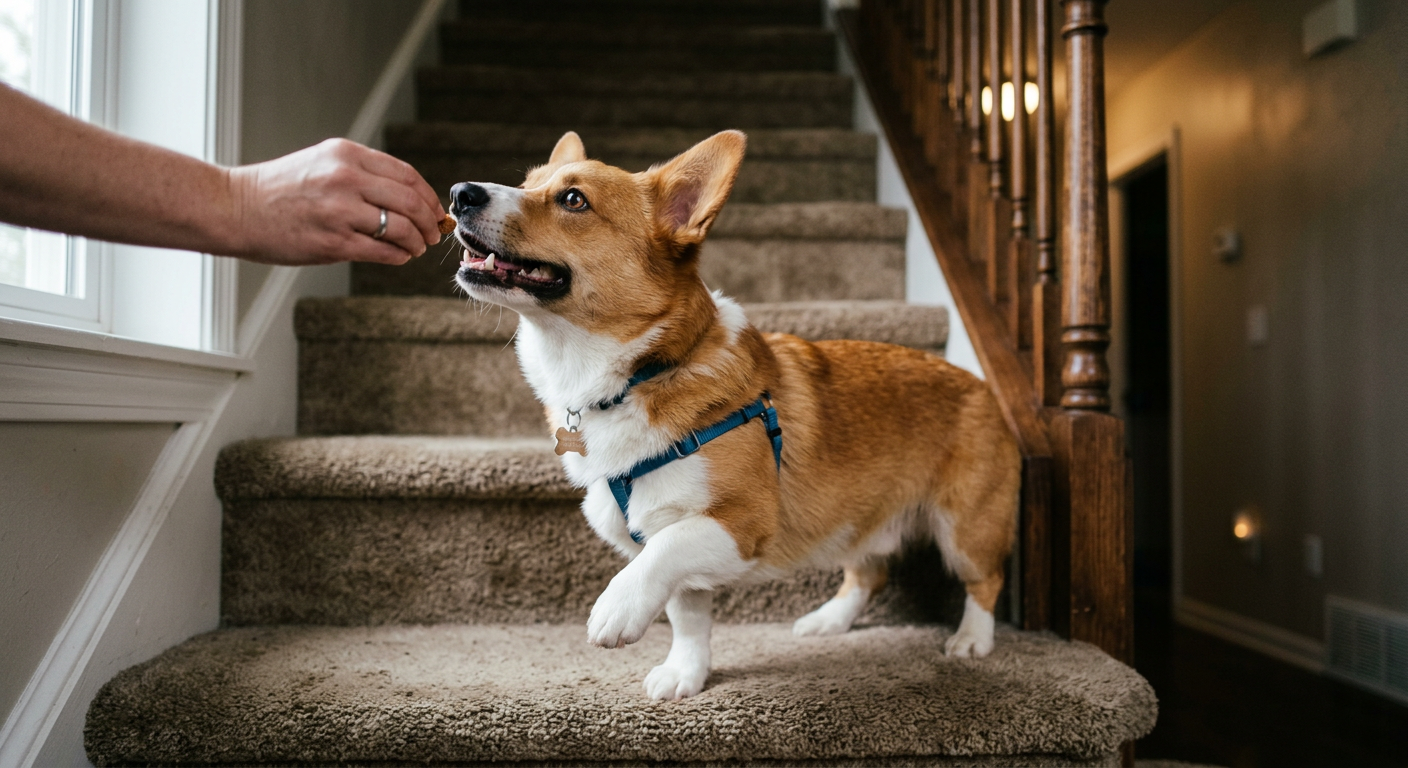
A person kneeling on stairs giving a treat to a Corgi to encourage climbing.
Step-by-Step Desensitization Techniques
Desensitization involves slowly reintroducing your dog to the stairs in a way that creates positive associations. Use high-value treats to lure them toward the first step. Reward them just for standing near the stairs, then for putting one paw on the bottom step.
Repeat this process over several days. Gradually encourage them to take one step, then two, always offering plenty of praise. If they show signs of stress, like panting or trembling, stop and try again later at a lower difficulty level.
Alternative Solutions for Senior Dogs
If your dog is a senior or has a permanent physical limitation, it might be time to adapt your home to their needs. Not every dog needs to use the stairs for a full and happy life.
1. **Block access:** Use baby gates to prevent them from attempting stairs and potentially hurting themselves.
2. **Ramps:** If you only have a few steps (like onto a porch), a pet ramp can provide a much gentler incline.
3. **Support harnesses:** Use a lifting harness that allows you to take some of the weight off their hindquarters as they climb.
4. **Relocate essentials:** Move their bed, food, and water to the ground floor to reduce the number of trips they need to take.
Comparing Breed Predispositions
Some breeds are more prone to stair-related issues than others due to their body structure. For example, comparing a French Bulldog vs Poodle, the Frenchie's heavy front-end and shorter legs might make steep stairs more intimidating as they age compared to the more agile Poodle.
Similarly, long-backed breeds like Dachshunds or Basset Hounds are at a higher risk for spinal issues, which can make stairs physically risky. Knowing your dog's specific breed risks allows you to be proactive about their joint health from a young age.
When to See a Professional
If your dog suddenly terrified of stairs is also showing other signs of distress, a professional evaluation is necessary. Sudden behavior changes can sometimes be linked to neurological issues or acute pain that isn't visible to the naked eye.
A veterinarian can perform a physical exam to check for range of motion and localise any pain. If the issue is purely behavioral, a certified professional dog trainer or a veterinary behaviorist can create a custom plan to help your dog feel safe again.
Conclusion
Having a dog suddenly terrified of stairs can be stressful, but with a compassionate approach, most dogs can either regain their confidence or adapt to a new routine. Always prioritize their comfort and safety. By focusing on wellness and positive reinforcement, you can ensure your dog feels secure navigating your home. If you notice other strange behaviors, like your dog following you to the bathroom more often, it may be a sign they are seeking extra "safety" from your presence during this fearful time.
Frequently Asked Questions
The most common cause is physical pain, such as arthritis, hip dysplasia, or a recent paw injury. Vision changes or a previous slip on the stairs can also trigger sudden fear.
No, you should never force or pull a fearful dog. This can lead to increased anxiety or potential injury. Instead, use positive reinforcement and gradual desensitization.
Add non-slip carpet treads, improve the lighting in the stairwell, and keep the area free of clutter. Ensuring your dog's nails are trimmed can also help them get better traction.
Descent is often more frightening because it requires more balance and puts significant pressure on the front shoulders and elbows. It also requires better depth perception.
We're passionate pet lovers and AI enthusiasts dedicated to helping you understand your furry friends better through the power of artificial intelligence.
AI Analysis
Free!
AI-Powered Pet Analysis
Understand Your Pet's Emotions
Our AI analyzes photos and videos to reveal what your pet is really feeling.