Medical Disclaimer: The content on this site is for informational and educational purposes only and is not a substitute for professional veterinary advice. Pet Decoder AI analyzes audio and behavioral patterns but cannot diagnose medical conditions. If your cat is showing sudden behavioral changes, please consult a veterinarian.
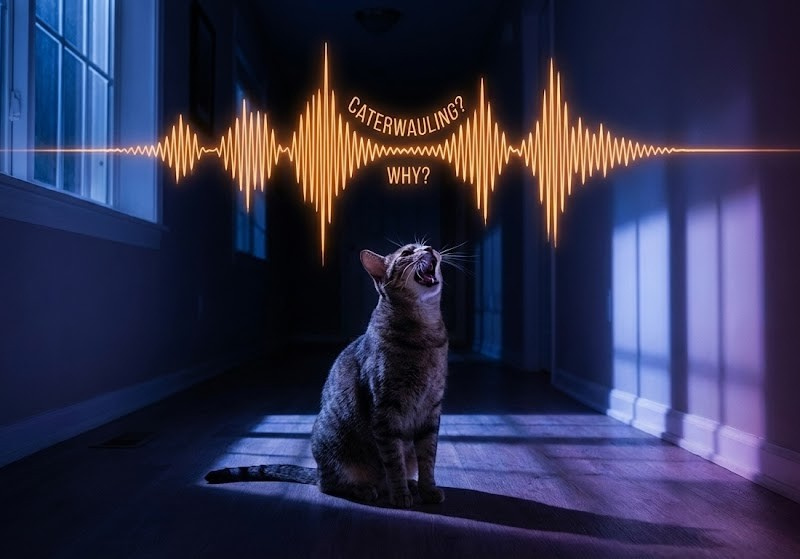
It starts at 3:00 AM. You are fast asleep when a sound cuts through the darkness. It isn't a cute "meow." It is a long, drawn-out, guttural moan that sounds eerily like a human child crying—or a siren.
This specific type of vocalization is called caterwauling.
For many cat owners, this nightly serenade is the stuff of nightmares. You rush to the living room, heart pounding, only to find your cat sitting in the middle of the hallway, staring at a blank wall, looking perfectly fine.
Why does this happen when the house is quiet? Is your cat in pain? Are they seeing ghosts? Or are they just bored?
In this guide, we will break down the science of cat caterwauling, helping you decode the difference between a simple cry for attention and a medical red flag.
What is "Caterwauling"? (And How It Differs from Meowing)
Before you can fix the problem, you must identify the sound. Cats have a vast vocal range, but caterwauling is distinct.
The "Chatter" or Meow: Short, mid-pitch bursts (“Mrr? Mrow?”). This is usually a request: "Feed me," "Open the door," or "Look at me."
The Caterwaul: Long, melodic, and rising/falling in pitch (“Aooooo-ooo”). This sound is evolutionarily designed to travel long distances. It signals a primal state—high hormonal drive, deep distress, or significant disorientation.
If your cat is making this sound, they are not "talking" to you. They are broadcasting a signal to the world. Here are the 5 reasons why.
Reason 1: The "Call of the Wild" (Mating Instincts)
If your cat is not spayed or neutered, biology is almost certainly the culprit. Caterwauling is the primary language of feline courtship.
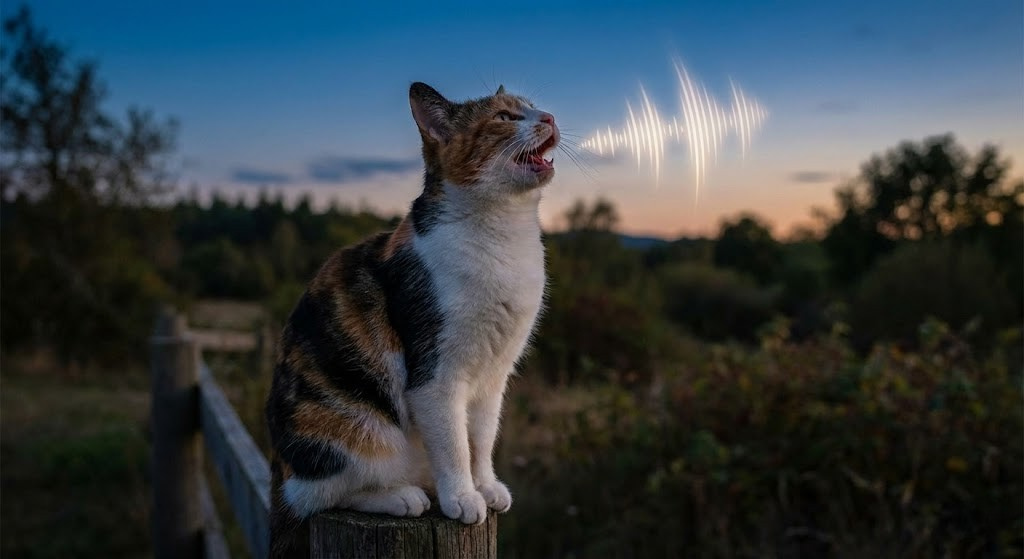
The Sound: Relentless, loud moaning that can last for hours.
The Signs:
Females: During estrus (heat), they may tread with their back legs, raise their rear end, and hold their tail to the side.
Males: If an intact male smells a female in heat (even blocks away), he will caterwaul to announce his presence and may pace or spray urine near doors.
The Fix: Spaying or neutering is the only effective solution. It eliminates the hormonal drive and the vocalizations almost immediately.
Reason 2: The "Midnight Hunter" (Boredom & Zoomies)
Domestic cats are crepuscular, meaning they are naturally hard-wired to be active at dawn and dusk. However, indoor cats often shift this rhythm. If they sleep alone in an empty house while you work 9-to-5, they arrive at "peak energy" right as you turn off the lights.
The "Muffled" Caterwaul: Does the sound seem muted? You might find your cat yowling while carrying a toy mouse or a pair of socks in their mouth. This is a "Hunting Triumph Cry." They aren't upset; they are celebrating a successful "kill" and calling you to share in the feast.
The Fix: You must reset their circadian rhythm using the "Hunt-Eat-Sleep" cycle.
Hunt: Engage in 15 minutes of intense play with a wand toy right before your bedtime.
Eat: Feed them their main meal or a heavy snack immediately after play.
Sleep: A cat with a full belly after a "hunt" will naturally groom and sleep.
Reason 3: "Sundowning" & Senior Dementia (CDS)
If your cat is older (typically 11+ years) and has suddenly started caterwauling at night, this is a significant medical red flag.
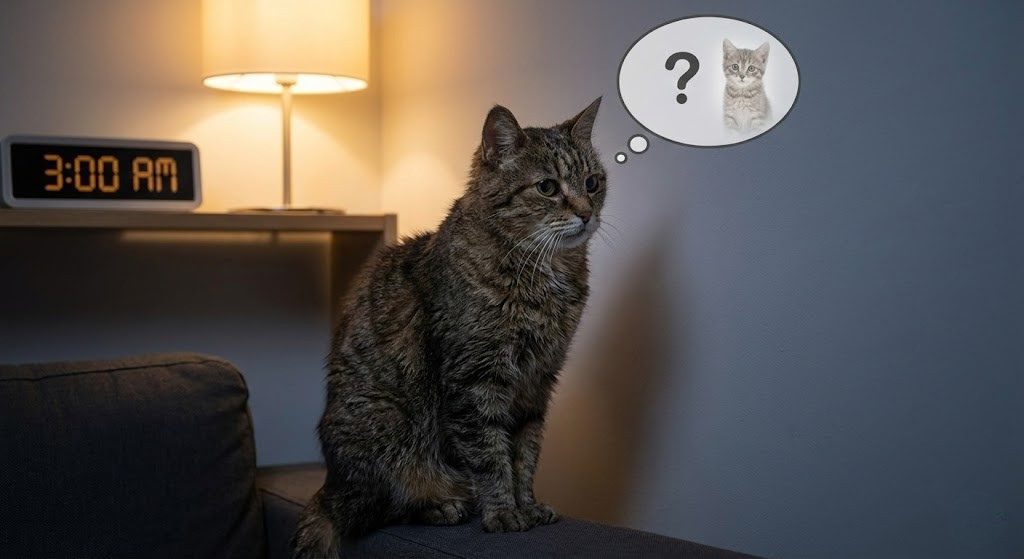
Just like humans, cats can suffer from Cognitive Dysfunction Syndrome (CDS), often referred to as feline dementia.
The Signs:
Disorientation: You find them caterwauling in a corner or getting "stuck" behind furniture.
The "Lost" Cry: The sound is mournful and confused, not demanding.
Sleep-Wake Reversal: They sleep deeply all day (often ignoring family) and wander anxiously all night.
The "Nightlight" Test: Senior cats often suffer from vision loss. Total darkness can be disorienting. Try plugging in a nightlight in the hallway. If the yowling stops, it was likely anxiety caused by an inability to navigate in the dark.
Reason 4: The "Caffeine" Effect (Thyroid & Blood Pressure)
In senior cats, two common invisible killers often present as night screaming: Hyperthyroidism and Hypertension.
Hyperthyroidism: An overactive thyroid revs the cat’s metabolism up to an uncomfortable speed. Imagine drinking 10 espressos and trying to sleep—you would be irritable, hungry, and vocal.
Hypertension (High Blood Pressure): This can cause blinding headaches or a sensation of pulsing pressure, leading to vocalizations of distress.
Pro Tip: If your older cat is caterwauling and has a ravenous appetite despite losing weight, see a vet for bloodwork immediately.
Reason 5: Environmental Stress (The "Ghost" Factor)
Cats have hearing far superior to ours. Sometimes, they are caterwauling at something you simply cannot perceive.
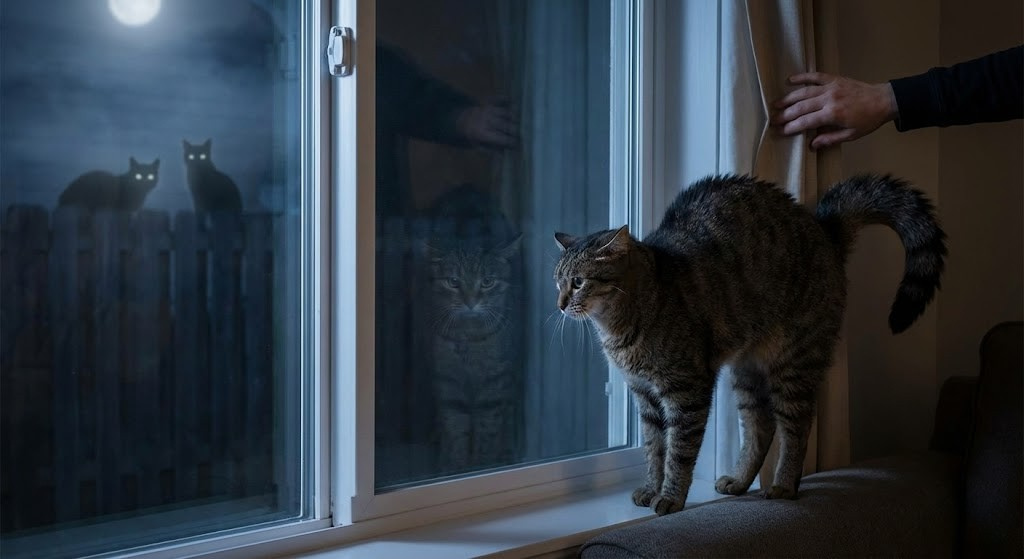
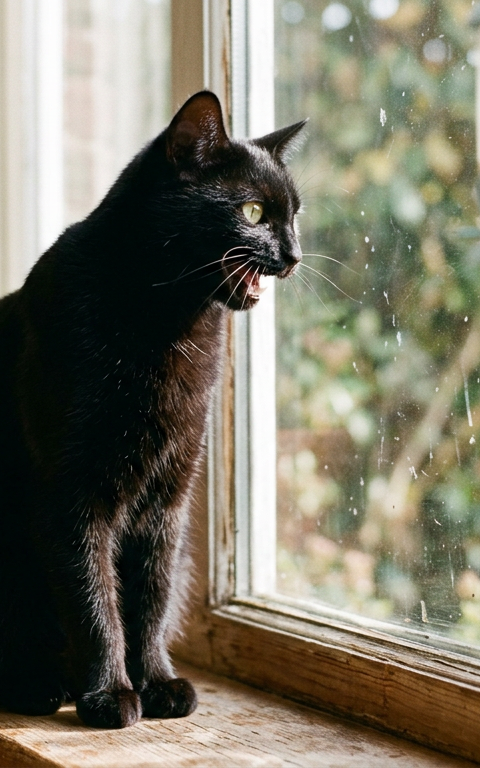
Stray Cats: A neighborhood cat walking through your yard can trigger a territorial screaming match through the window.
Pests: Mice or raccoons in the walls can trigger a frustration cry.
The Fix: Close the blinds at night to block the visual line of sight to the outdoors, or use a white noise machine to mask the sounds of critters in the walls.
The 3-Step "Midnight Check" Protocol
If you wake up to a screaming cat tonight, don't just pull the pillow over your head. Use this check to gather data.
1. The "Response Test" Call their name from your bed.
If they stop and run to you: It is likely Boredom/Loneliness.
If they continue caterwauling without acknowledging you: It is likely Cognitive (CDS), Hormonal, or Pain.
2. The "Resource Check" Check the litter box and water bowl. Some cats are fastidious and will scream to announce that the "toilet" is dirty or their water is stale.
3. The Audio Log Record the sound. Describing a sound as "loud" to a vet is subjective. Playing a recording allows the vet to hear the pitch, frequency, and urgency.
When to See a Veterinarian
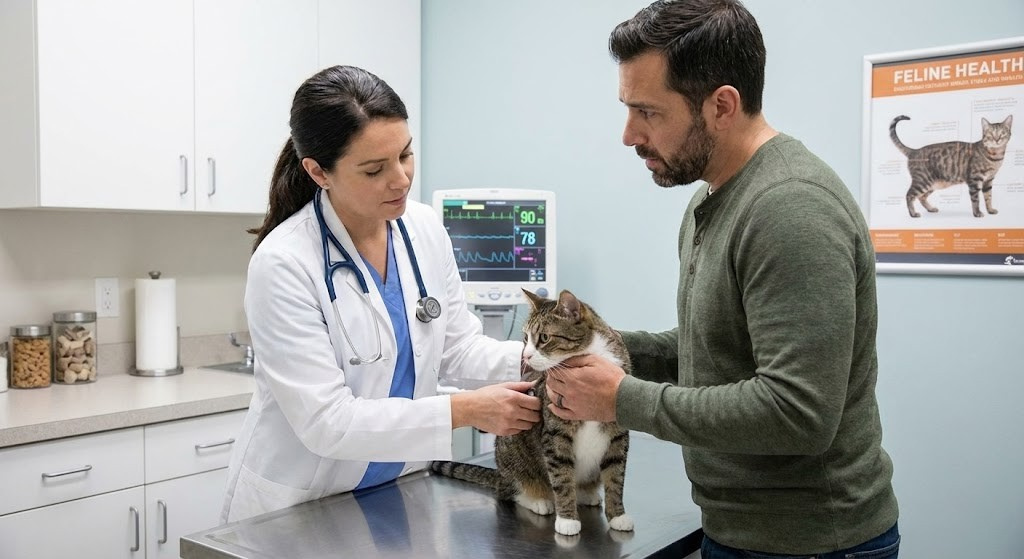
You should schedule an exam if:
Your cat is over 10 years old and this behavior is new.
The caterwauling is accompanied by weight loss, increased thirst, or vomiting.
They are missing the litter box.
They seem irritable or aggressive when handled.
Decoding the Mystery
A caterwauling cat is not trying to annoy you; they are trying to communicate a need that they cannot fulfill themselves. Whether it is a "victory song" over a captured sock or a confused cry from a senior cat lost in the dark, the sound carries the clue.
Need to know for sure? Don't guess. Visit Pet Decoder AI to use our advanced audio analysis tool. Simply record the night vocalization, and our AI will do the rest. It’s the smartest way to translate the noise and get your sleep back.